
铝通过增加氧化应激对D-半乳糖处理小鼠齿状回中神经干细胞、增殖细胞和分化成神经母细胞数量减少的影响。
Effects of aluminum on the reduction of neural stem cells, proliferating cells, and differentiating neuroblasts in the dentate gyrus of D-galactose-treated mice via increasing oxidative stress.
作者信息
Nam Sung Min, Kim Jong Whi, Yoo Dae Young, Kim Woosuk, Jung Hyo Young, Choi Jung Hoon, Hwang In Koo, Seong Je Kyung, Yoon Yeo Sung
机构信息
Department of Anatomy and Cell Biology, College of Veterinary Medicine, Seoul National University, Seoul 08826, Koreaiversity, Seoul 08826, Korea.
BK21 PLUS Program for Creative Veterinary Science Research, Research Institute for Veterinary Science, College of Veterinary Medicine, Seoul National University, Seoul 08826, Koreaiversity, Seoul 08826, Korea.
出版信息
J Vet Sci. 2016 Jun 30;17(2):127-36. doi: 10.4142/jvs.2016.17.2.127.
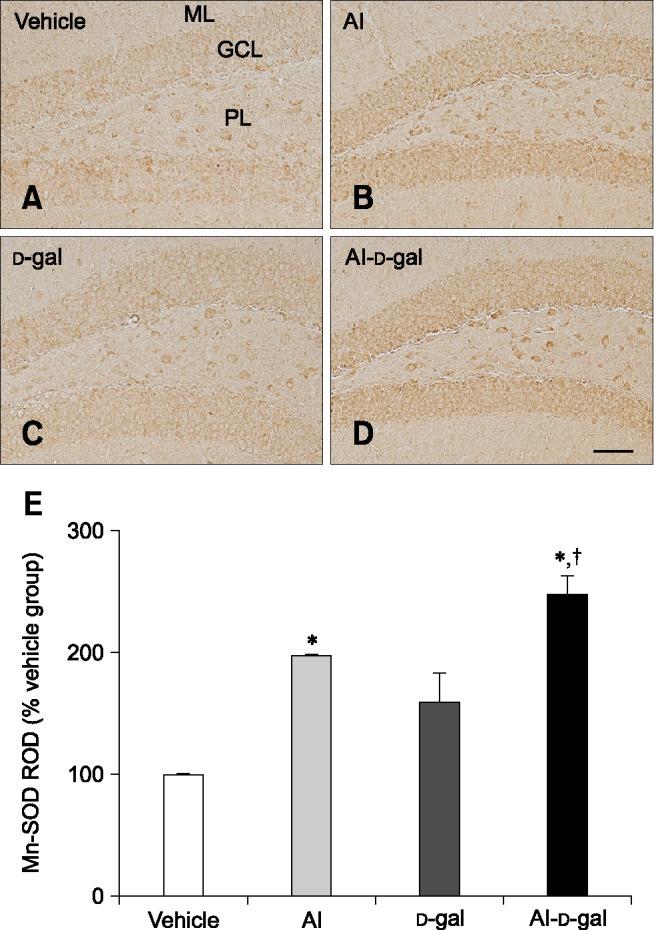
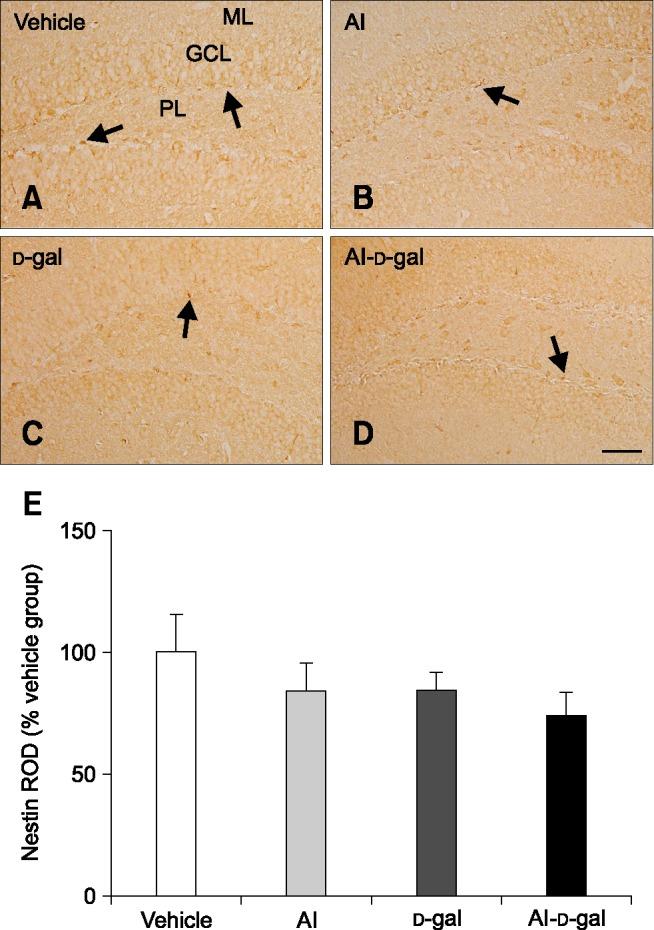
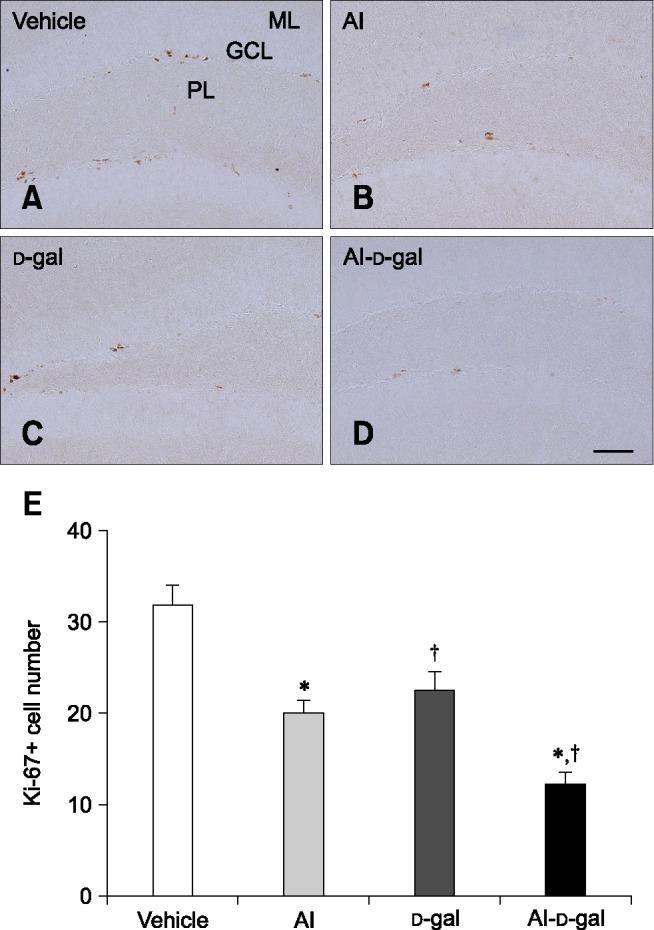
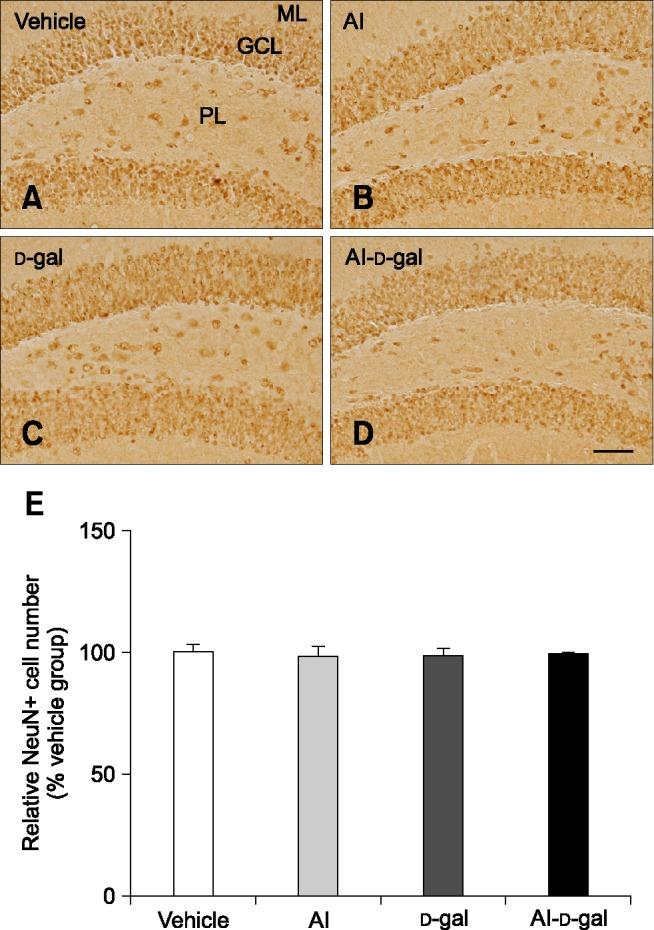
Aluminum (Al) accumulation increases with aging, and long-term exposure to Al is regarded as a risk factor for Alzheimer's disease. In this study, we investigated the effects of Al and/or D-galactose on neural stem cells, proliferating cells, differentiating neuroblasts, and mature neurons in the hippocampal dentate gyrus. AlCl3 (40 mg/kg/day) was intraperitoneally administered to C57BL/6J mice for 4 weeks. In addition, vehicle (physiological saline) or D-galactose (100 mg/kg) was subcutaneously injected to these mice immediately after AlCl3 treatment. Neural stem cells, proliferating cells, differentiating neuroblasts, and mature neurons were detected using the relevant marker for each cell type, including nestin, Ki67, doublecortin, and NeuN, respectively, via immunohistochemistry. Subchronic (4 weeks) exposure to Al in mice reduced neural stem cells, proliferating cells, and differentiating neuroblasts without causing any changes to mature neurons. This Al-induced reduction effect was exacerbated in D-galactose-treated mice compared to vehicle-treated adult mice. Moreover, exposure to Al enhanced lipid peroxidation in the hippocampus and expression of antioxidants such as Cu, Zn- and Mn-superoxide dismutase in D-galactose-treated mice. These results suggest that Al accelerates the reduction of neural stem cells, proliferating cells, and differentiating neuroblasts in D-galactose-treated mice via oxidative stress, without inducing loss in mature neurons.
铝(Al)蓄积随衰老而增加,长期暴露于铝被视为阿尔茨海默病的一个风险因素。在本研究中,我们调查了铝和/或D-半乳糖对海马齿状回中的神经干细胞、增殖细胞、分化中的神经母细胞和成熟神经元的影响。将氯化铝(40毫克/千克/天)腹腔注射给C57BL/6J小鼠,持续4周。此外,在氯化铝处理后立即给这些小鼠皮下注射溶媒(生理盐水)或D-半乳糖(100毫克/千克)。通过免疫组织化学分别使用针对每种细胞类型的相关标志物(包括巢蛋白、Ki67、双皮质素和NeuN)来检测神经干细胞、增殖细胞、分化中的神经母细胞和成熟神经元。小鼠亚慢性(4周)暴露于铝会减少神经干细胞、增殖细胞和分化中的神经母细胞,而不会对成熟神经元造成任何变化。与溶媒处理的成年小鼠相比,在D-半乳糖处理的小鼠中,这种铝诱导的减少效应会加剧。此外,在D-半乳糖处理的小鼠中,暴露于铝会增强海马中的脂质过氧化以及抗氧化剂如铜锌超氧化物歧化酶和锰超氧化物歧化酶的表达。这些结果表明,铝通过氧化应激加速了D-半乳糖处理的小鼠中神经干细胞、增殖细胞和分化中的神经母细胞的减少,而不会导致成熟神经元的损失。




 Zotero 插件