
一种用于模拟杀微生物剂从粘膜粘附制剂中扩散率的级联计算机模型。
A cascade computer model for mocrobicide diffusivity from mucoadhesive formulations.
作者信息
Lee Yugyung, Khemka Alok, Acharya Gayathri, Giri Namita, Lee Chi H
机构信息
School of Computing and Engineering, Kansas City, USA.
Division of Pharmaceutical Sciences, School of Pharmacy, University of Missouri-Kansas City, 2464 Charlotte Street, Kansas City, MO, 64108, USA.
出版信息
BMC Bioinformatics. 2015 Aug 19;16:263. doi: 10.1186/s12859-015-0684-z.
BACKGROUND
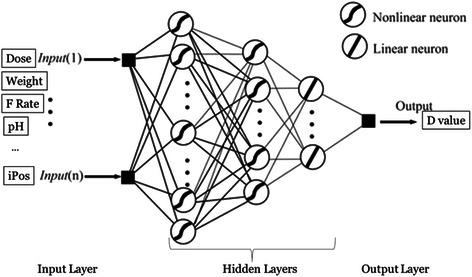
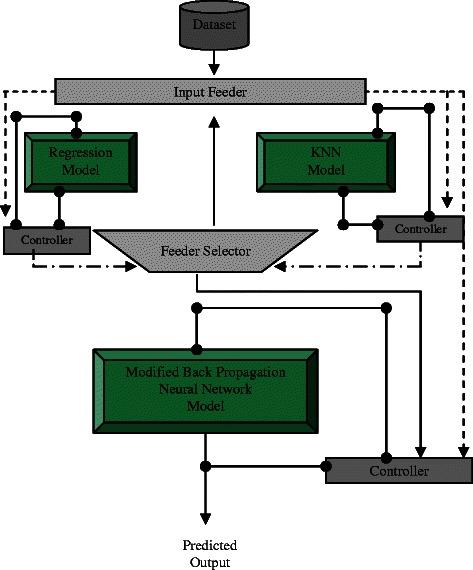
The cascade computer model (CCM) was designed as a machine-learning feature platform for prediction of drug diffusivity from the mucoadhesive formulations. Three basic models (the statistical regression model, the K nearest neighbor model and the modified version of the back propagation neural network) in CCM operate sequentially in close collaboration with each other, employing the estimated value obtained from the afore-positioned base model as an input value to the next-positioned base model in the cascade. The effects of various parameters on the pharmacological efficacy of a female controlled drug delivery system (FcDDS) intended for prevention of women from HIV-1 infection were evaluated using an in vitro apparatus "Simulant Vaginal System" (SVS). We used computer simulations to explicitly examine the changes in drug diffusivity from FcDDS and determine the prognostic potency of each variable for in vivo prediction of formulation efficacy. The results obtained using the CCM approach were compared with those from individual multiple regression model.
RESULTS
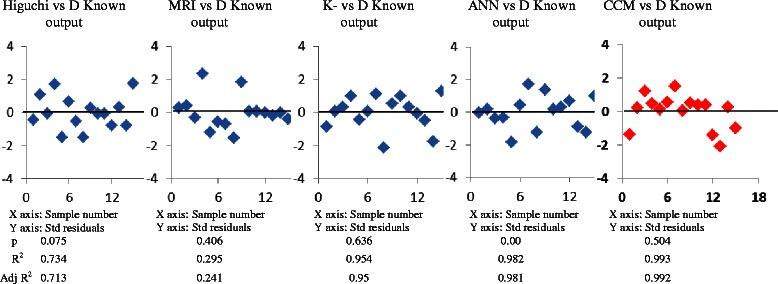
CCM significantly lowered the percentage mean error (PME) and enhanced r(2) values as compared with those from the multiple regression models. It was noted that CCM generated the PME value of 21.82 at 48169 epoch iterations, which is significantly improved from the PME value of 29.91% at 118344 epochs by the back propagation network model. The results of this study indicated that the sequential ensemble of the classifiers allowed for an accurate prediction of the domain with significantly lowered variance and considerably reduces the time required for training phase.
CONCLUSION
CCM is accurate, easy to operate, time and cost-effective, and thus, can serve as a valuable tool for prediction of drug diffusivity from mucoadhesive formulations. CCM may yield new insights into understanding how drugs are diffused from the carrier systems and exert their efficacies under various clinical conditions.
背景
级联计算机模型(CCM)被设计为一个机器学习特征平台,用于预测来自粘膜粘附制剂的药物扩散率。CCM中的三个基本模型(统计回归模型、K近邻模型和反向传播神经网络的修改版本)相互紧密协作依次运行,将从前面定位的基础模型获得的估计值用作级联中下一个定位基础模型的输入值。使用体外装置“模拟阴道系统”(SVS)评估了各种参数对旨在预防女性感染HIV-1的女性控制药物递送系统(FcDDS)药理疗效的影响。我们使用计算机模拟来明确检查FcDDS药物扩散率的变化,并确定每个变量对制剂疗效体内预测的预后效力。将使用CCM方法获得的结果与来自单个多元回归模型的结果进行比较。
结果
与多元回归模型相比,CCM显著降低了平均误差百分比(PME)并提高了r(2)值。值得注意的是,CCM在48169次迭代时产生的PME值为21.82,这比反向传播网络模型在118344次迭代时的29.91%的PME值有显著改善。本研究结果表明,分类器的顺序集成允许对该领域进行准确预测,方差显著降低,并大大减少了训练阶段所需的时间。
结论
CCM准确、易于操作、具有时间和成本效益,因此可以作为预测来自粘膜粘附制剂的药物扩散率的有价值工具。CCM可能会为理解药物如何从载体系统扩散以及在各种临床条件下发挥其疗效提供新的见解。


 Zotero 插件