
SB225002通过激活GLIPR1诱导急性淋巴细胞白血病细胞死亡和细胞周期停滞。
SB225002 Induces Cell Death and Cell Cycle Arrest in Acute Lymphoblastic Leukemia Cells through the Activation of GLIPR1.
作者信息
de Vasconcellos Jaíra Ferreira, Laranjeira Angelo Brunelli Albertoni, Leal Paulo C, Bhasin Manoj K, Zenatti Priscila Pini, Nunes Ricardo J, Yunes Rosendo A, Nowill Alexandre E, Libermann Towia A, Zerbini Luiz Fernando, Yunes José Andrés
机构信息
Centro Infantil Boldrini, Campinas, SP, Brazil; Department of Medical Genetics, Faculty of Medical Sciences, University of Campinas, Campinas, SP, Brazil; BIDMC Genomics, Proteomics, Bioinformatics and Systems Biology Center, Beth Israel Deaconess Medical Center and Harvard Medical School, Boston, Massachusetts, United States of America.
Centro Infantil Boldrini, Campinas, SP, Brazil.
出版信息
PLoS One. 2015 Aug 24;10(8):e0134783. doi: 10.1371/journal.pone.0134783. eCollection 2015.
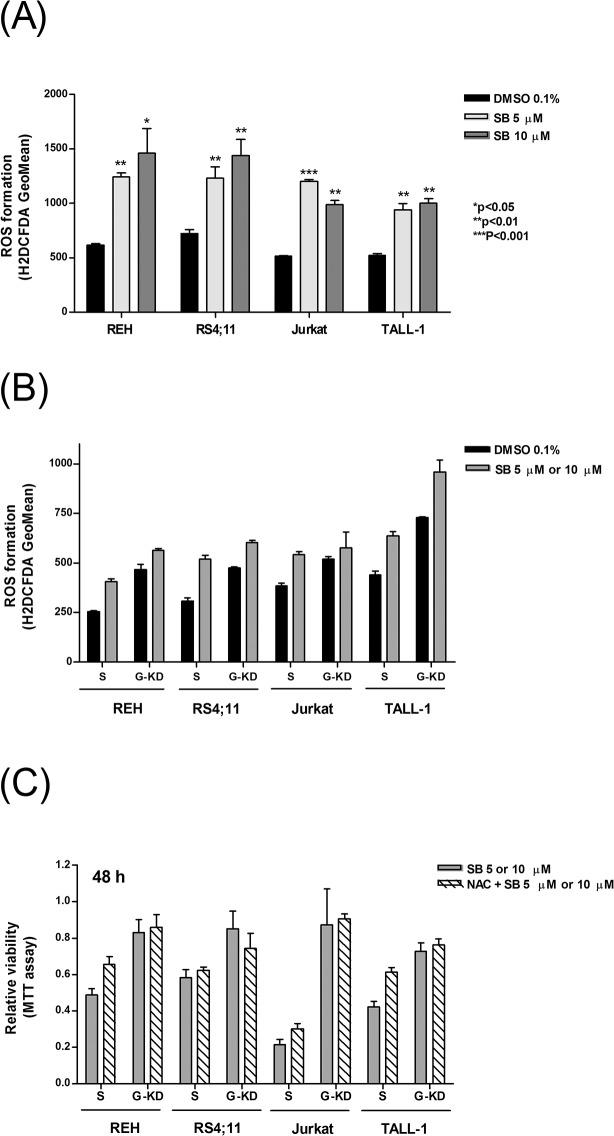
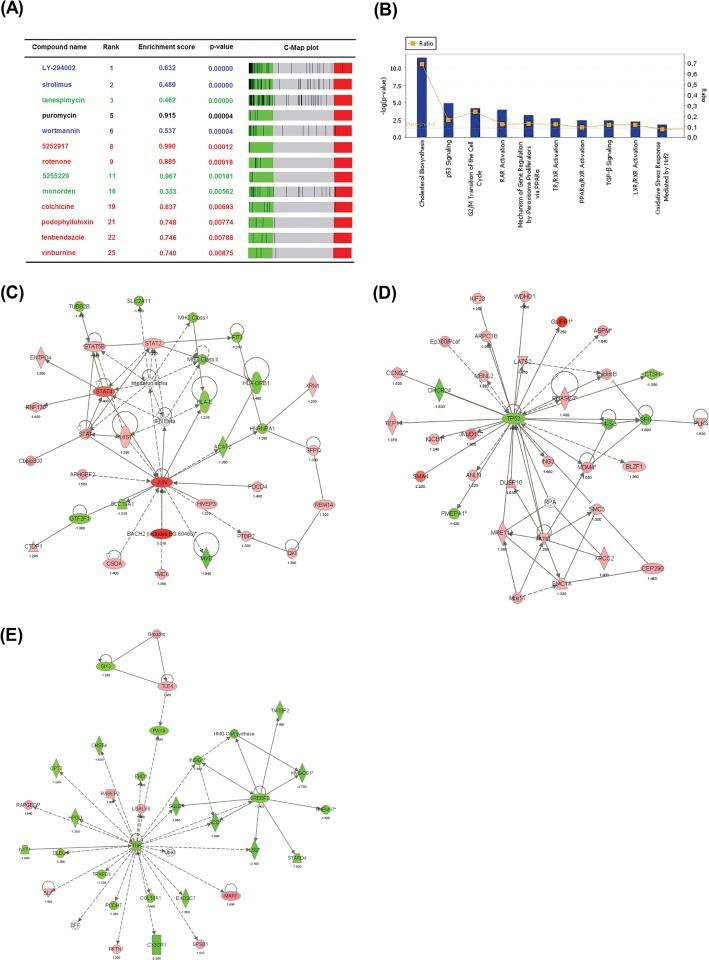
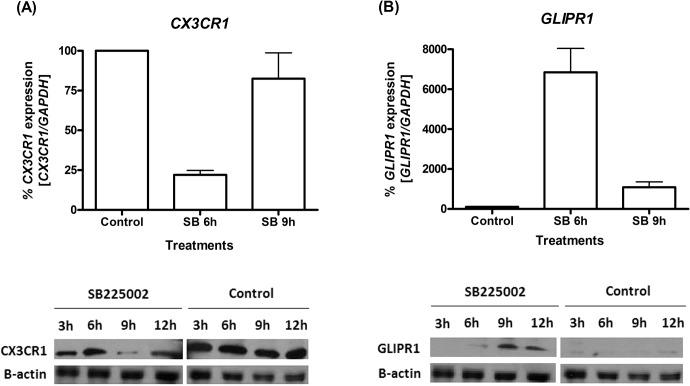
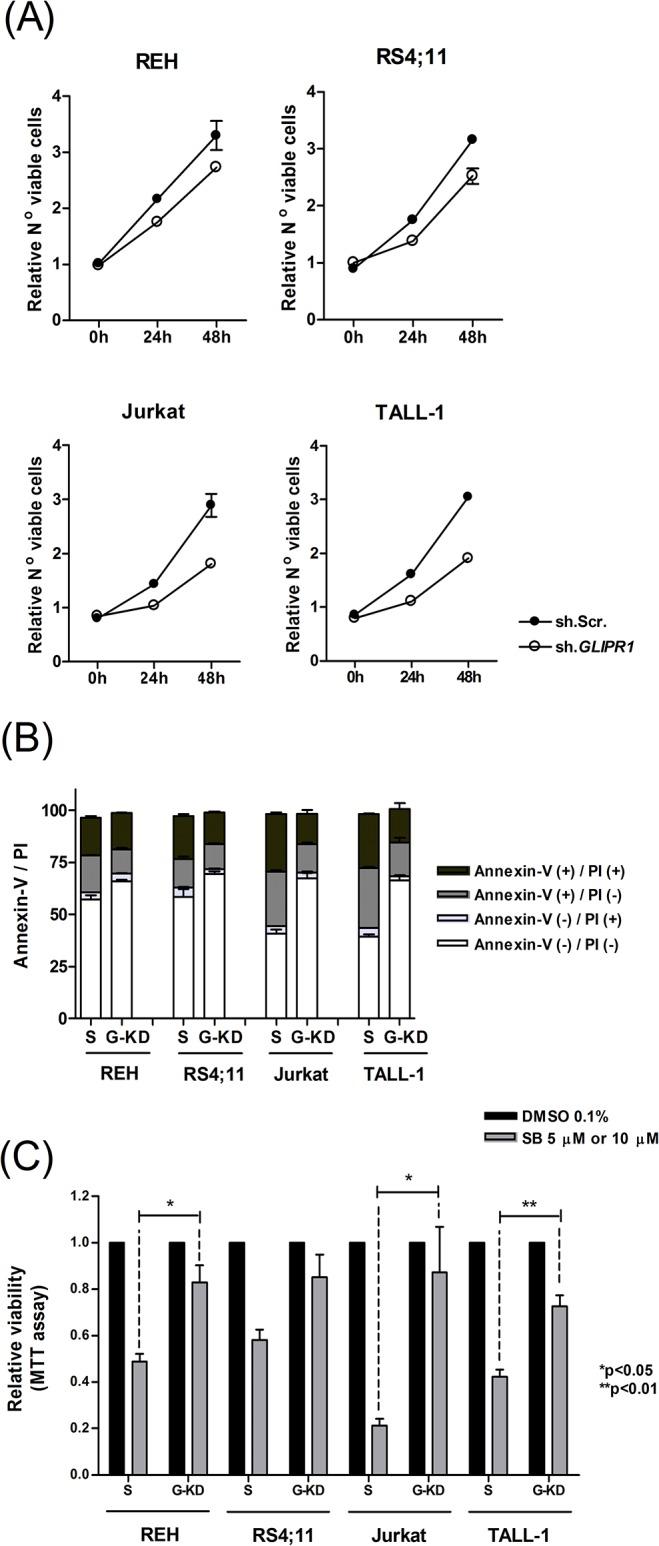
Acute Lymphoblastic Leukemia (ALL) is the most frequent childhood malignancy. In the effort to find new anti-leukemic agents, we evaluated the small drug SB225002 (N-(2-hydroxy-4-nitrophenyl)-N'-(2-bromophenyl)urea). Although initially described as a selective antagonist of CXCR2, later studies have identified other cellular targets for SB225002, with potential medicinal use in cancer. We found that SB225002 has a significant pro-apoptotic effect against both B- and T-ALL cell lines. Cell cycle analysis demonstrated that treatment with SB225002 induces G2-M cell cycle arrest. Transcriptional profiling revealed that SB225002-mediated apoptosis triggered a transcriptional program typical of tubulin binding agents. Network analysis revealed the activation of genes linked to the JUN and p53 pathways and inhibition of genes linked to the TNF pathway. Early cellular effects activated by SB225002 included the up-regulation of GLIPR1, a p53-target gene shown to have pro-apoptotic activities in prostate and bladder cancer. Silencing of GLIPR1 in B- and T-ALL cell lines resulted in increased resistance to SB225002. Although SB225002 promoted ROS increase in ALL cells, antioxidant N-Acetyl Cysteine pre-treatment only modestly attenuated cell death, implying that the pro-apoptotic effects of SB225002 are not exclusively mediated by ROS. Moreover, GLIPR1 silencing resulted in increased ROS levels both in untreated and SB225002-treated cells. In conclusion, SB225002 induces cell cycle arrest and apoptosis in different B- and T-ALL cell lines. Inhibition of tubulin function with concurrent activation of the p53 pathway, in particular, its downstream target GLIPR1, seems to underlie the anti-leukemic effect of SB225002.
急性淋巴细胞白血病(ALL)是儿童期最常见的恶性肿瘤。为了寻找新的抗白血病药物,我们评估了小分子药物SB225002(N-(2-羟基-4-硝基苯基)-N'-(2-溴苯基)脲)。尽管最初被描述为CXCR2的选择性拮抗剂,但后来的研究确定了SB225002的其他细胞靶点,在癌症治疗中具有潜在药用价值。我们发现SB225002对B-ALL和T-ALL细胞系均具有显著的促凋亡作用。细胞周期分析表明,SB225002处理可诱导G2-M期细胞周期阻滞。转录谱分析显示,SB225002介导的凋亡触发了典型的微管蛋白结合剂转录程序。网络分析显示与JUN和p53通路相关的基因被激活,与TNF通路相关的基因受到抑制。SB225002激活的早期细胞效应包括GLIPR1上调,GLIPR1是一个p53靶基因,在前列腺癌和膀胱癌中具有促凋亡活性。在B-ALL和T-ALL细胞系中沉默GLIPR1会导致对SB225002的抗性增加。尽管SB225002可促进ALL细胞中活性氧(ROS)增加,但抗氧化剂N-乙酰半胱氨酸预处理仅适度减弱细胞死亡,这意味着SB225002的促凋亡作用并非完全由ROS介导。此外,GLIPR1沉默导致未处理和SB225002处理的细胞中ROS水平均升高。总之,SB225002可诱导不同B-ALL和T-ALL细胞系的细胞周期阻滞和凋亡。抑制微管蛋白功能并同时激活p53通路,特别是其下游靶点GLIPR1,似乎是SB225002抗白血病作用的基础。

 Zotero 插件