
对TRAIL诱导的细胞凋亡中的耐受性的理解以及通过α-山竹黄酮(一种氧杂蒽酮衍生物)对其机制的消除。
Understanding of tolerance in TRAIL-induced apoptosis and cancelation of its machinery by α-mangostin, a xanthone derivative.
作者信息
Kumazaki Minami, Shinohara Haruka, Taniguchi Kohei, Ueda Hiroshi, Nishi Mayuko, Ryo Akihide, Akao Yukihiro
机构信息
United Graduate School of Drug Discovery and Medical Information Sciences, Gifu University, Yanagido, Gifu 501-1193, Japan.
Department of Microbiology, Yokohama City University School of Medicine, Yokohama 236-0027, Japan.
出版信息
Oncotarget. 2015 Sep 22;6(28):25828-42. doi: 10.18632/oncotarget.4558.
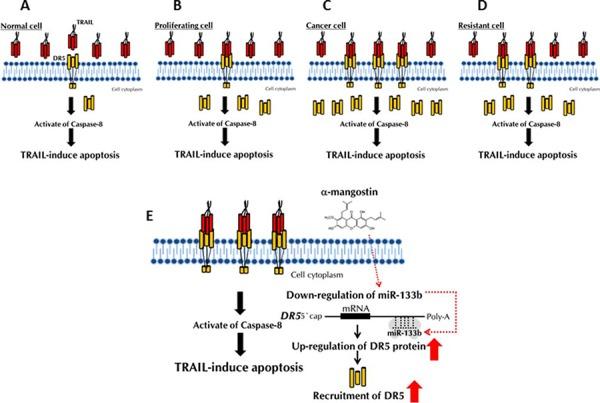
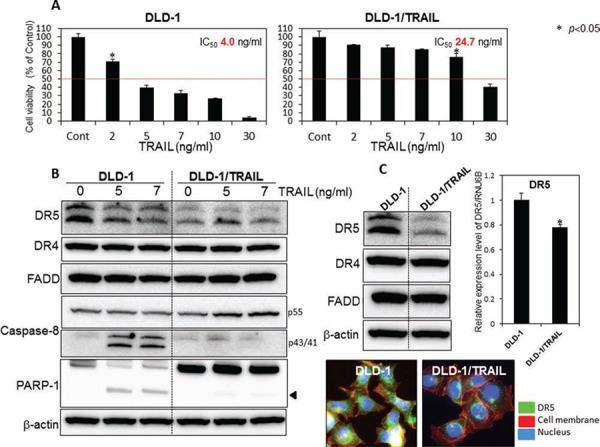
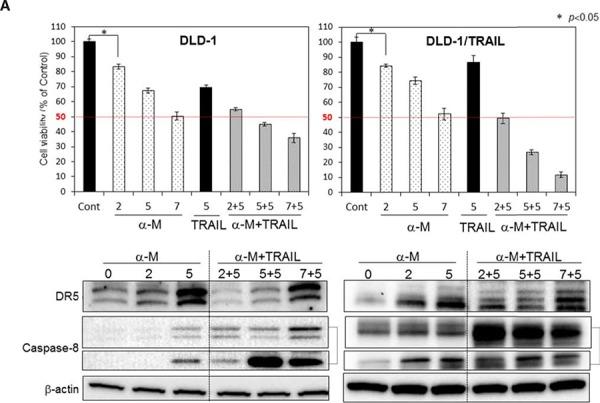
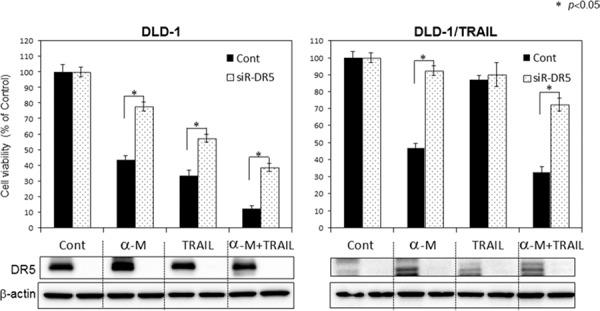
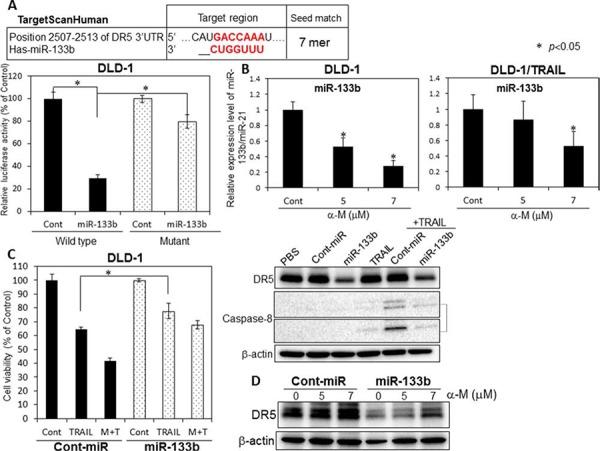
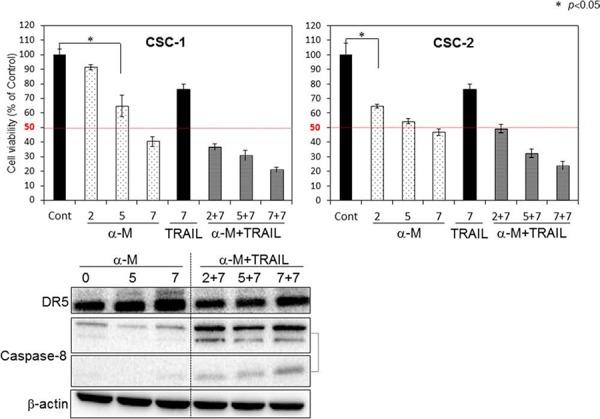
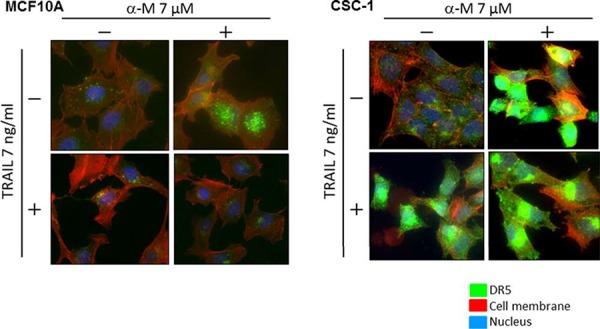
Tumor necrosis-factor (TNF)-related apoptosis-inducing ligand (TRAIL) is a member of the TNF-superfamily that selectively induces apoptosis through death receptors (DRs) 4 and/or 5 in cancer cells. These receptors are expressed on the cancer cell surface, without affecting normal cells. Unfortunately, many clinical studies have shown that cancer cells acquire TRAIL-resistance and finally avoid TRAIL-induced apoptosis. The detailed mechanisms of this resistance are not well understood. In the current study, we established a TRAIL-resistant human colon cancer DLD-1 cell line to clarify the mechanisms of TRAIL-resistance and developed agents to cancel its machinery. Also, we found that cancer stem-like cells from breast epithelial proliferating MCF10A cells were also sensitive to TRAIL-induced apoptosis. The enforced expression of DR5 in both TRAIL-resistant cells partially recovered the sensitivity to the TRAIL ligand, which was judged by the activation of caspase-8. As a result, we newly found that the mechanisms of TRAIL-resistance comprised co-existence of a decrease in the expression level of DR5 along with malfunction of its recruitment to the cell surface, as evidenced by Western blot and immunocytological analysis, respectively. Interestingly, α-mangostin, which is a xanthone derivative, canceled the resistance by increasing the expression level of DR5 through down-regulation of miR-133b and effectively induced the translocation of DR5 to the cancer cell surface membrane in TRAIL-resistant DLD-1 cells. These findings indicate that α-mangostin functioned as a sensitizer of TRAIL-induced apoptosis and may thus serve as a possible adjuvant compound for cytokine therapy to conquer TRAIL-resistance.
肿瘤坏死因子(TNF)相关凋亡诱导配体(TRAIL)是TNF超家族的成员,它通过癌细胞中的死亡受体(DRs)4和/或5选择性地诱导细胞凋亡。这些受体在癌细胞表面表达,而不影响正常细胞。不幸的是,许多临床研究表明癌细胞获得了TRAIL抗性,最终避免了TRAIL诱导的细胞凋亡。这种抗性的详细机制尚不清楚。在本研究中,我们建立了一种TRAIL抗性人结肠癌细胞系DLD-1,以阐明TRAIL抗性的机制,并开发消除其机制的药物。此外,我们发现来自乳腺上皮增殖性MCF10A细胞的癌干细胞样细胞对TRAIL诱导的细胞凋亡也敏感。在两种TRAIL抗性细胞中强制表达DR5部分恢复了对TRAIL配体的敏感性,这通过半胱天冬酶-8的激活来判断。结果,我们新发现TRAIL抗性机制包括DR5表达水平降低与其向细胞表面募集功能异常并存,分别通过蛋白质印迹和免疫细胞分析证明。有趣的是,α-山竹黄酮是一种氧杂蒽酮衍生物,它通过下调miR-133b增加DR5的表达水平来消除抗性,并有效地诱导DR5在TRAIL抗性DLD-1细胞中向癌细胞表面膜的转运。这些发现表明α-山竹黄酮作为TRAIL诱导凋亡的敏化剂发挥作用,因此可能作为一种可能的辅助化合物用于细胞因子治疗以克服TRAIL抗性。




 Zotero 插件