
使用Nexfin血压监测仪对麻醉患者的脉压变异和每搏量变异进行无创测量。
Non-invasive measurements of pulse pressure variation and stroke volume variation in anesthetized patients using the Nexfin blood pressure monitor.
作者信息
Stens Jurre, Oeben Jeroen, Van Dusseldorp Ab A, Boer Christa
机构信息
Department of Anesthesiology, Institute for Cardiovascular Research, VU University Medical Center, De Boelelaan 1117, 1081 HV, Amsterdam, The Netherlands.
出版信息
J Clin Monit Comput. 2016 Oct;30(5):587-94. doi: 10.1007/s10877-015-9759-7. Epub 2015 Aug 29.
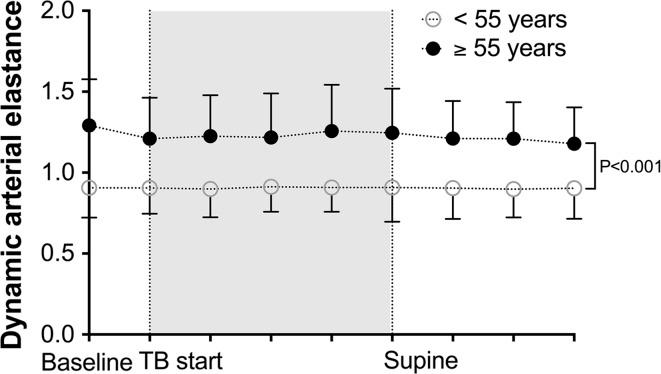
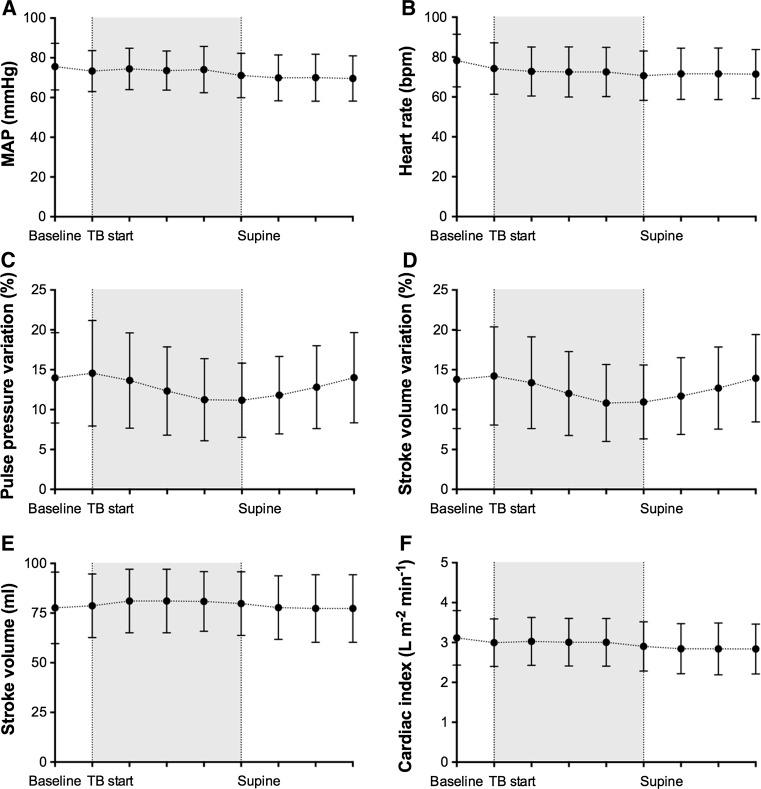
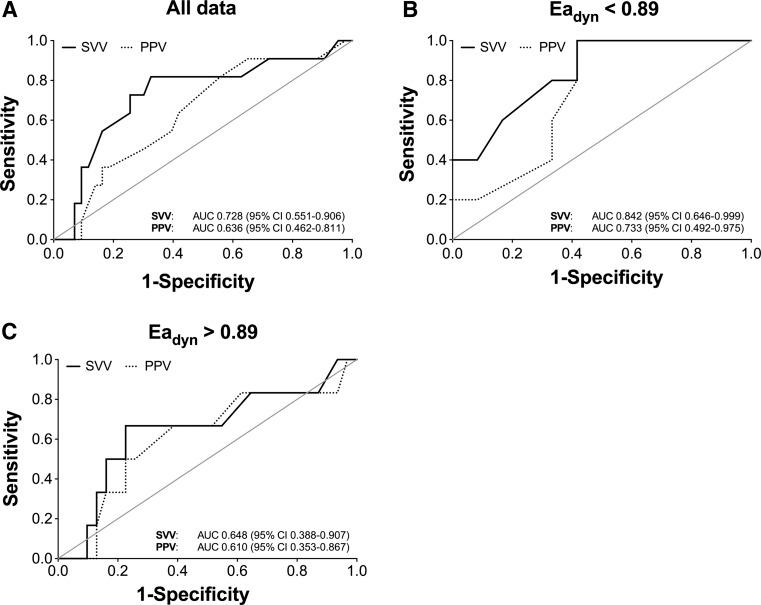
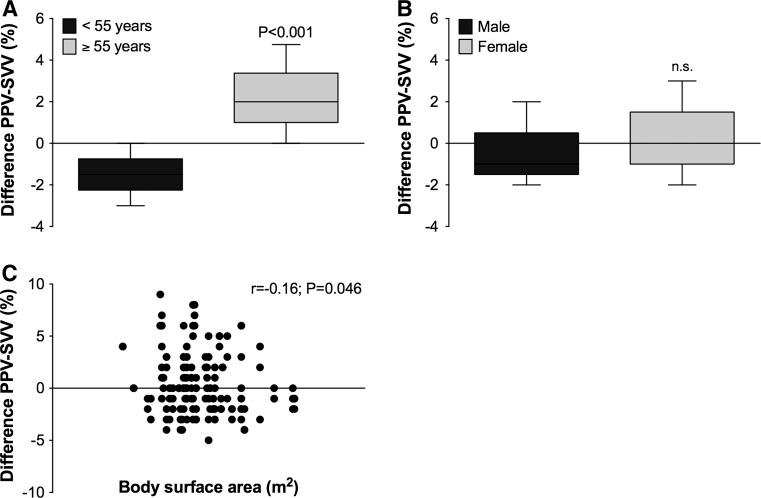
Nexfin beat-to-beat arterial blood pressure monitoring enables continuous assessment of hemodynamic indices like cardiac index (CI), pulse pressure variation (PPV) and stroke volume variation (SVV) in the perioperative setting. In this study we investigated whether Nexfin adequately reflects alterations in these hemodynamic parameters during a provoked fluid shift in anesthetized and mechanically ventilated patients. The study included 54 patients undergoing non-thoracic surgery with positive pressure mechanical ventilation. The provoked fluid shift comprised 15° Trendelenburg positioning, and fluid responsiveness was defined as a concomitant increase in stroke volume (SV) >10 %. Nexfin blood pressure measurements were performed during supine steady state, Trendelenburg and supine repositioning. Hemodynamic parameters included arterial blood pressure (MAP), CI, PPV and SVV. Trendelenburg positioning did not affect MAP or CI, but induced a decrease in PPV and SVV by 3.3 ± 2.8 and 3.4 ± 2.7 %, respectively. PPV and SVV returned back to baseline values after repositioning of the patient to baseline. Bland-Altman analysis of SVV and PPV showed a bias of -0.3 ± 3.0 % with limits of agreement ranging from -5.6 to 6.2 %. The SVV was more superior in predicting fluid responsiveness (AUC 0.728) than the PVV (AUC 0.636), respectively. The median bias between PPV and SVV was different for patients younger [-1.5 % (-3 to 0)] or older [+2 % (0-4.75)] than 55 years (P < 0.001), while there were no gender differences in the bias between PPV and SVV. The Nexfin monitor adequately reflects alterations in PPV and SVV during a provoked fluid shift, but the level of agreement between PPV and SVV was low. The SVV tended to be superior over PPV or Eadyn in predicting fluid responsiveness in our population.
Nexfin逐搏动脉血压监测能够在围手术期持续评估血流动力学指标,如心脏指数(CI)、脉压变异(PPV)和每搏量变异(SVV)。在本研究中,我们调查了在麻醉和机械通气患者诱发液体转移期间,Nexfin是否能充分反映这些血流动力学参数的变化。该研究纳入了54例接受非胸科手术并采用正压机械通气的患者。诱发液体转移包括采用15°头低脚高位,液体反应性定义为每搏量(SV)伴随增加>10%。在仰卧位稳态、头低脚高位和仰卧位重新定位期间进行Nexfin血压测量。血流动力学参数包括动脉血压(MAP)、CI、PPV和SVV。头低脚高位未影响MAP或CI,但分别使PPV和SVV降低了3.3±2.8%和3.4±2.7%。患者重新定位至基线后,PPV和SVV恢复至基线值。对SVV和PPV进行Bland-Altman分析显示,偏差为-0.3±3.0%,一致性界限范围为-5.6%至6.2%。SVV在预测液体反应性方面(AUC 0.728)比PPV(AUC 0.636)更具优势。年龄小于55岁[-1.5%(-3至0)]或大于55岁[+2%(0至4.75)]的患者,PPV和SVV之间的中位数偏差不同(P<0.001),而PPV和SVV之间的偏差不存在性别差异。Nexfin监测仪能充分反映诱发液体转移期间PPV和SVV的变化,但PPV和SVV之间的一致性水平较低。在我们的研究人群中,SVV在预测液体反应性方面往往优于PPV或Eadyn。
 Zotero 插件