
肺部超声和脉搏血氧饱和度测定与胸部X线摄影及动脉血气分析在急性呼吸窘迫综合征诊断中的应用比较:一项初步研究
Pulmonary ultrasound and pulse oximetry versus chest radiography and arterial blood gas analysis for the diagnosis of acute respiratory distress syndrome: a pilot study.
作者信息
Bass Cameron M, Sajed Dana R, Adedipe Adeyinka A, West T Eoin
机构信息
Department of Medicine, University of Washington School of Medicine, Seattle, WA, USA.
International Respiratory and Severe Illness Center, University of Washington School of Medicine, Seattle, WA, USA.
出版信息
Crit Care. 2015 Jul 21;19(1):282. doi: 10.1186/s13054-015-0995-5.
INTRODUCTION
In low-resource settings it is not always possible to acquire the information required to diagnose acute respiratory distress syndrome (ARDS). Ultrasound and pulse oximetry, however, may be available in these settings. This study was designed to test whether pulmonary ultrasound and pulse oximetry could be used in place of traditional radiographic and oxygenation evaluation for ARDS.
METHODS
This study was a prospective, single-center study in the ICU of Harborview Medical Center, a referral hospital in Seattle, Washington, USA. Bedside pulmonary ultrasound was performed on ICU patients receiving invasive mechanical ventilation. Pulse oximetric oxygen saturation (SpO2), partial pressure of oxygen (PaO2), fraction of inspired oxygen (FiO2), provider diagnoses, and chest radiograph closest to time of ultrasound were recorded or interpreted.
RESULTS
One hundred and twenty three ultrasound assessments were performed on 77 consecutively enrolled patients with respiratory failure. Oxygenation and radiographic criteria for ARDS were met in 35 assessments. Where SpO2 ≤ 97%, the Spearman rank correlation coefficient between SpO2/FiO2 and PaO2/FiO2 was 0.83, p < 0.0001. The sensitivity and specificity of the previously reported threshold of SpO2/FiO2 ≤ 315 for PaO2/FiO2 ≤ 300 was 83% (95% confidence interval (CI) 68-93), and 50% (95% CI 1-99), respectively. Sensitivity and specificity of SpO2/FiO2 ≤ 235 for PaO2/FiO2 ≤ 200 was 70% (95% CI 47-87), and 90% (95% CI 68-99), respectively. For pulmonary ultrasound assessments interpreted by the study physician, the sensitivity and specificity of ultrasound interstitial syndrome bilaterally and involving at least three lung fields were 80% (95% CI 63-92) and 62% (95% CI 49-74) for radiographic criteria for ARDS. Combining SpO2/FiO2 with ultrasound to determine oxygenation and radiographic criteria for ARDS, the sensitivity was 83% (95% CI 52-98) and specificity was 62% (95% CI 38-82). For moderate-severe ARDS criteria (PaO2/FiO2 ≤ 200), sensitivity was 64% (95% CI 31-89) and specificity was 86% (95% CI 65-97). Excluding repeat assessments and independent interpretation of ultrasound images did not significantly alter the sensitivity measures.
CONCLUSIONS
Pulse oximetry and pulmonary ultrasound may be useful tools to screen for, or rule out, impaired oxygenation or lung abnormalities consistent with ARDS in under-resourced settings where arterial blood gas testing and chest radiography are not readily available.
引言
在资源匮乏地区,获取诊断急性呼吸窘迫综合征(ARDS)所需的信息并非总是可行的。然而,这些地区可能具备超声和脉搏血氧饱和度测定仪。本研究旨在测试肺部超声和脉搏血氧饱和度测定是否可用于替代传统的ARDS影像学和氧合评估。
方法
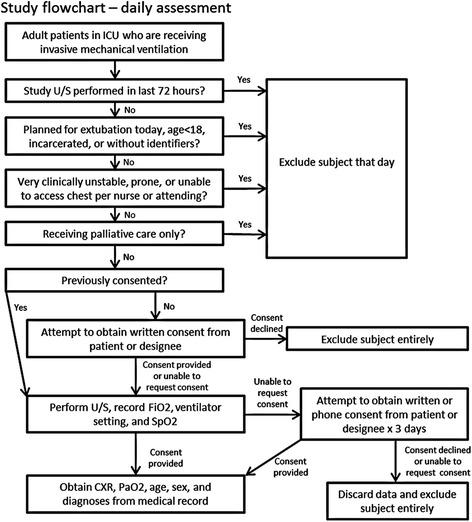
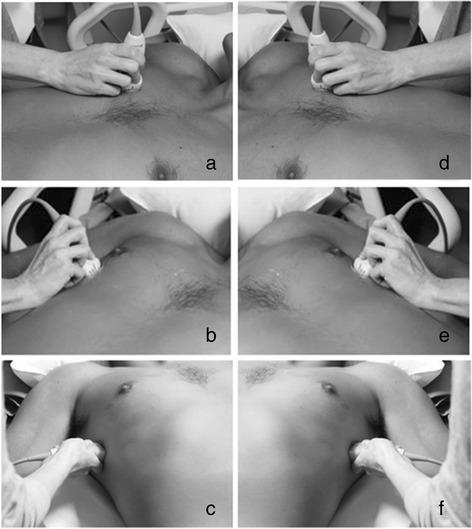
本研究是在美国华盛顿州西雅图的一家转诊医院——海港景医疗中心的重症监护病房(ICU)进行的一项前瞻性单中心研究。对接受有创机械通气的ICU患者进行床边肺部超声检查。记录或解读脉搏血氧饱和度(SpO2)、氧分压(PaO2)、吸入氧分数(FiO2)、医生诊断以及与超声检查时间最接近的胸部X线片。
结果
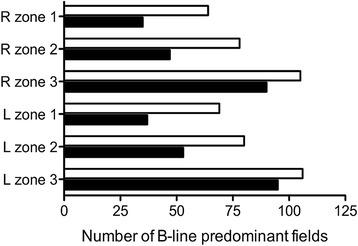
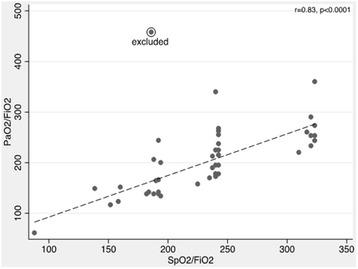
对77例连续入组的呼吸衰竭患者进行了123次超声评估。35次评估符合ARDS的氧合和影像学标准。当SpO2≤97%时,SpO2/FiO2与PaO2/FiO2之间的Spearman等级相关系数为0.83,p<0.0001。对于PaO2/FiO2≤300,先前报道的SpO2/FiO2≤315阈值的敏感性和特异性分别为83%(95%置信区间(CI)68 - 93)和50%(95%CI 1 - 99)。对于PaO2/FiO2≤200,SpO2/FiO2≤235的敏感性和特异性分别为70%(95%CI 47 - 87)和90%(95%CI 68 - 99)。对于由研究医生解读的肺部超声评估,双侧超声间质综合征且累及至少三个肺野对ARDS影像学标准的敏感性和特异性分别为80%(95%CI 63 - 92)和62%(95%CI 49 - 74)。将SpO2/FiO2与超声相结合以确定ARDS的氧合和影像学标准,敏感性为83%(95%CI 52 - 98);特异性为62%(95%CI 38 - 82)。对于中重度ARDS标准(PaO2/FiO2≤200),敏感性为64%(95%CI 31 - 89);特异性为86%(95%CI 65 - 97)。排除重复评估和超声图像的独立解读并未显著改变敏感性指标。
结论
在无法轻易进行动脉血气检测和胸部X线摄影的资源匮乏地区,脉搏血氧饱和度测定和肺部超声可能是筛查或排除与ARDS一致的氧合受损或肺部异常的有用工具。

 Zotero 插件