
单次推注地塞米松对单侧腹股沟疝手术术中及术后疼痛的影响。
Effect of a single bolus of dexamethasone on intraoperative and postoperative pain in unilateral inguinal hernia surgery.
作者信息
Asad Muhammad Vaiz, Khan Fauzia Anis
机构信息
Department of Anaesthesiology, Aga Khan University, Karachi, Pakistan.
出版信息
J Anaesthesiol Clin Pharmacol. 2015 Jul-Sep;31(3):339-43. doi: 10.4103/0970-9185.161669.
BACKGROUND AND AIMS
Opioids are commonly used to provide perioperative analgesia, but have many side-effects. Addition of co-analgesics results in reducing the dosage and hence the side-effects of opioids. The objective of this study was to compare the analgesic efficacy of fentanyl (1 micro/kg(-1)) administered alone, with fentanyl (0.75 micro/kg(-1)) and dexamethasone (8 mg) combination, in patients undergoing day care unilateral inguinal hernia repair.
MATERIAL AND METHODS
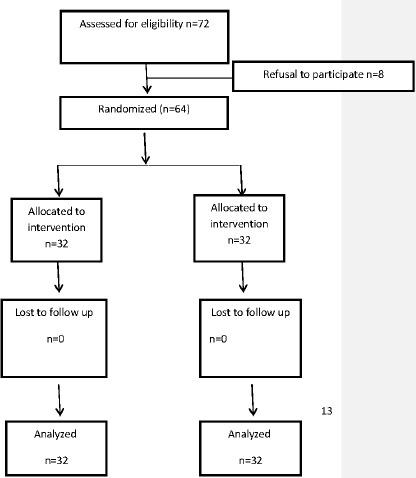
Patients scheduled for the day care unilateral inguinal hernia repair were randomized to receive either saline and fentanyl 1 micro/kg(-1) (control group) or 8 mg dexamethasone with fentanyl 0.75 micro/kg(-1) (study group) immediately before induction of anesthesia in a double-blind clinical trial. Anesthesia technique and rescue analgesia regimen were standardized. Intraoperatively, pain was assessed based on hemodynamic variability and postoperatively by visual analog scale.
RESULTS
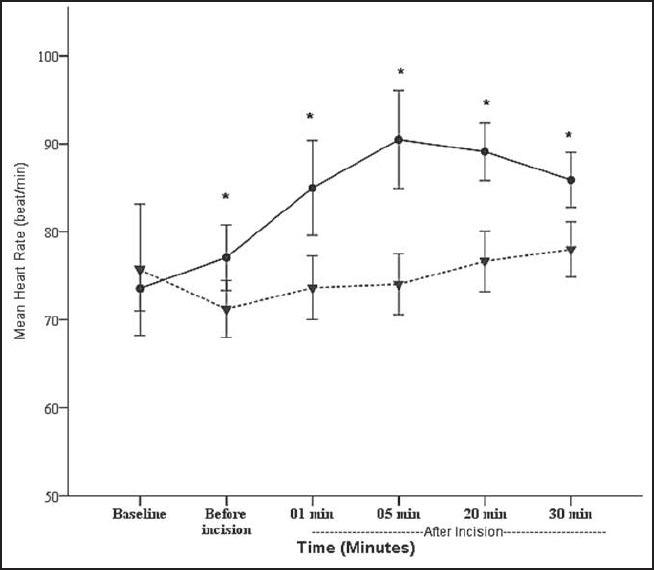
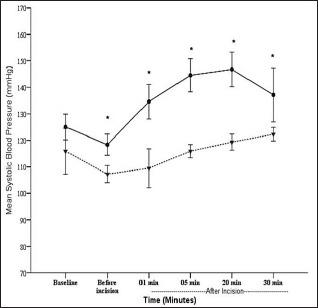
The mean heart rate, systolic and the diastolic blood pressure at 1, 5, 20 and at 30 min after incision, were significantly higher in the control group (P ≤ 0.001) when compared to the study group. Intra-operative rescue analgesia was required in 32 (100%) and 19 (59.4%) patients in control group and study group respectively (P = 0.0002). Mean pain scores measured at fixed time periods postoperatively were significantly higher in the control group when compared to study group (P ≤ 0.001). Postoperative rescue analgesia was needed in 32 (100%) versus 24 (75%) patients in the control group and study group respectively, but this difference was not statistically significant (P = 0.285).
CONCLUSION
We conclude that the addition of 8 mg of preoperative intravenous dexamethasone to 0.75 micro/kg(-1) fentanyl was effective in reducing intraoperative and postoperative pain in the 1(st) h after unilateral inguinal hernia surgery.
背景与目的
阿片类药物常用于提供围手术期镇痛,但有许多副作用。添加辅助镇痛药可降低阿片类药物的剂量,从而减少其副作用。本研究的目的是比较在日间手术单侧腹股沟疝修补患者中,单独使用芬太尼(1微克/千克⁻¹)与芬太尼(0.75微克/千克⁻¹)和地塞米松(8毫克)联合使用的镇痛效果。
材料与方法
在一项双盲临床试验中,将计划进行日间手术单侧腹股沟疝修补的患者随机分为两组,在麻醉诱导前立即分别接受生理盐水和1微克/千克⁻¹芬太尼(对照组)或8毫克地塞米松与0.75微克/千克⁻¹芬太尼(研究组)。麻醉技术和补救镇痛方案标准化。术中,根据血流动力学变化评估疼痛,术后通过视觉模拟评分法评估。
结果
与研究组相比,对照组在切口后1、5、20和30分钟时的平均心率、收缩压和舒张压显著更高(P≤0.001)。对照组和研究组分别有32例(100%)和19例(59.4%)患者需要术中补救镇痛(P = 0.0002)。与研究组相比,对照组术后固定时间段测量的平均疼痛评分显著更高(P≤0.001)。对照组和研究组分别有32例(100%)和24例(75%)患者需要术后补救镇痛,但这种差异无统计学意义(P = 0.285)。
结论
我们得出结论,术前静脉注射8毫克地塞米松与0.75微克/千克⁻¹芬太尼联合使用,可有效减轻单侧腹股沟疝手术后第1小时的术中及术后疼痛。

 Zotero 插件