
阿米洛利在大鼠福尔马林试验中的脊髓抗伤害感受作用及其与替扎尼定的相互作用。
Spinal antinociceptive action of amiloride and its interaction with tizanidine in the rat formalin test.
作者信息
Ouyang Handong, Wang Peizong, Huang Wan, Li Qiang, Nie Bilin, Zeng Weian
出版信息
Pain Res Manag. 2015 Nov-Dec;20(6):321-6. doi: 10.1155/2015/902914. Epub 2015 Sep 10.
BACKGROUND
Amiloride has been reported to produce a wide variety of actions, thereby affecting several ionic channels and a multitude of receptors and enzymes. Intrathecal α2-adrenergic receptor agonists produce pronounced analgesia, and amiloride modulates α2-adrenergic receptor agonist binding and function, acting via the allosteric site on the α2A-adrenergic receptor.
OBJECTIVES
To investigate the antinociceptive interaction of intrathecal amiloride and the α2-adrenoceptor agonist tizanidine using a rat formalin test.
METHODS
Sprague-Dawley rats were chronically implanted with lumbar intrathecal catheters and were tested for paw flinching using formalin injection. Biphasic painful behaviour was recorded. Amiloride, tizanidine or an amiloride-tizanidine mixture was administered 10 min before formalin injection. To characterize any interactions, isobolographic analysis was performed. The effects of a pretreatment using intrathecally administered yohimbine was also tested.
RESULTS
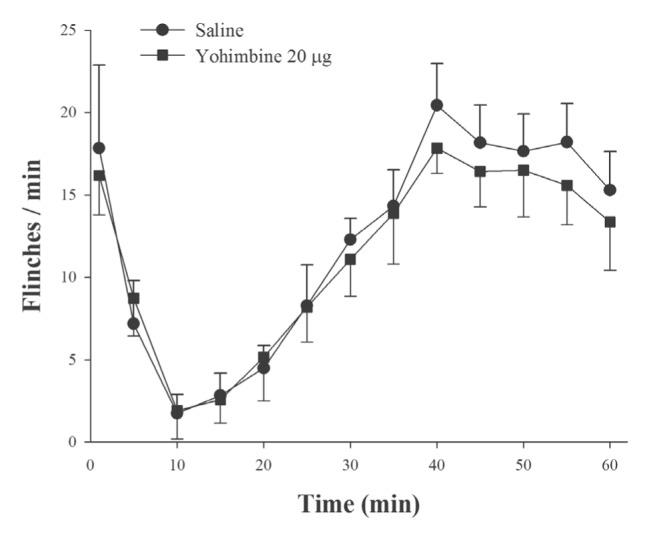
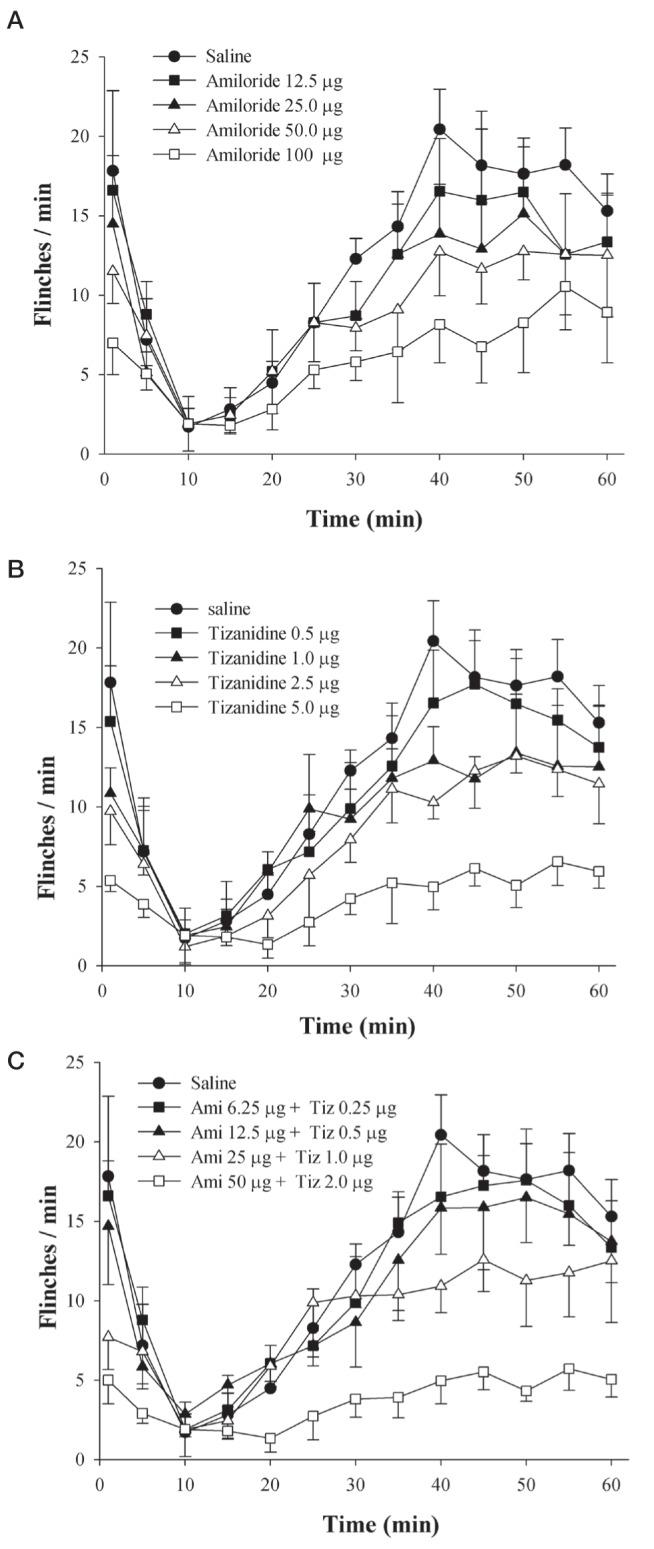
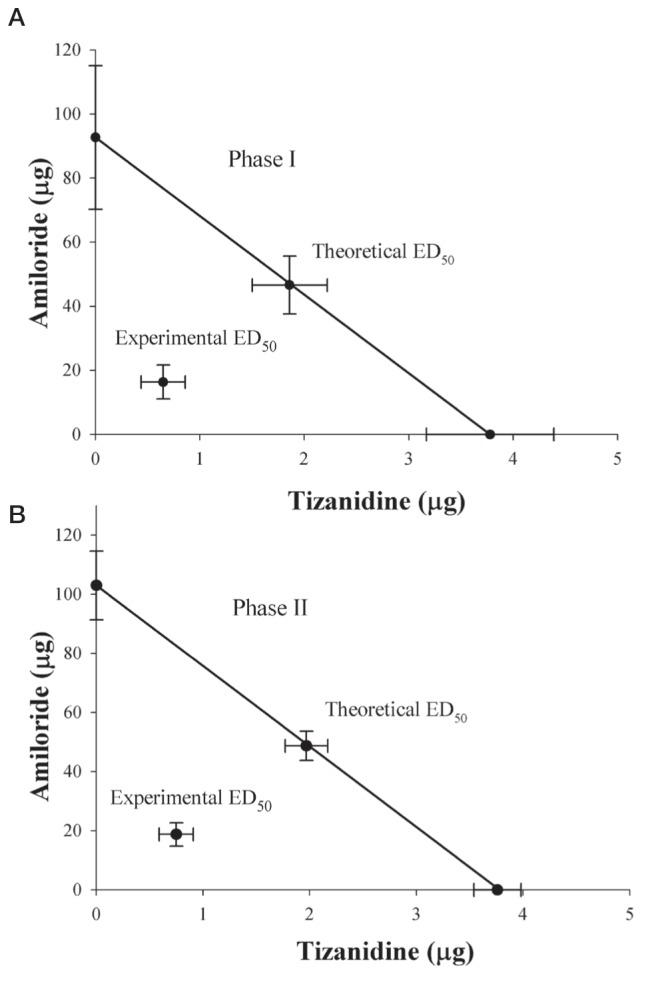
Intrathecally administered amiloride (12.5 μg to 100 μg) and tizanidine (0.5 μg to 5 μg), given separately, produced a significant dose-related suppression of the biphasic responses in the formalin test. Isobolographic analysis revealed that the combination of intrathecal amiloride and tizanidine synergistically reduced phase I and II activities. Intrathecally administered yohimbine antagonized or attenuated the antinociceptive effect of amiloride, tizanidine and the amiloride-tizanidine mixture. Intrathecally administered amiloride synergistically interacts with tizanidine to reduce the nociceptive response in the formalin test, most likely by activating α2-adrenoceptors in the spinal cord.
CONCLUSIONS
Although intrathecal tizanidine produced pronounced analgesia, antinociceptive doses of intrathecal tizanidine also produced several side effects, including bradycardia and sedation. Amiloride produced antinociceptive action against the thermal nociceptive test without side effects in rats.
背景
据报道,氨氯吡咪具有多种作用,从而影响多种离子通道以及众多受体和酶。鞘内注射α2 - 肾上腺素能受体激动剂可产生显著的镇痛作用,而氨氯吡咪可调节α2 - 肾上腺素能受体激动剂的结合及功能,通过作用于α2A - 肾上腺素能受体的变构位点发挥作用。
目的
采用大鼠福尔马林试验研究鞘内注射氨氯吡咪与α2 - 肾上腺素能受体激动剂替扎尼定的抗伤害感受相互作用。
方法
将Sprague - Dawley大鼠长期植入腰段鞘内导管,通过注射福尔马林测试其 paw 退缩情况。记录双相疼痛行为。在注射福尔马林前10分钟给予氨氯吡咪、替扎尼定或氨氯吡咪 - 替扎尼定混合物。为表征任何相互作用,进行了等效应线分析。还测试了鞘内注射育亨宾预处理的效果。
结果
单独鞘内注射氨氯吡咪(12.5μg至100μg)和替扎尼定(0.5μg至5μg)在福尔马林试验中均产生了显著的剂量相关的双相反应抑制。等效应线分析表明,鞘内注射氨氯吡咪和替扎尼定的组合可协同降低I期和II期活性。鞘内注射育亨宾可拮抗或减弱氨氯吡咪、替扎尼定及氨氯吡咪 - 替扎尼定混合物的抗伤害感受作用。鞘内注射氨氯吡咪与替扎尼定协同作用以降低福尔马林试验中的伤害感受反应,最可能是通过激活脊髓中的α2 - 肾上腺素能受体。
结论
尽管鞘内注射替扎尼定产生了显著的镇痛作用,但鞘内注射替扎尼定的抗伤害感受剂量也产生了多种副作用,包括心动过缓和镇静。氨氯吡咪对大鼠热伤害感受试验产生了抗伤害感受作用且无副作用。

 Zotero 插件