
有氧运动训练可增强体内胆固醇从巨噬细胞到肝脏的转运,且与巨噬细胞和主动脉中参与脂质通量的基因表达变化无关。
Aerobic exercise training enhances the in vivo cholesterol trafficking from macrophages to the liver independently of changes in the expression of genes involved in lipid flux in macrophages and aorta.
作者信息
Pinto Paula Ramos, Rocco Débora Dias Ferraretto Moura, Okuda Ligia Shimabukuro, Machado-Lima Adriana, Castilho Gabriela, da Silva Karolline Santana, Gomes Diego Juvenal, Pinto Raphael de Souza, Iborra Rodrigo Tallada, Ferreira Guilherme da Silva, Nakandakare Edna Regina, Machado Ubiratan Fabres, Correa-Giannella Maria Lucia Cardillo, Catanozi Sergio, Passarelli Marisa
机构信息
Lipids Laboratory (LIM - 10), University of São Paulo Medical School, Av. Dr. Arnaldo 455, room 3305, Sao Paulo, SP, CEP 01246000, Brazil.
Department of Physiology and Biophysics, Institute of Biomedical Sciences, University of Sao Paulo, São Paulo, Brazil.
出版信息
Lipids Health Dis. 2015 Sep 16;14:109. doi: 10.1186/s12944-015-0093-3.
BACKGROUND
Regular exercise prevents and regresses atherosclerosis by improving lipid metabolism and antioxidant defenses. Exercise ameliorates the reverse cholesterol transport (RCT), an antiatherogenic system that drives cholesterol from arterial macrophages to the liver for excretion into bile and feces. In this study we analyzed the role of aerobic exercise on the in vivo RCT and expression of genes and proteins involved in lipid flux and inflammation in peritoneal macrophages, aortic arch and liver from wild type mice.
METHODS
Twelve-week-old male mice were divided into sedentary and trained groups. Exercise training was performed in a treadmill (15 m/min, 30 min/day, 5 days/week). Plasma lipids were determined by enzymatic methods and lipoprotein profile by fast protein liquid chromatography. After intraperitoneal injection of J774-macrophages the RCT was assessed by measuring the recovery of (3)H-cholesterol in plasma, feces and liver. The expression of liver receptors was determined by immunoblot, macrophages and aortic mRNAs by qRT-PCR. (14)C-cholesterol efflux mediated by apo A-I and HDL2 and the uptake of (3)H-cholesteryl oleoyl ether ((3)H-COE)-acetylated-LDL were determined in macrophages isolated from sedentary and trained animals 48 h after the last exercise session.
RESULTS
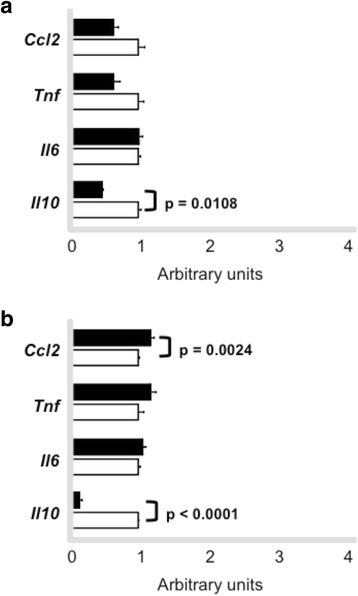
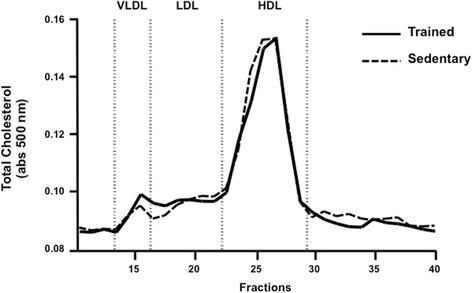
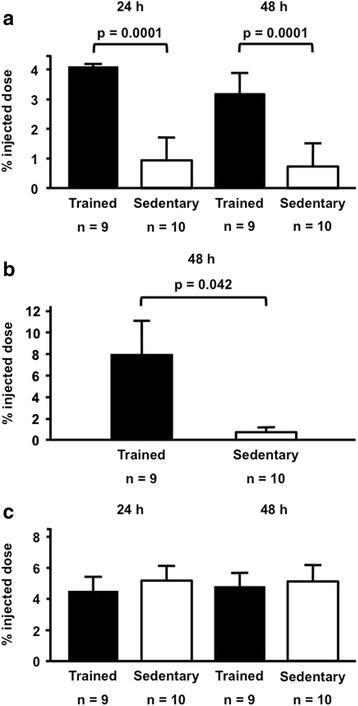
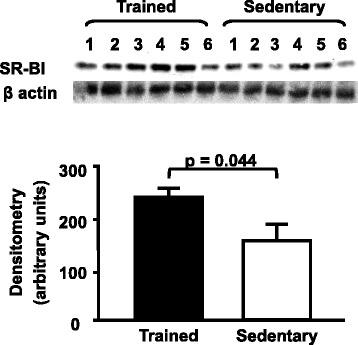
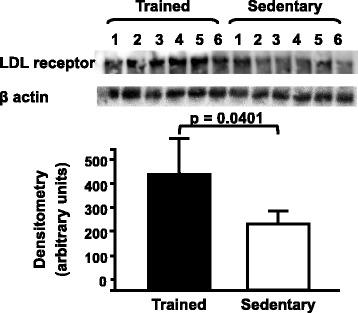
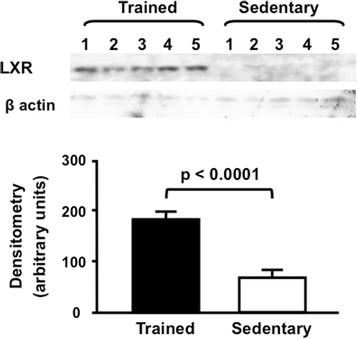
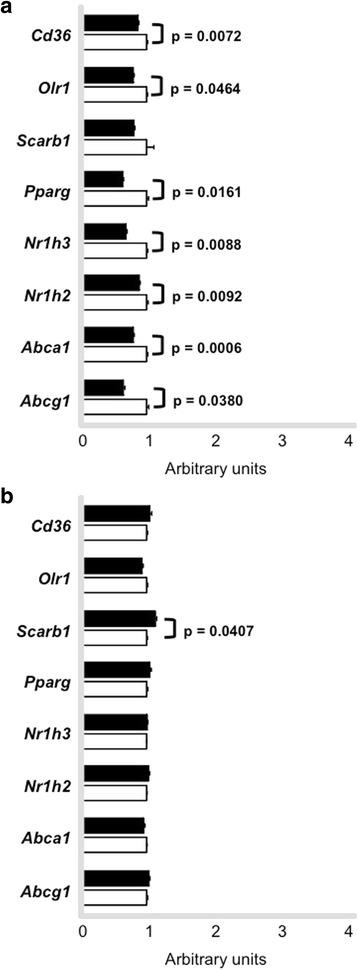
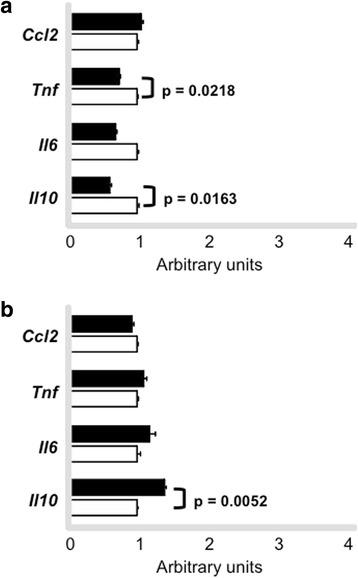
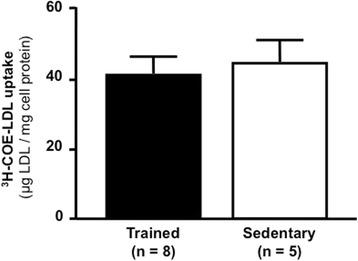
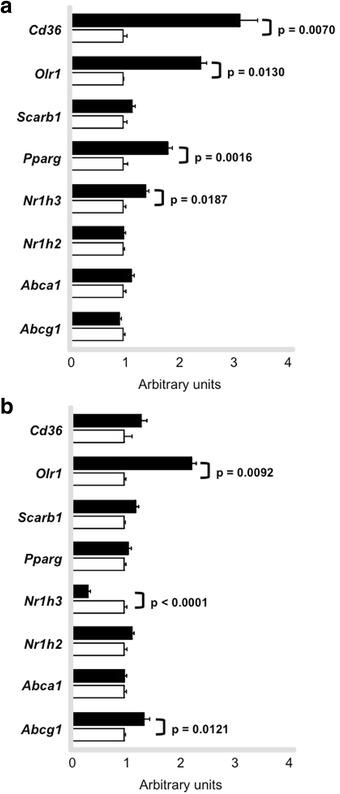
Body weight, plasma lipids, lipoprotein profile, glucose and blood pressure were not modified by exercise training. A greater amount of (3)H-cholesterol was recovered in plasma (24 h and 48 h) and liver (48 h) from trained animals in comparison to sedentary. No difference was found in (3)H-cholesterol excreted in feces between trained and sedentary mice. The hepatic expression of scavenger receptor class B type I (SR-BI) and LDL receptor (B-E) was enhanced by exercise. We observed 2.8 and 1.7 fold rise, respectively, in LXR and Cyp7a mRNA in the liver of trained as compared to sedentary mice. Macrophage and aortic expression of genes involved in lipid efflux was not systematically changed by physical exercise. In agreement, (14)C-cholesterol efflux and uptake of (3)H-COE-acetylated-LDL by macrophages was similar between sedentary and trained animals.
CONCLUSION
Aerobic exercise in vivo accelerates the traffic of cholesterol from macrophages to the liver contributing to prevention and regression of atherosclerosis, independently of changes in macrophage and aorta gene expression.
背景
规律运动可通过改善脂质代谢和抗氧化防御来预防和逆转动脉粥样硬化。运动可改善逆向胆固醇转运(RCT),这是一种抗动脉粥样硬化系统,可将胆固醇从动脉巨噬细胞转运至肝脏,以便排泄到胆汁和粪便中。在本研究中,我们分析了有氧运动对野生型小鼠体内RCT以及腹膜巨噬细胞、主动脉弓和肝脏中参与脂质通量和炎症的基因与蛋白质表达的作用。
方法
将12周龄雄性小鼠分为久坐组和训练组。在跑步机上进行运动训练(15米/分钟,每天30分钟,每周5天)。采用酶法测定血浆脂质,用快速蛋白质液相色谱法测定脂蛋白谱。腹腔注射J774巨噬细胞后,通过测量血浆、粪便和肝脏中(3)H -胆固醇的回收率来评估RCT。通过免疫印迹法测定肝脏受体的表达,用qRT - PCR法测定巨噬细胞和主动脉的mRNA。在最后一次运动训练48小时后,测定久坐和训练动物分离出的巨噬细胞中载脂蛋白A - I和HDL2介导的(14)C -胆固醇流出以及(3)H -胆固醇油酰醚((3)H - COE) - 乙酰化 - LDL的摄取。
结果
运动训练未改变体重、血浆脂质、脂蛋白谱、血糖和血压。与久坐小鼠相比,训练小鼠血浆(24小时和48小时)和肝脏(48小时)中回收的(3)H -胆固醇量更多。训练小鼠和久坐小鼠粪便中排泄的(3)H -胆固醇没有差异。运动可增强肝脏中I型清道夫受体(SR - BI)和低密度脂蛋白受体(B - E)的表达。与久坐小鼠相比,训练小鼠肝脏中LXR和Cyp7a mRNA分别升高了2.8倍和1.7倍。体育锻炼并未使巨噬细胞和主动脉中参与脂质流出的基因表达发生系统性改变。同样,久坐和训练动物的巨噬细胞中(14)C -胆固醇流出以及(3)H - COE - 乙酰化 - LDL的摄取相似。
结论
体内有氧运动可加速胆固醇从巨噬细胞向肝脏的转运,有助于预防和逆转动脉粥样硬化,且与巨噬细胞和主动脉基因表达的变化无关。


 Zotero 插件