
分娩期间的优质护理:对卫生系统瓶颈及潜在解决方案的多国分析
Quality care during labour and birth: a multi-country analysis of health system bottlenecks and potential solutions.
作者信息
Sharma Gaurav, Mathai Matthews, Dickson Kim E, Weeks Andrew, Hofmeyr G, Lavender Tina, Day Louise, Mathews Jiji, Fawcus Sue, Simen-Kapeu Aline, de Bernis Luc
出版信息
BMC Pregnancy Childbirth. 2015;15 Suppl 2(Suppl 2):S2. doi: 10.1186/1471-2393-15-S2-S2. Epub 2015 Sep 11.
BACKGROUND
Good outcomes during pregnancy and childbirth are related to availability, utilisation and effective implementation of essential interventions for labour and childbirth. The majority of the estimated 289,000 maternal deaths, 2.8 million neonatal deaths and 2.6 million stillbirths every year could be prevented by improving access to and scaling up quality care during labour and birth.
METHODS
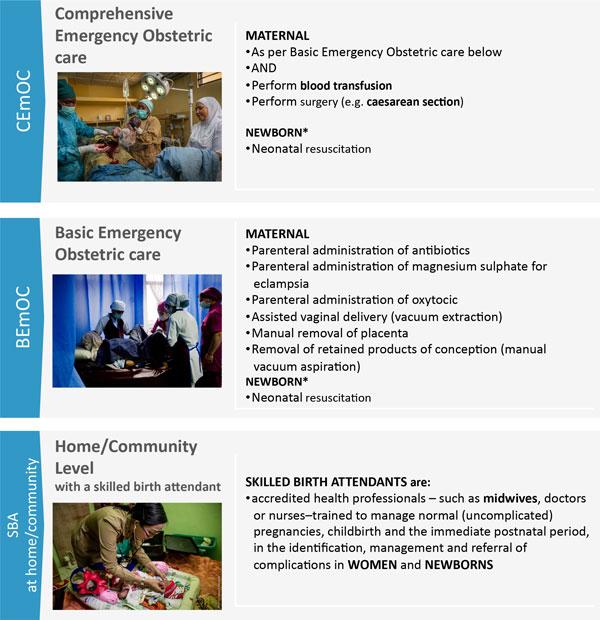
The bottleneck analysis tool was applied in 12 countries in Africa and Asia as part of the Every Newborn Action Plan process. Country workshops engaged technical experts to complete the survey tool, which is designed to synthesise and grade health system "bottlenecks", factors that hinder the scale up, of maternal-newborn intervention packages. We used quantitative and qualitative methods to analyse the bottleneck data, combined with literature review, to present priority bottlenecks and actions relevant to different health system building blocks for skilled birth attendance and basic and comprehensive emergency obstetric care.
RESULTS
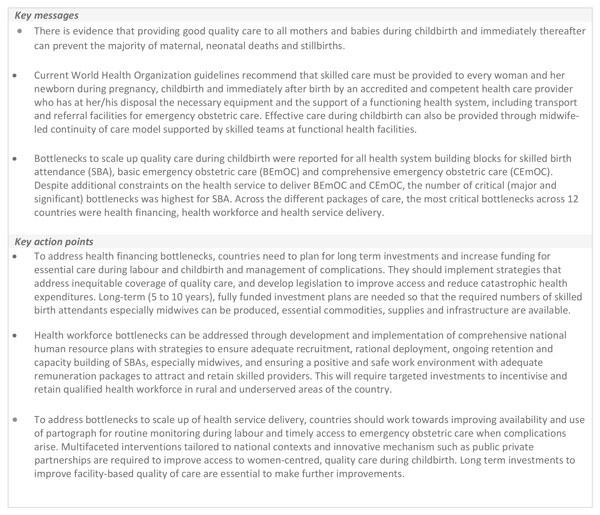
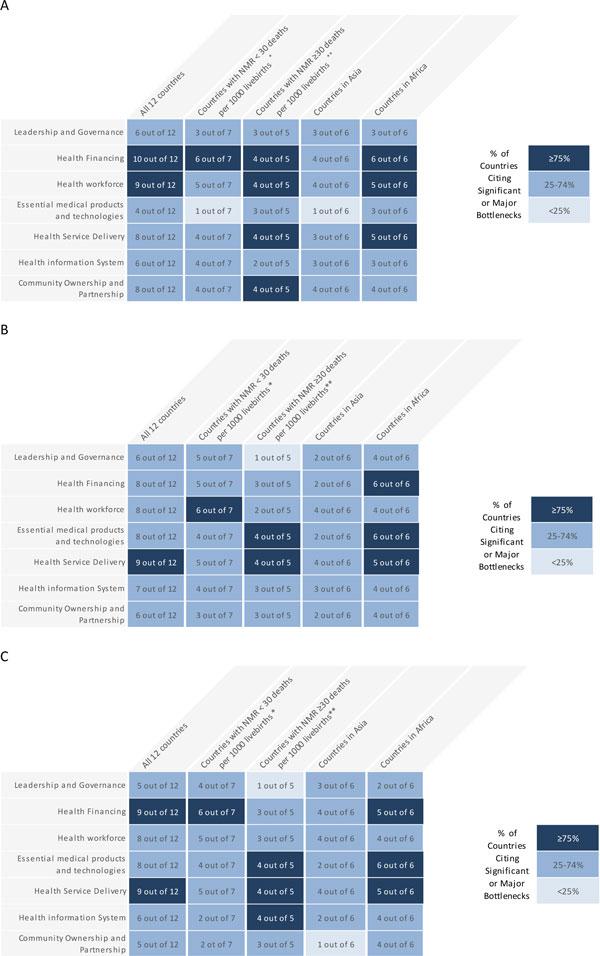
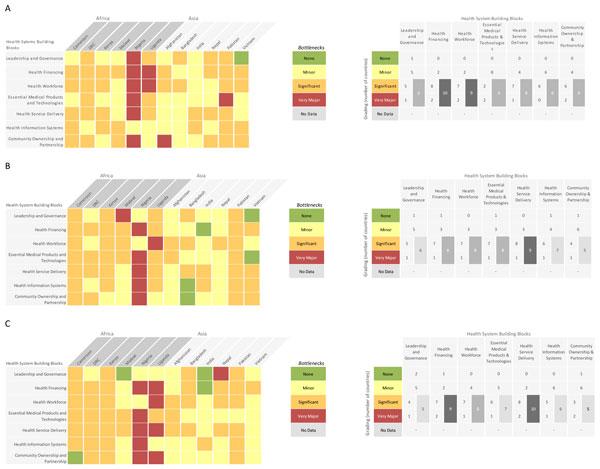
Across 12 countries the most critical bottlenecks identified by workshop participants for skilled birth attendance were health financing (10 out of 12 countries) and health workforce (9 out of 12 countries). Health service delivery bottlenecks were found to be the most critical for both basic and comprehensive emergency obstetric care (9 out of 12 countries); health financing was identified as having critical bottlenecks for comprehensive emergency obstetric care (9 out of 12 countries). Solutions to address health financing bottlenecks included strengthening national financing mechanisms and removing financial barriers to care seeking. For addressing health workforce bottlenecks, improved human resource planning is needed, including task shifting and improving training quality. For health service delivery, proposed solutions included improving quality of care and establishing public private partnerships.
CONCLUSIONS
Progress towards the 2030 targets for ending preventable maternal and newborn deaths is dependent on improving quality of care during birth and the immediate postnatal period. Strengthening national health systems to improve maternal and newborn health, as a cornerstone of universal health coverage, will only be possible by addressing specific health system bottlenecks during labour and birth, including those within health workforce, health financing and health service delivery.
背景
妊娠和分娩期间的良好结局与分娩基本干预措施的可及性、利用率及有效实施相关。每年估计的28.9万例孕产妇死亡、280万例新生儿死亡和260万例死产中,大多数可通过改善分娩期间的医疗服务可及性及扩大优质护理规模来预防。
方法
作为“每个新生儿行动计划”进程的一部分,瓶颈分析工具在非洲和亚洲的12个国家应用。国家研讨会邀请技术专家完成该调查工具,该工具旨在综合并分级卫生系统的“瓶颈”,即阻碍孕产妇-新生儿干预包扩大规模的因素。我们采用定量和定性方法分析瓶颈数据,并结合文献综述,以呈现与不同卫生系统组成部分相关的优先瓶颈及行动,这些组成部分涉及熟练接生和基本及全面的紧急产科护理。
结果
在12个国家中,研讨会参与者确定的熟练接生最关键瓶颈是卫生筹资(12个国家中的10个)和卫生人力(12个国家中的9个)。卫生服务提供瓶颈被发现对基本和全面的紧急产科护理而言都是最关键的(12个国家中的9个);卫生筹资被确定为全面紧急产科护理存在关键瓶颈(12个国家中的9个)。解决卫生筹资瓶颈的办法包括加强国家筹资机制及消除就医的经济障碍。为解决卫生人力瓶颈,需要改进人力资源规划,包括任务转移和提高培训质量。对于卫生服务提供,提议的解决办法包括提高护理质量和建立公私伙伴关系。
结论
实现到2030年消除可预防的孕产妇和新生儿死亡目标的进展取决于提高分娩期间及产后即刻的护理质量。加强国家卫生系统以改善孕产妇和新生儿健康,作为全民健康覆盖的基石,只有通过解决分娩期间的特定卫生系统瓶颈才有可能实现,这些瓶颈包括卫生人力、卫生筹资和卫生服务提供方面的瓶颈。

 Zotero 插件