
白细胞介素-1β通过CXCL1-CXCR2轴在口腔癌中反式激活表皮生长因子受体。
Interleukin-1 beta transactivates epidermal growth factor receptor via the CXCL1-CXCR2 axis in oral cancer.
作者信息
Lee Chia-Huei, Syu Shih-Han, Liu Ko-Jiunn, Chu Pei-Yi, Yang Wen-Chan, Lin Pinpin, Shieh Wan-Yu
机构信息
National Institute of Cancer Research, National Health Research Institutes, Zhunan, Taiwan.
School of Medicine, College of Medicine, Fu Jen Catholic University, New Taipei City, Taiwan.
出版信息
Oncotarget. 2015 Nov 17;6(36):38866-80. doi: 10.18632/oncotarget.5640.
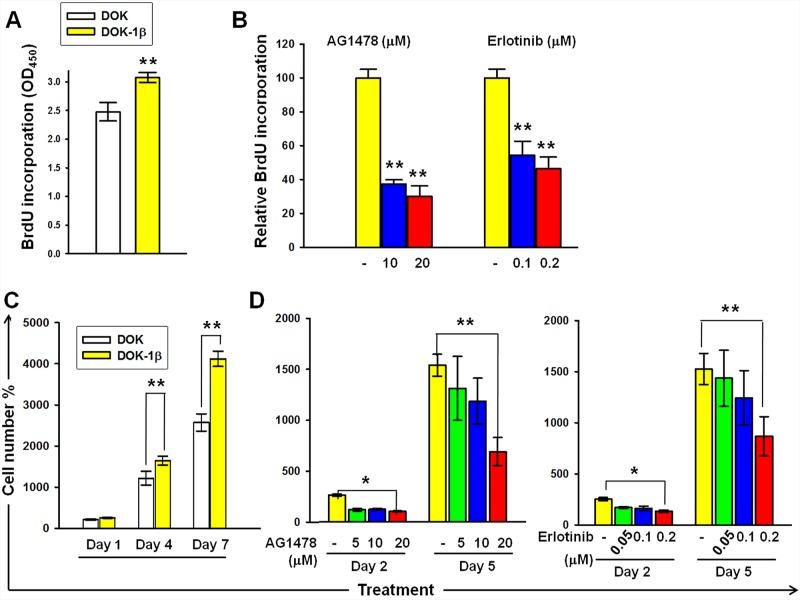
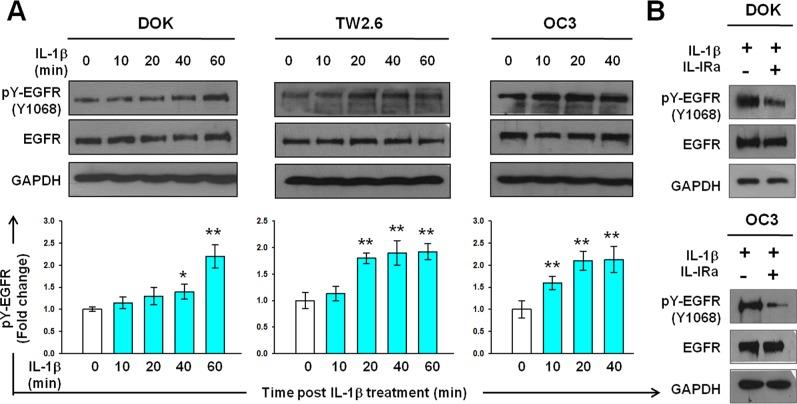
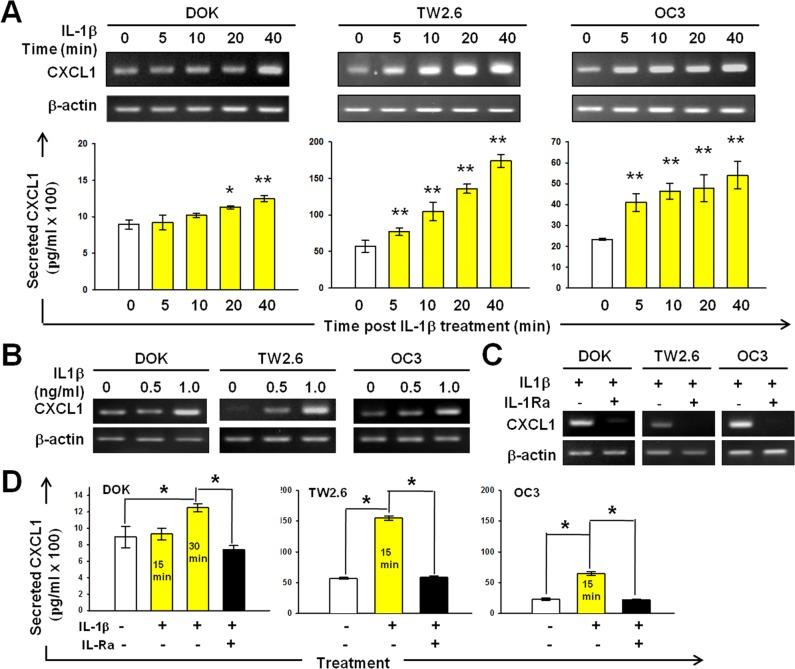
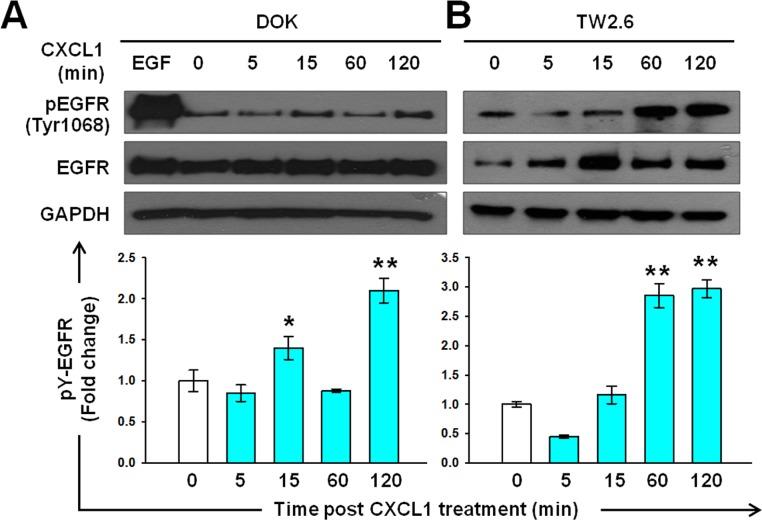
Hyperactivation of the epidermal growth factor receptor (EGFR) pathways and chronic inflammation are common characteristics of oral squamous cell carcinoma (OSCC). Previously, we reported that OSCC cells secrete interleukin-1 beta (IL-1β), which promotes the proliferation of the oral premalignant cell line, DOK, and stimulates DOK and OSCC cells to produce the chemokine CXCL1. CXCL1 functions through CXCR2, a G protein-coupled receptor that transactivates EGFR in ovarian and lung cancers. We hypothesized that IL-1β transactivates EGFR through the CXCL1-CXCR2 axis in OSCC. In this study, we demonstrated that tyrosine phosphorylation of EGFR is crucial for the IL-1β-mediated proliferation and subsequent bromodeoxyuridine (BrdU) incorporation of DOK cells because the EGFR inhibitors AG1478 and erlotinib inhibit these abilities in a dose-dependent manner. Addition of IL-1β instantly enhanced CXCL1 expression and secretion (within 15 min) in the DOK and OSCC cell lines. Furthermore, tyrosine phosphorylation of EGFR was significantly enhanced in DOK (1 h) and OSCC (20 min) cell lines after IL-1β treatment, and both cell lines were inhibited on the addition of an IL-1 receptor antagonist (IL-1Ra). CXCL1 treatment resulted in EGFR phosphorylation, whereas the knockdown of CXCL1 expression by lentivirus-mediated shRNA or the addition of the CXCR2 antagonist SB225002 dramatically reduced IL-1β-mediated EGFR phosphorylation and proliferation of DOK cells. Neutralizing antibodies against IL-1β or CXCL1 markedly inhibited the constitutive or IL-1β-induced tyrosine phosphorylation of EGFR in OSCC cells. IL-1β transactivates EGFR through the CXCL1-CXCR2 axis, revealing a novel molecular network in OSCC that is associated with autocrine IL-1β and EGFR signaling.
表皮生长因子受体(EGFR)通路的过度激活和慢性炎症是口腔鳞状细胞癌(OSCC)的常见特征。此前,我们报道过OSCC细胞分泌白细胞介素-1β(IL-1β),其可促进口腔癌前细胞系DOK的增殖,并刺激DOK和OSCC细胞产生趋化因子CXCL1。CXCL1通过CXCR2发挥作用,CXCR2是一种G蛋白偶联受体,可在卵巢癌和肺癌中反式激活EGFR。我们推测IL-1β在OSCC中通过CXCL1-CXCR2轴反式激活EGFR。在本研究中,我们证明EGFR的酪氨酸磷酸化对于IL-1β介导的DOK细胞增殖及随后的溴脱氧尿苷(BrdU)掺入至关重要,因为EGFR抑制剂AG1478和厄洛替尼以剂量依赖性方式抑制这些能力。添加IL-1β可立即增强DOK和OSCC细胞系中CXCL1的表达和分泌(15分钟内)。此外,IL-1β处理后,DOK(1小时)和OSCC(20分钟)细胞系中EGFR的酪氨酸磷酸化显著增强,而添加白细胞介素-1受体拮抗剂(IL-1Ra)后,这两种细胞系均受到抑制。CXCL1处理导致EGFR磷酸化,而慢病毒介导的短发夹RNA(shRNA)敲低CXCLl表达或添加CXCR2拮抗剂SB225002可显著降低IL-1β介导的EGFR磷酸化及DOK细胞的增殖。抗IL-1β或CXCL1的中和抗体可显著抑制OSCC细胞中EGFR的组成型或IL-1β诱导的酪氨酸磷酸化。IL-1β通过CXCL1-CXCR2轴反式激活EGFR,揭示了OSCC中一个与自分泌IL-1β和EGFR信号传导相关的新型分子网络。




 Zotero 插件