
慢性阻塞性肺疾病(COPD)中鞘氨醇-1-磷酸(S1P)系统与肺泡巨噬细胞吞噬功能缺陷之间的潜在联系。
Potential Link between the Sphingosine-1-Phosphate (S1P) System and Defective Alveolar Macrophage Phagocytic Function in Chronic Obstructive Pulmonary Disease (COPD).
作者信息
Barnawi Jameel, Tran Hai, Jersmann Hubertus, Pitson Stuart, Roscioli Eugene, Hodge Greg, Meech Robyn, Haberberger Rainer, Hodge Sandra
机构信息
Lung Research, Hanson Institute, Adelaide, Australia; Dept of Medicine, University of Adelaide, Adelaide, Australia; Dept Medical Laboratory Technology, University of Tabuk, Tabuk, Saudi Arabia.
Lung Research, Hanson Institute, Adelaide, Australia.
出版信息
PLoS One. 2015 Oct 20;10(10):e0122771. doi: 10.1371/journal.pone.0122771. eCollection 2015.
INTRODUCTION
We previously reported that alveolar macrophages from patients with chronic obstructive pulmonary disease (COPD) are defective in their ability to phagocytose apoptotic cells, with a similar defect in response to cigarette smoke. The exact mechanisms for this defect are unknown. Sphingolipids including ceramide, sphingosine and sphingosine-1-phosphate (S1P) are involved in diverse cellular processes and we hypothesised that a comprehensive analysis of this system in alveolar macrophages in COPD may help to delineate the reasons for defective phagocytic function.
METHODS
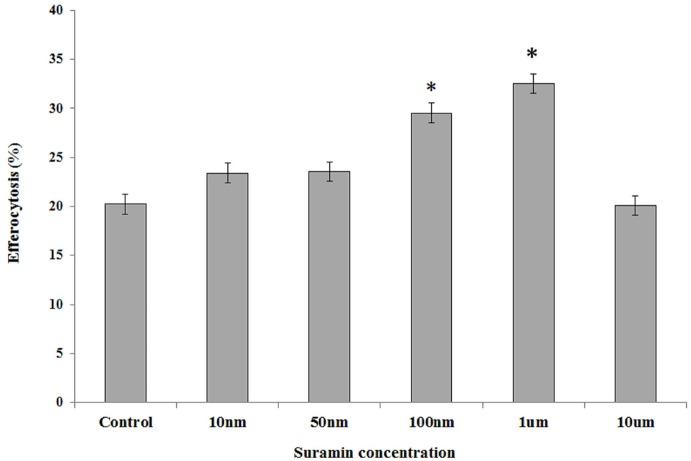
We compared mRNA expression of sphingosine kinases (SPHK1/2), S1P receptors (S1PR1-5) and S1P-degrading enzymes (SGPP1, SGPP2, SGPL1) in bronchoalveolar lavage-derived alveolar macrophages from 10 healthy controls, 7 healthy smokers and 20 COPD patients (10 current- and 10 ex-smokers) using Real-Time PCR. Phagocytosis of apoptotic cells was investigated using flow cytometry. Functional associations were assessed between sphingosine signalling system components and alveolar macrophage phagocytic ability in COPD. To elucidate functional effects of increased S1PR5 on macrophage phagocytic ability, we performed the phagocytosis assay in the presence of varying concentrations of suramin, an antagonist of S1PR3 and S1PR5. The effects of cigarette smoking on the S1P system were investigated using a THP-1 macrophage cell line model.
RESULTS
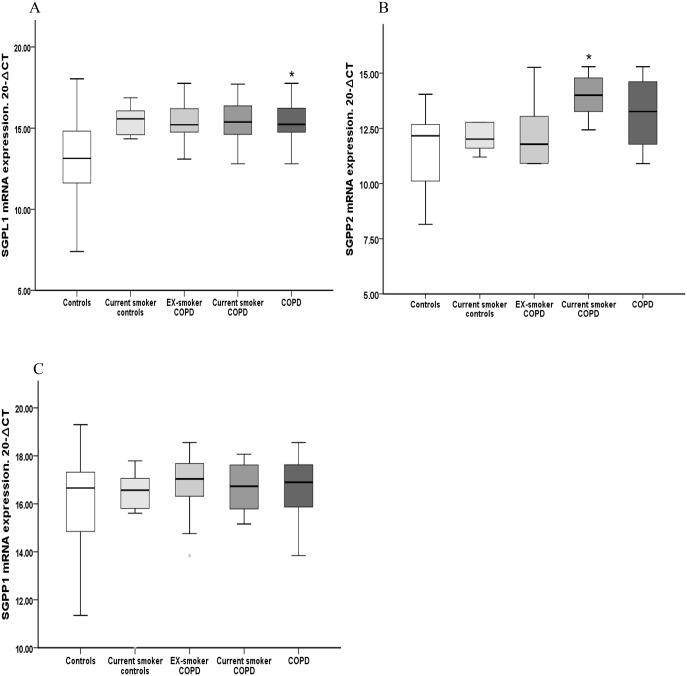
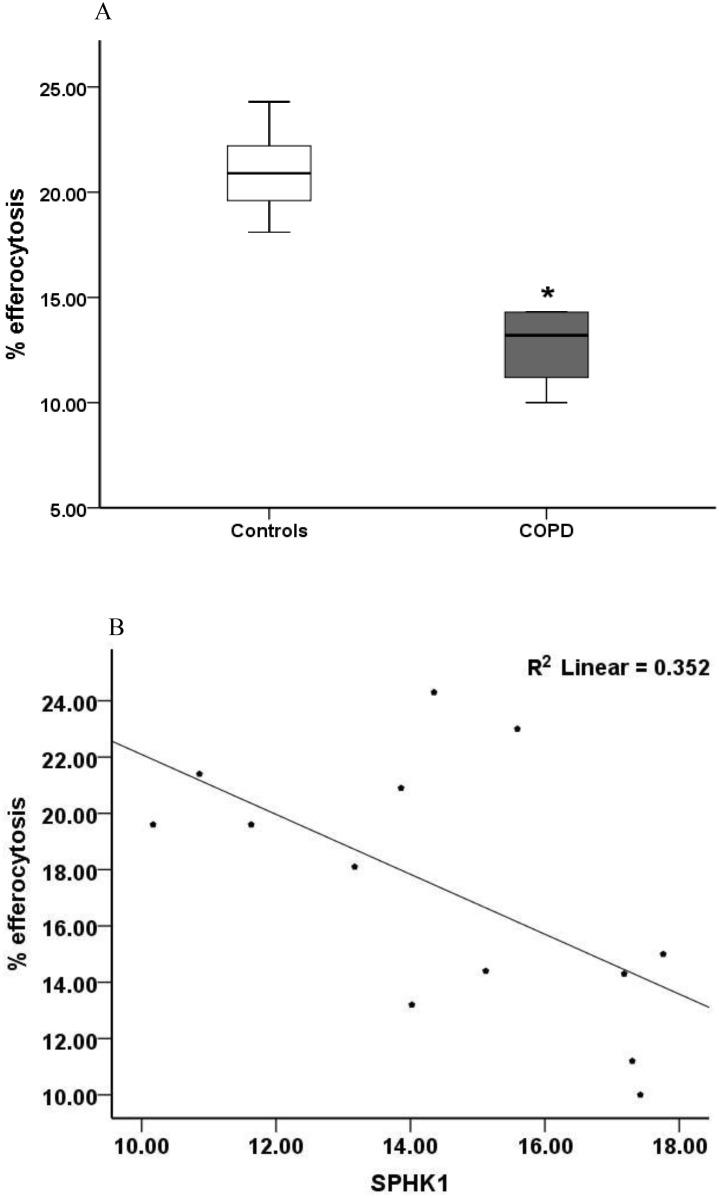
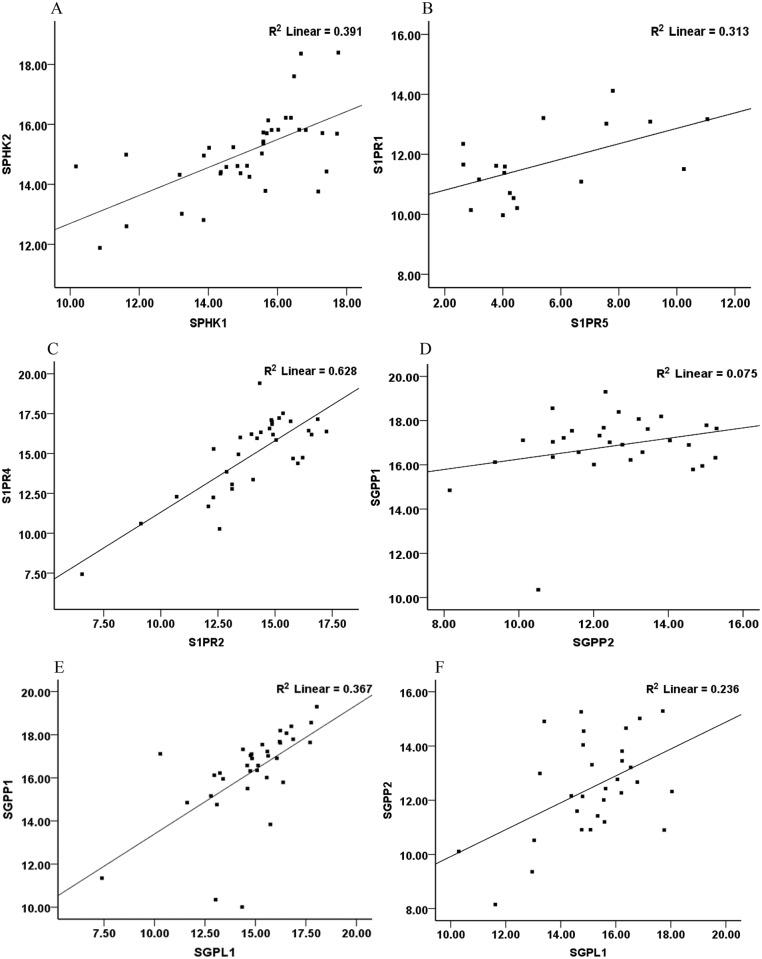
We found significant increases in SPHK1/2 (3.4- and 2.1-fold increases respectively), S1PR2 and 5 (4.3- and 14.6-fold increases respectively), and SGPL1 (4.5-fold increase) in COPD vs. controls. S1PR5 and SGPL1 expression was unaffected by smoking status, suggesting a COPD "disease effect" rather than smoke effect per se. Significant associations were noted between S1PR5 and both lung function and phagocytosis. Cigarette smoke extract significantly increased mRNA expression of SPHK1, SPHK2, S1PR2 and S1PR5 by THP-1 macrophages, confirming the results in patient-derived macrophages. Antagonising SIPR5 significantly improved phagocytosis.
CONCLUSION
Our results suggest a potential link between the S1P signalling system and defective macrophage phagocytic function in COPD and advise therapeutic targets.
引言
我们之前报道过,慢性阻塞性肺疾病(COPD)患者的肺泡巨噬细胞吞噬凋亡细胞的能力存在缺陷,对香烟烟雾的反应也有类似缺陷。这种缺陷的确切机制尚不清楚。包括神经酰胺、鞘氨醇和1-磷酸鞘氨醇(S1P)在内的鞘脂参与多种细胞过程,我们推测对COPD患者肺泡巨噬细胞中该系统进行全面分析可能有助于阐明吞噬功能缺陷的原因。
方法
我们使用实时定量聚合酶链反应(Real-Time PCR)比较了10名健康对照者、7名健康吸烟者和20名COPD患者(10名现吸烟者和10名既往吸烟者)支气管肺泡灌洗获得的肺泡巨噬细胞中鞘氨醇激酶(SPHK1/2)、S1P受体(S1PR1 - 5)和S1P降解酶(SGPP1、SGPP2、SGPL1)的mRNA表达。使用流式细胞术研究凋亡细胞的吞噬作用。评估COPD患者中鞘氨醇信号系统成分与肺泡巨噬细胞吞噬能力之间的功能关联。为了阐明S1PR5增加对巨噬细胞吞噬能力的功能影响,我们在存在不同浓度苏拉明(一种S1PR3和S1PR5拮抗剂)的情况下进行吞噬试验。使用THP - 1巨噬细胞系模型研究吸烟对S1P系统的影响。
结果
我们发现,与对照组相比,COPD患者中SPHK1/2(分别增加3.4倍和2.1倍)、S1PR2和5(分别增加4.3倍和14.6倍)以及SGPL1(增加4.5倍)显著增加。S1PR5和SGPL1的表达不受吸烟状态影响,提示这是COPD的“疾病效应”而非吸烟本身的效应。S1PR5与肺功能和吞噬作用之间均存在显著关联。香烟烟雾提取物显著增加THP - 1巨噬细胞中SPHK1、SPHK2、S1PR2和S1PR5的mRNA表达,证实了在患者来源巨噬细胞中的结果。拮抗SIPR5可显著改善吞噬作用。
结论
我们的结果提示S1P信号系统与COPD中巨噬细胞吞噬功能缺陷之间存在潜在联系,并为治疗靶点提供了建议。



 Zotero 插件