
在大鼠血脑屏障原代三重共培养模型中,银纳米颗粒可诱导紧密连接破坏和星形胶质细胞神经毒性。
Silver nanoparticles induce tight junction disruption and astrocyte neurotoxicity in a rat blood-brain barrier primary triple coculture model.
作者信息
Xu Liming, Dan Mo, Shao Anliang, Cheng Xiang, Zhang Cuiping, Yokel Robert A, Takemura Taro, Hanagata Nobutaka, Niwa Masami, Watanabe Daisuke
机构信息
National Institutes for Food and Drug Control, No 2, Temple of Heaven, Beijing, People's Republic of China ; School of Information and Engineering, Wenzhou Medical University, Wenzhou, People's Republic of China.
National Institutes for Food and Drug Control, No 2, Temple of Heaven, Beijing, People's Republic of China.
出版信息
Int J Nanomedicine. 2015 Sep 29;10:6105-18. doi: 10.2147/IJN.S85265. eCollection 2015.
BACKGROUND
Silver nanoparticles (Ag-NPs) can enter the brain and induce neurotoxicity. However, the toxicity of Ag-NPs on the blood-brain barrier (BBB) and the underlying mechanism(s) of action on the BBB and the brain are not well understood.
METHOD
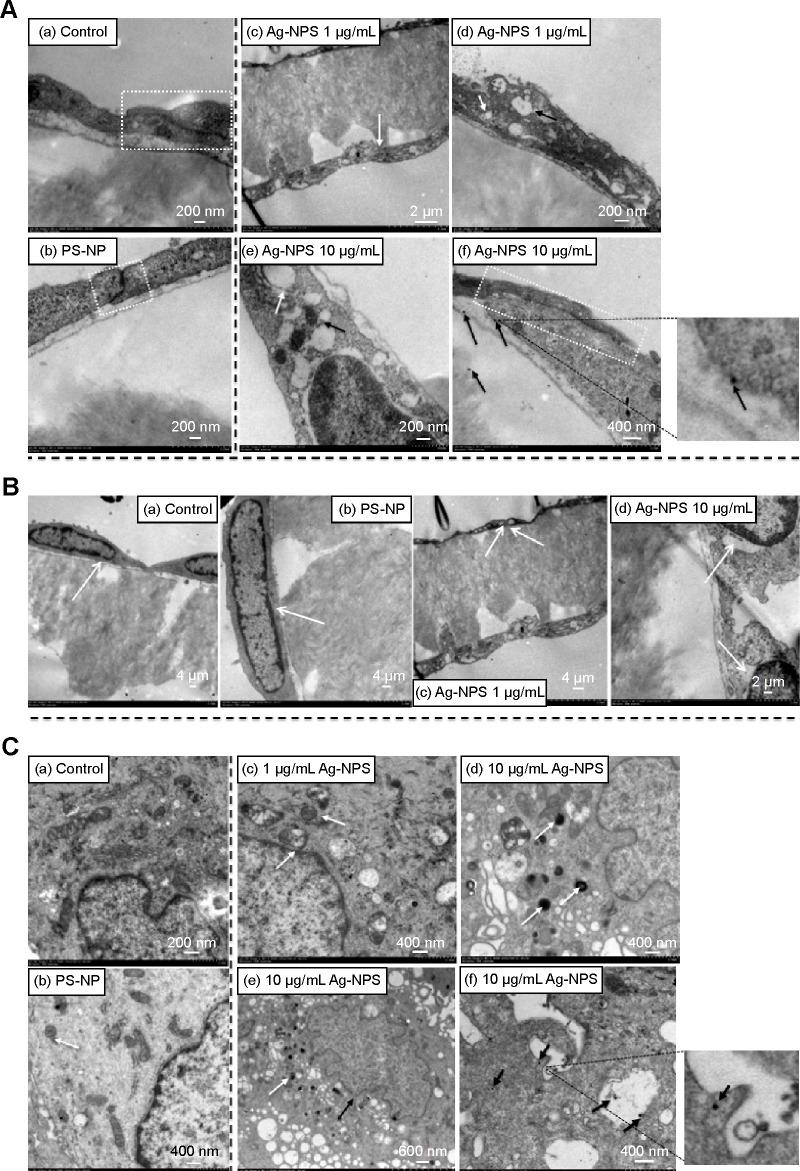
To investigate Ag-NP suspension (Ag-NPS)-induced toxicity, a triple coculture BBB model of rat brain microvascular endothelial cells, pericytes, and astrocytes was established. The BBB permeability and tight junction protein expression in response to Ag-NPS, NP-released Ag ions, and polystyrene-NP exposure were investigated. Ultrastructural changes of the microvascular endothelial cells, pericytes, and astrocytes were observed using transmission electron microscopy (TEM). Global gene expression of astrocytes was measured using a DNA microarray.
RESULTS
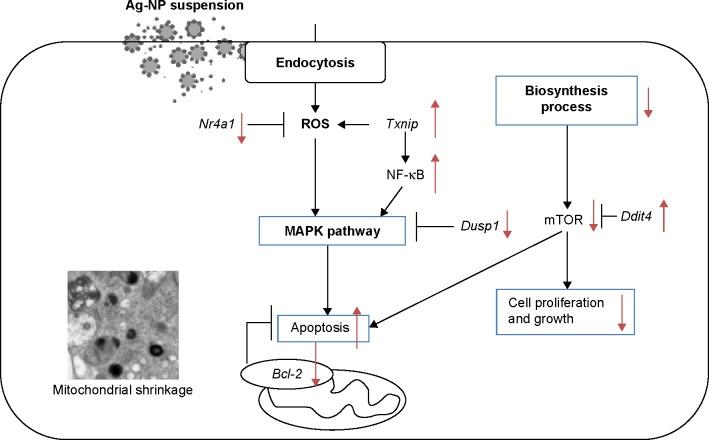
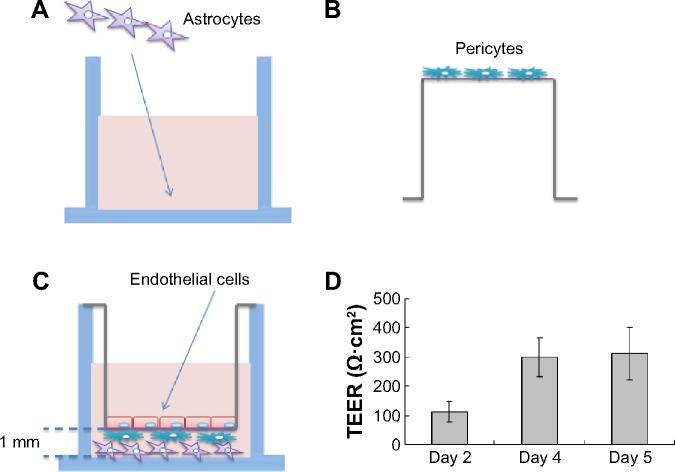
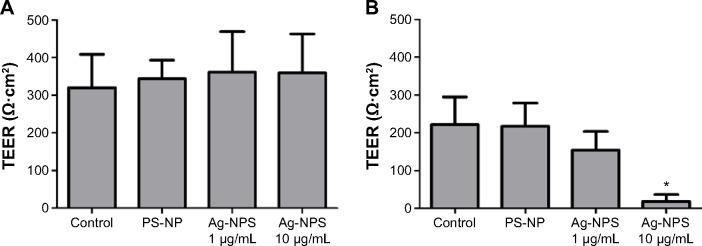
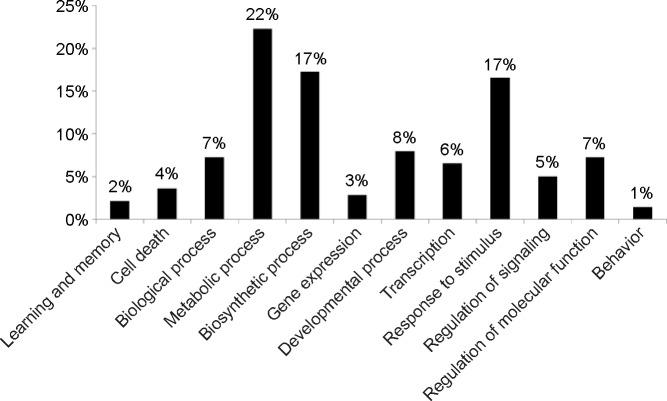
A triple coculture BBB model of primary rat brain microvascular endothelial cells, pericytes, and astrocytes was established, with the transendothelial electrical resistance values >200 Ω·cm(2). After Ag-NPS exposure for 24 hours, the BBB permeability was significantly increased and expression of the tight junction (TJ) protein ZO-1 was decreased. Discontinuous TJs were also observed between microvascular endothelial cells. After Ag-NPS exposure, severe mitochondrial shrinkage, vacuolations, endoplasmic reticulum expansion, and Ag-NPs were observed in astrocytes by TEM. Global gene expression analysis showed that three genes were upregulated and 20 genes were downregulated in astrocytes treated with Ag-NPS. Gene ontology (GO) and Kyoto Encyclopedia of Genes and Genomes (KEGG) pathway analysis showed that the 23 genes were associated with metabolic processes, biosynthetic processes, response to stimuli, cell death, the MAPK pathway, and so on. No GO term and KEGG pathways were changed in the released-ion or polystyrene-NP groups. Ag-NPS inhibited the antioxidant defense of the astrocytes by increasing thioredoxin interacting protein, which inhibits the Trx system, and decreasing Nr4a1 and Dusp1. Meanwhile, Ag-NPS induced inflammation and apoptosis through modulation of the MAPK pathway or B-cell lymphoma-2 expression or mTOR activity in astrocytes.
CONCLUSION
These results draw our attention to the importance of Ag-NP-induced toxicity on the neurovascular unit and provide a better understanding of its toxicological mechanisms on astrocytes.
背景
银纳米颗粒(Ag-NPs)可进入大脑并诱发神经毒性。然而,Ag-NPs对血脑屏障(BBB)的毒性以及其对BBB和大脑作用的潜在机制尚不清楚。
方法
为研究Ag-NP悬浮液(Ag-NPS)诱发的毒性,建立了大鼠脑微血管内皮细胞、周细胞和星形胶质细胞的三重共培养BBB模型。研究了Ag-NPS、NP释放的Ag离子和聚苯乙烯-NP暴露对BBB通透性和紧密连接蛋白表达的影响。使用透射电子显微镜(TEM)观察微血管内皮细胞、周细胞和星形胶质细胞的超微结构变化。使用DNA微阵列测量星形胶质细胞的整体基因表达。
结果
建立了原代大鼠脑微血管内皮细胞、周细胞和星形胶质细胞的三重共培养BBB模型,跨内皮电阻值>200Ω·cm²。Ag-NPS暴露24小时后,BBB通透性显著增加,紧密连接(TJ)蛋白ZO-1的表达降低。在微血管内皮细胞之间也观察到不连续的TJ。TEM观察显示,Ag-NPS暴露后,星形胶质细胞出现严重的线粒体收缩、空泡化、内质网扩张和Ag-NPs。整体基因表达分析表明,用Ag-NPS处理的星形胶质细胞中有3个基因上调,20个基因下调。基因本体(GO)和京都基因与基因组百科全书(KEGG)通路分析表明,这23个基因与代谢过程、生物合成过程、对刺激的反应、细胞死亡、MAPK通路等有关。释放离子组或聚苯乙烯-NP组的GO术语和KEGG通路没有变化。Ag-NPS通过增加抑制Trx系统的硫氧还蛋白相互作用蛋白、降低Nr4a1和Dusp1来抑制星形胶质细胞的抗氧化防御。同时,Ag-NPS通过调节星形胶质细胞中的MAPK通路或B细胞淋巴瘤-2表达或mTOR活性诱导炎症和凋亡。
结论
这些结果使我们关注到Ag-NP诱导的毒性对神经血管单元的重要性,并更好地理解了其对星形胶质细胞的毒理学机制。


 Zotero 插件