
用于体外和体内药物控释的头孢妥仑匹酯脂质体的制备与表征
Preparation and characterization of cefditoren pivoxil-loaded liposomes for controlled in vitro and in vivo drug release.
作者信息
Venugopalarao Gojjala, Lakshmipathy Rajasekhar, Sarada Nallani Chakravarthula
机构信息
Environmental and Analytical Chemistry Division, School of Advanced Sciences, VIT University, Vellore, India.
Centre for Material Science, KCG College of Technology, Chennai, India.
出版信息
Int J Nanomedicine. 2015 Oct 1;10 Suppl 1(Suppl 1):149-57. doi: 10.2147/IJN.S79994. eCollection 2015.
BACKGROUND
The application of antibiotics has been limited due to weak biodistribution and pharmacokinetics. Encapsulation of these drugs in lipid vesicles might be a good solution for obtaining the required properties. Liposomes are one of the most suitable drug-delivery systems to deliver the drug to the target organ and minimize the distribution of the drug to non-target tissues.
OBJECTIVE
The study reported here aimed to develop cefditoren pivoxil liposomes by thin-film hydration, characterize them in terms of physical interactions, and undertake in vitro and in vivo release studies.
METHODOLOGY
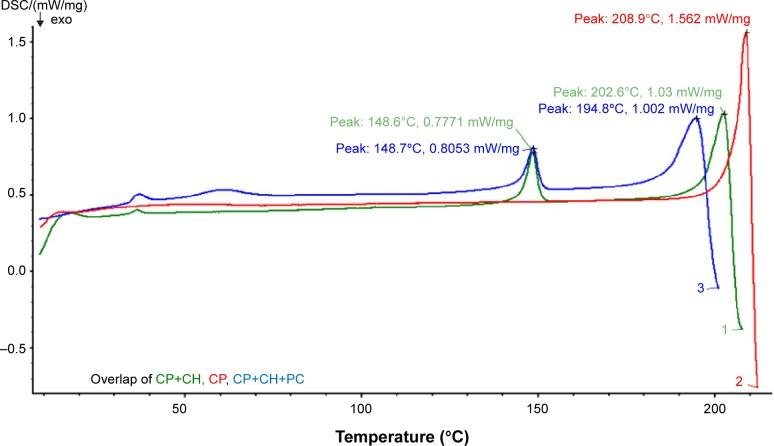
The pre-formulation studies were carried out using Fourier-transform infrared spectroscopy and differential scanning calorimetry. Cefditoren pivoxil liposomal formulations were formulated by thin-film hydration using biomaterials ie, soya lecithin and cholesterol in different molar ratios. The best molar ratio was determined by in vitro studies such as entrapment efficacy, particle size distribution, and diffusion.
RESULTS
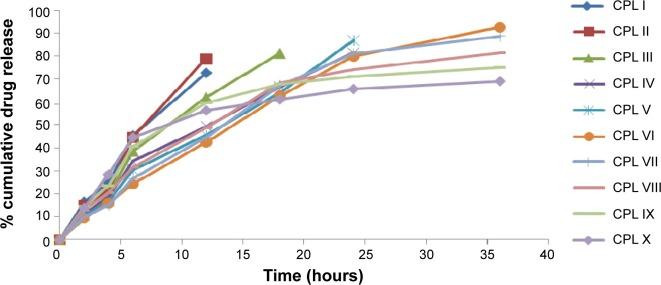
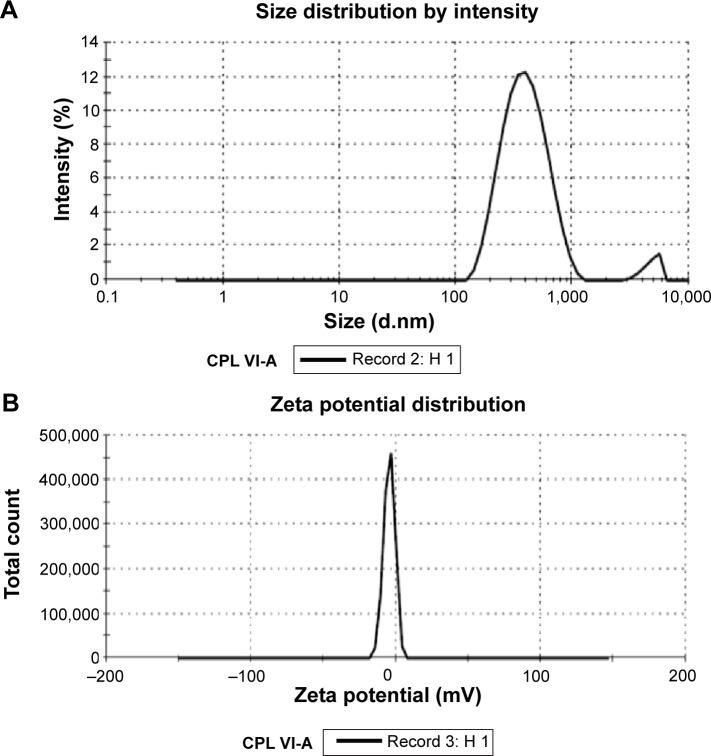
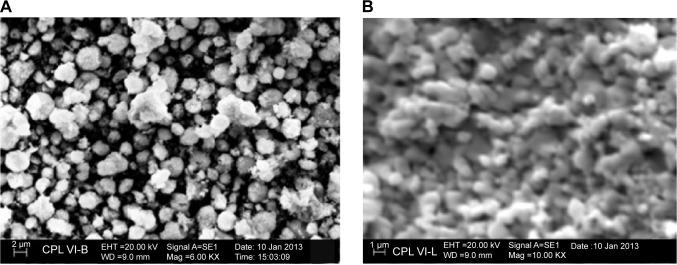
From the in vitro release studies, it was found that the formulation that contained soya lecithin and cholesterol in a 1.0:0.6 molar ratio gave good entrapment of 72.33% and drug release of 92.5% at 36 hours. Further, the formulation's zeta potential and surface morphology were examined and stability and in vivo studies were undertaken evaluating the pharmacokinetic parameters, which showed promising results.
CONCLUSION
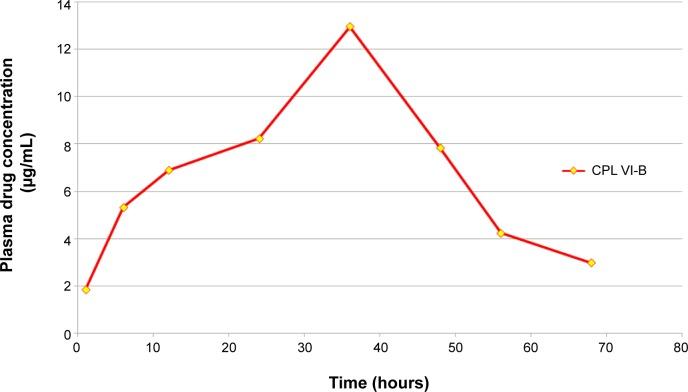
Formulation CPL VI showed the maximum drug-loading capacity of 72.3% with good controlled release and acceptable stability when compared with the other formulations. In vivo studies in rabbits showed that the drug release from the liposomes was successfully retarded with good controlled release behavior which can be used to treat many bacterial infections with a minimal dose.
背景
由于生物分布和药代动力学特性不佳,抗生素的应用受到限制。将这些药物包裹在脂质囊泡中可能是获得所需特性的良好解决方案。脂质体是将药物递送至靶器官并使药物在非靶组织中的分布最小化的最合适的药物递送系统之一。
目的
本文报道的研究旨在通过薄膜水化法制备头孢妥仑匹酯脂质体,对其物理相互作用进行表征,并进行体外和体内释放研究。
方法
采用傅里叶变换红外光谱和差示扫描量热法进行处方前研究。使用生物材料即大豆卵磷脂和胆固醇以不同摩尔比通过薄膜水化法制备头孢妥仑匹酯脂质体制剂。通过体外研究如包封率、粒径分布和扩散来确定最佳摩尔比。
结果
从体外释放研究中发现,含有摩尔比为1.0:0.6的大豆卵磷脂和胆固醇的制剂在36小时时具有72.33%的良好包封率和92.5%的药物释放率。此外,检查了制剂的zeta电位和表面形态,并进行了稳定性和体内研究以评估药代动力学参数,结果显示出良好的前景。
结论
与其他制剂相比,制剂CPL VI显示出最大载药量72.3%,具有良好的控释性能和可接受的稳定性。在兔体内的研究表明,脂质体中的药物释放成功延迟,具有良好的控释行为,可用于以最小剂量治疗多种细菌感染。
 Zotero 插件