
DNA腺嘌呤甲基转移酶的瞬时过表达可实现高效且可移动的基因组工程,同时减少脱靶效应。
Transient overexpression of DNA adenine methylase enables efficient and mobile genome engineering with reduced off-target effects.
作者信息
Lennen Rebecca M, Nilsson Wallin Annika I, Pedersen Margit, Bonde Mads, Luo Hao, Herrgård Markus J, Sommer Morten O A
机构信息
The Novo Nordisk Foundation Center for Biosustainability, Technical University of Denmark, Kogle Allé 6, 2970 Hørsholm, Denmark.
The Novo Nordisk Foundation Center for Biosustainability, Technical University of Denmark, Kogle Allé 6, 2970 Hørsholm, Denmark
出版信息
Nucleic Acids Res. 2016 Feb 29;44(4):e36. doi: 10.1093/nar/gkv1090. Epub 2015 Oct 22.
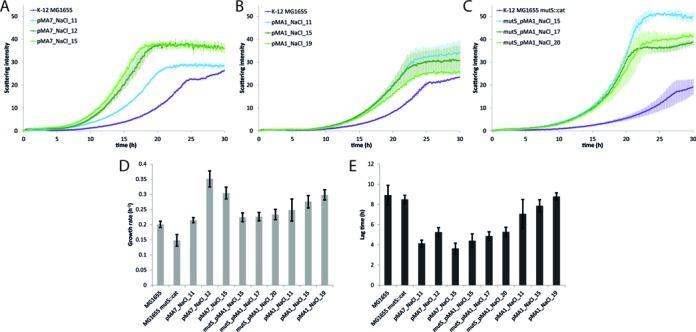
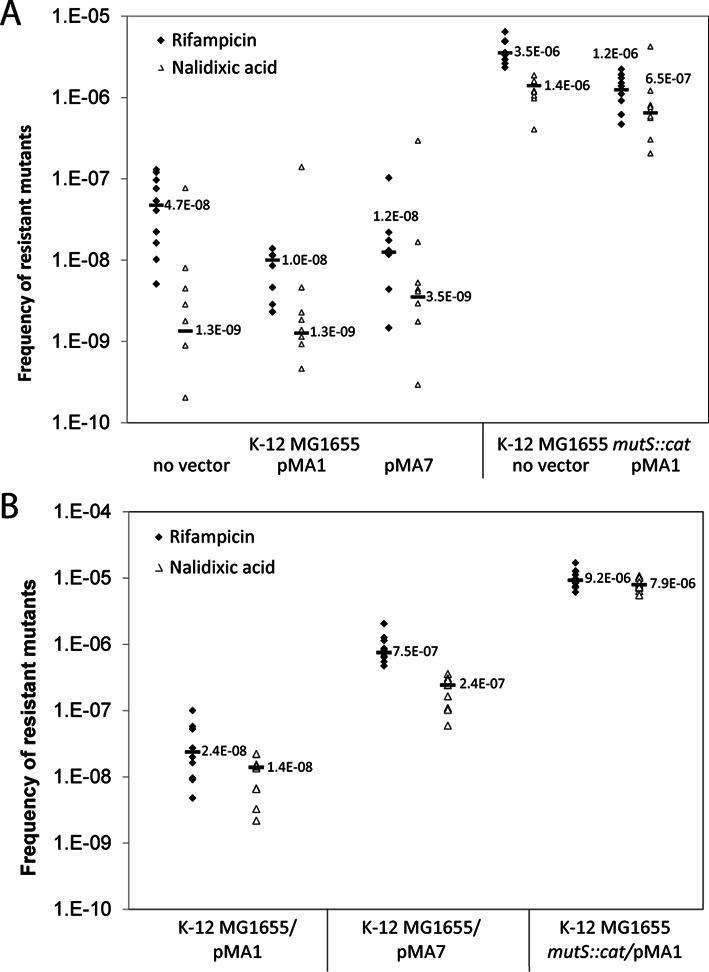
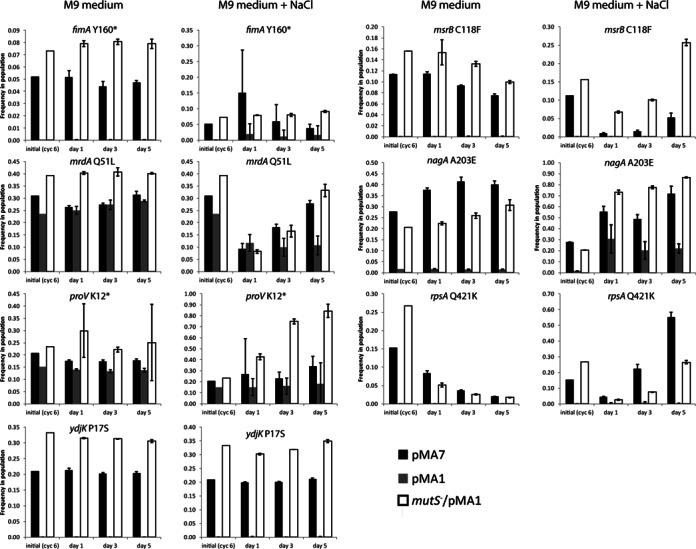
Homologous recombination of single-stranded oligonucleotides is a highly efficient process for introducing precise mutations into the genome of E. coli and other organisms when mismatch repair (MMR) is disabled. This can result in the rapid accumulation of off-target mutations that can mask desired phenotypes, especially when selections need to be employed following the generation of combinatorial libraries. While the use of inducible mutator phenotypes or other MMR evasion tactics have proven useful, reported methods either require non-mobile genetic modifications or costly oligonucleotides that also result in reduced efficiencies of replacement. Therefore a new system was developed, Transient Mutator Multiplex Automated Genome Engineering (TM-MAGE), that solves problems encountered in other methods for oligonucleotide-mediated recombination. TM-MAGE enables nearly equivalent efficiencies of allelic replacement to the use of strains with fully disabled MMR and with an approximately 12- to 33-fold lower off-target mutation rate. Furthermore, growth temperatures are not restricted and a version of the plasmid can be readily removed by sucrose counterselection. TM-MAGE was used to combinatorially reconstruct mutations found in evolved salt-tolerant strains, enabling the identification of causative mutations and isolation of strains with up to 75% increases in growth rate and greatly reduced lag times in 0.6 M NaCl.
当错配修复(MMR)功能被禁用时,单链寡核苷酸的同源重组是一种将精确突变引入大肠杆菌和其他生物体基因组的高效方法。这可能会导致脱靶突变的快速积累,从而掩盖所需的表型,尤其是在组合文库构建后需要进行筛选时。虽然使用诱导型突变表型或其他MMR逃避策略已被证明是有用的,但已报道的方法要么需要非移动性基因修饰,要么需要昂贵的寡核苷酸,这也会导致替换效率降低。因此,开发了一种新的系统,即瞬时突变体多重自动化基因组工程(TM-MAGE),它解决了寡核苷酸介导的重组的其他方法中遇到的问题。TM-MAGE能够实现与使用MMR完全失活的菌株几乎相同的等位基因替换效率,并且脱靶突变率降低约12至33倍。此外,生长温度不受限制,并且质粒的一个版本可以通过蔗糖反选择轻易去除。TM-MAGE被用于组合重建在耐盐进化菌株中发现的突变,从而能够鉴定致病突变并分离出生长速率提高多达75%且在0.6 M NaCl中滞后时间大大缩短的菌株。

 Zotero 插件