
RNA结合基序蛋白4调控的剪接级联对大肠癌细胞进展和代谢的影响
The impact of RNA binding motif protein 4-regulated splicing cascade on the progression and metabolism of colorectal cancer cells.
作者信息
Liang Yu-Chih, Lin Wei-Cheng, Lin Ying-Ju, Lin Jung-Chun
机构信息
School of Medical Laboratory Science and Biotechnology, College of Medical Science and Technology, Taipei Medical University, Taipei, Taiwan.
Division of Thoracic Surgery, Wan Fang Hospital, Taipei Medical University, Taipei, Taiwan.
出版信息
Oncotarget. 2015 Nov 10;6(35):38046-60. doi: 10.18632/oncotarget.5710.
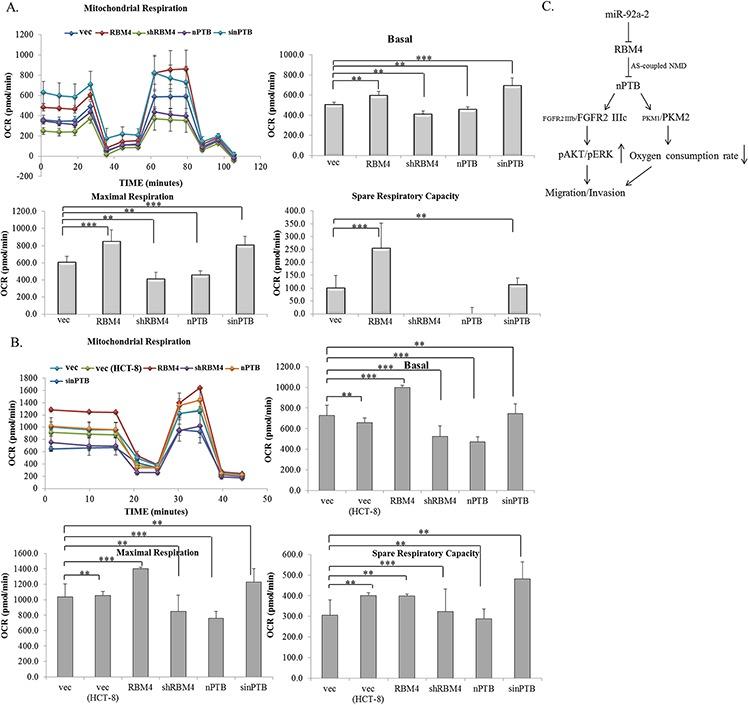
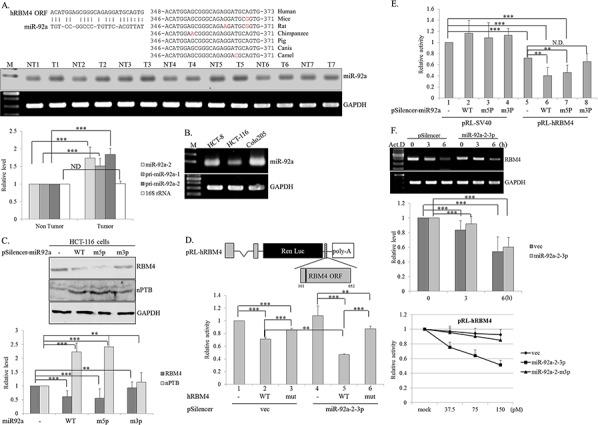
Dysregulated splicing of pre-messenger (m)RNA is considered a molecular occasion of carcinogenesis. However, the underlying mechanism is complex and remains to be investigated. Herein, we report that the upregulated miR-92a reduced the RNA-binding motif 4 (RBM4) protein expression, leading to the imbalanced expression of the neuronal polypyrimidine tract-binding (nPTB) protein through alternative splicing-coupled nonsense mediated decay (NMD) mechanism. Increase in nPTB protein enhances the relative level of fibroblast growth factor receptor 2 IIIc (FGFR2) and pyruvate kinase M2 (PKM2) transcripts which contribute to the progression and metabolic signature of CRC cells. Expression profiles of RBM4 and downstream alternative splicing events are consistently observed in cancerous tissues compared to adjacent normal tissues. These results constitute a mechanistic understanding of RBM4 on repressing the carcinogenesis of colorectal cells.
前体信使(m)RNA的剪接失调被认为是致癌作用的一个分子事件。然而,其潜在机制复杂,仍有待研究。在此,我们报告上调的miR-92a降低了RNA结合基序4(RBM4)蛋白表达,通过可变剪接偶联的无义介导衰变(NMD)机制导致神经元多嘧啶序列结合(nPTB)蛋白表达失衡。nPTB蛋白增加会提高成纤维细胞生长因子受体2 IIIc(FGFR2)和丙酮酸激酶M2(PKM2)转录本的相对水平,这有助于结直肠癌细胞的进展和代谢特征。与相邻正常组织相比,在癌组织中一致观察到RBM4的表达谱和下游可变剪接事件。这些结果构成了对RBM4抑制结肠直肠细胞致癌作用的机制理解。



 Zotero 插件