
通过同源搜索在食蟹猴(猕猴)中鉴定微小RNA,并利用肾皮质组织通过小RNA测序和逆转录定量PCR进行实验验证
Identification of microRNAs in Macaca fascicularis (Cynomolgus Monkey) by Homology Search and Experimental Validation by Small RNA-Seq and RT-qPCR Using Kidney Cortex Tissues.
作者信息
Veeranagouda Yaligara, Rival Pierrick, Prades Catherine, Mariet Claire, Léonard Jean-François, Gautier Jean-Charles, Zhou Xiaobing, Wang Jufeng, Li Bo, Ozoux Marie-Laure, Boitier Eric
机构信息
Sanofi R&D, Disposition Safety and animal Research, Vitry-sur-Seine, France.
Sanofi R&D, Global Biotherapeutics, Vitry-sur-Seine, France.
出版信息
PLoS One. 2015 Nov 12;10(11):e0142708. doi: 10.1371/journal.pone.0142708. eCollection 2015.
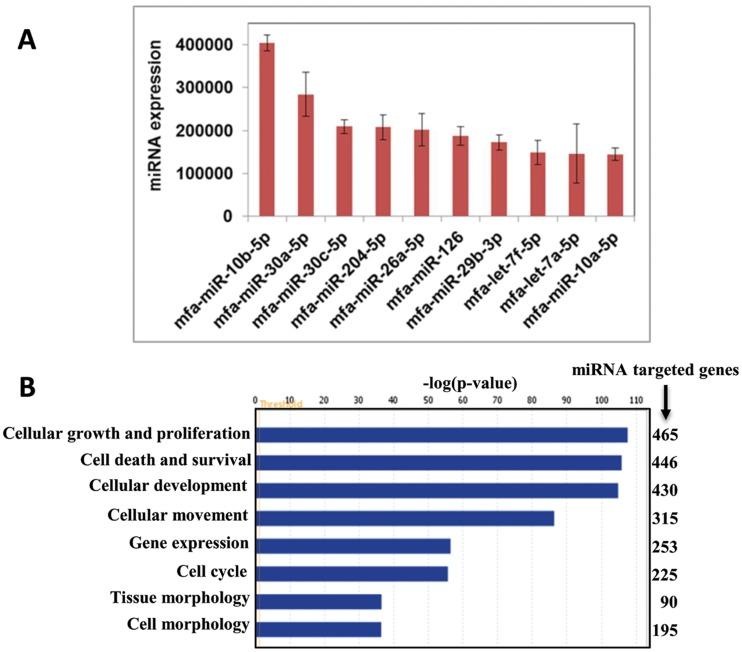
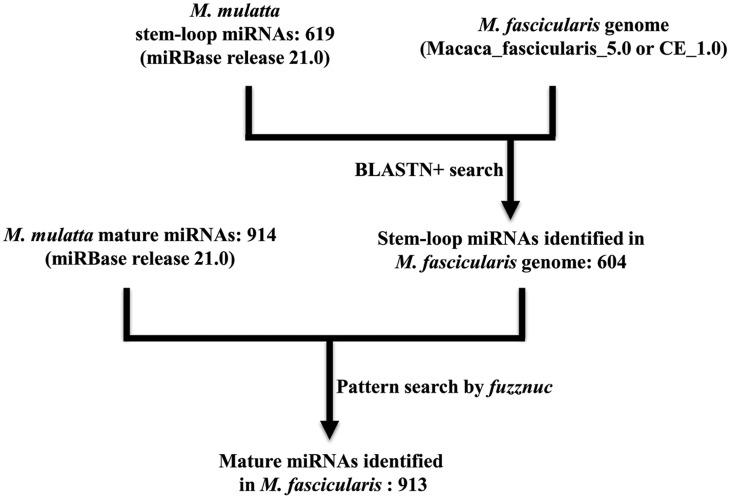
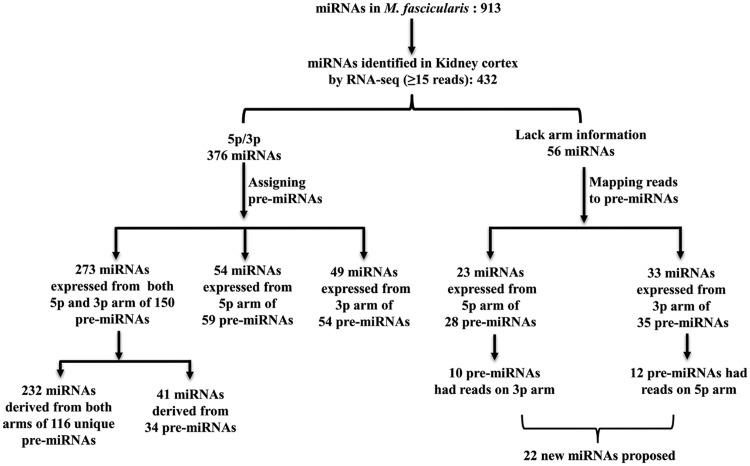
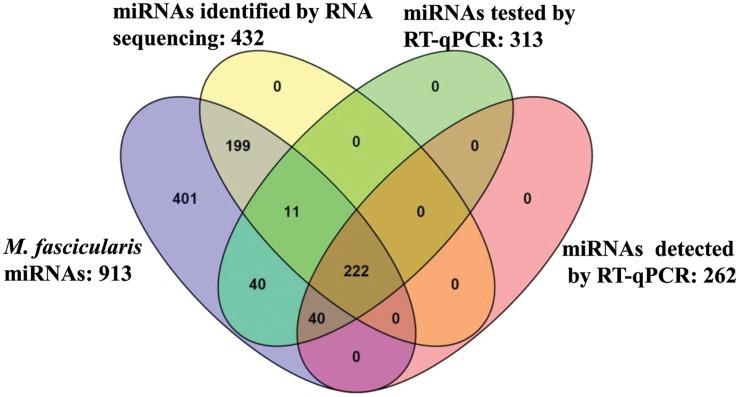
MicroRNAs (miRNAs) present in tissues and biofluids are emerging as sensitive and specific safety biomarkers. MiRNAs have not been thoroughly described in M. fascicularis, an animal model used in pharmaceutical industry especially in drug safety evaluation. Here we investigated the miRNAs in M. fascicularis. For Macaca mulatta, a closely related species of M. fascicularis, 619 stem-loop precursor miRNAs (pre-miRNAs) and 914 mature miRNAs are available in miRBase version 21. Using M. mulatta miRNAs as a reference list and homology search tools, we identified 604 pre-miRNAs and 913 mature miRNAs in the genome of M. fascicularis. In order to validate the miRNAs identified by homology search we attempted to sequence miRNAs expressed in kidney cortex from M. fascicularis. MiRNAs expressed in kidney cortex may indeed be released in urine upon kidney cortex damage and be potentially used to monitor drug induced kidney injury. Hence small RNA sequencing libraries were prepared using kidney cortex tissues obtained from three naive M. fascicularis and sequenced. Analysis of sequencing data indicated that 432 out of 913 mature miRNAs were expressed in kidney cortex tissues. Assigning these 432 miRNAs to pre-miRNAs revealed that 273 were expressed from both the -5p and -3p arms of 150 pre-miRNAs and 159 miRNAs expressed from either the -5p or -3p arm of 176 pre-miRNAs. Mapping sequencing reads to pre-miRNAs also facilitated the detection of twenty-two new miRNAs. To substantiate miRNAs identified by small RNA sequencing, 313 miRNAs were examined by RT-qPCR. Expression of 262 miRNAs in kidney cortex tissues ware confirmed by TaqMan microRNA RT-qPCR assays. Analysis of kidney cortex miRNA targeted genes suggested that they play important role in kidney development and function. Data presented in this study may serve as a valuable resource to assess the renal safety biomarker potential of miRNAs in Cynomolgus monkeys.
存在于组织和生物流体中的微小RNA(miRNA)正逐渐成为敏感且特异的安全性生物标志物。在食蟹猴(猕猴属动物,在制药行业尤其是药物安全性评估中用作动物模型)中,miRNA尚未得到充分描述。在此,我们对食蟹猴中的miRNA进行了研究。对于与食蟹猴亲缘关系密切的恒河猴,miRBase 21版本中提供了619个茎环前体miRNA(pre-miRNA)和914个成熟miRNA。以恒河猴的miRNA作为参考列表并使用同源性搜索工具,我们在食蟹猴基因组中鉴定出604个pre-miRNA和913个成熟miRNA。为了验证通过同源性搜索鉴定出的miRNA,我们尝试对食蟹猴肾皮质中表达的miRNA进行测序。肾皮质中表达的miRNA在肾皮质受损时确实可能释放入尿液中,并有可能用于监测药物诱导的肾损伤。因此,我们使用从三只未接触过药物的食蟹猴获取的肾皮质组织制备了小RNA测序文库并进行了测序。测序数据分析表明,913个成熟miRNA中有432个在肾皮质组织中表达。将这432个miRNA与pre-miRNA进行比对发现,273个miRNA由150个pre-miRNA的-5p和-3p臂同时表达,159个miRNA由176个pre-miRNA的-5p或-3p臂表达。将测序 reads 映射到 pre-miRNA 也有助于检测到22个新的miRNA。为了证实通过小RNA测序鉴定出的miRNA,我们通过RT-qPCR对313个miRNA进行了检测。TaqMan微小RNA RT-qPCR检测法证实了262个miRNA在肾皮质组织中的表达。对肾皮质miRNA靶向基因的分析表明,它们在肾脏发育和功能中发挥重要作用。本研究中呈现的数据可能成为评估食蟹猴中miRNA作为肾脏安全性生物标志物潜力的宝贵资源。
 Zotero 插件