
外部克罗恩病风险因素在肠道细菌上的汇聚
Convergence of External Crohn's Disease Risk Factors on Intestinal Bacteria.
作者信息
Oberc Alexander, Coombes Brian K
机构信息
Department of Biochemistry and Biomedical Sciences, McMaster University , Hamilton, ON , Canada ; Michael G. DeGroote Institute for Infectious Disease Research , Hamilton, ON , Canada.
Department of Biochemistry and Biomedical Sciences, McMaster University , Hamilton, ON , Canada ; Michael G. DeGroote Institute for Infectious Disease Research , Hamilton, ON , Canada ; Farncombe Family Digestive Health Research Institute , Hamilton, ON , Canada.
出版信息
Front Immunol. 2015 Nov 3;6:558. doi: 10.3389/fimmu.2015.00558. eCollection 2015.
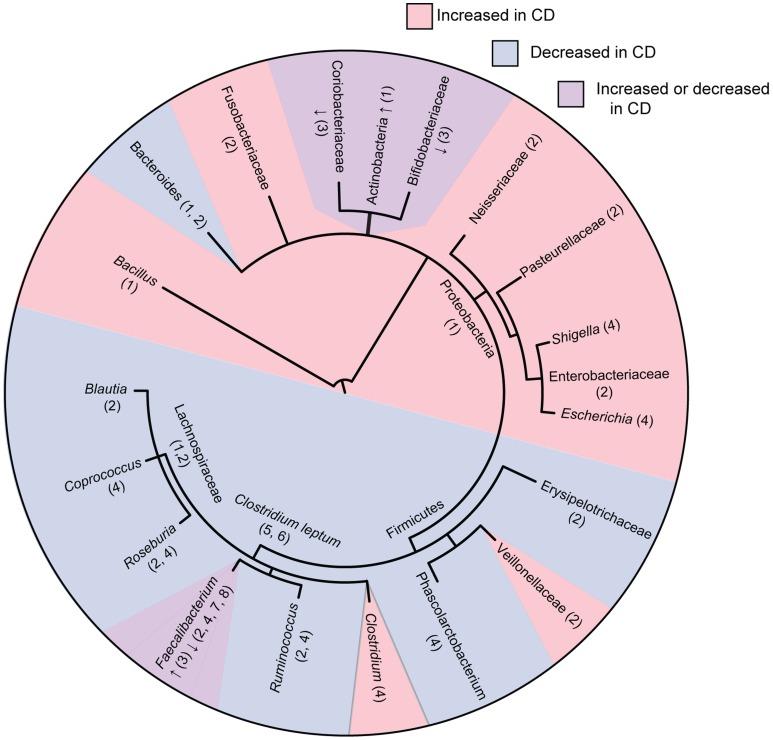
Crohn's disease (CD) is an immune-mediated intestinal illness that significantly compromises health in many developed countries. Although definitive causes remain elusive, the required contribution of microbes in the progression of disease has become an accepted concept. Known CD risk factors, such as antibiotic use and acute infectious gastroenteritis, may impact the gut. This concept is now being explored with a view toward understanding the beneficial and unfavorable microbes that may be altered in numbers during such external insults. A comprehensive understanding of the microbial component to CD could be useful clinically as future therapies may focus on preventing risk exposures on susceptible individuals, eliminating harmful microbes, or restoring a protective gut microbiome. Here, we examine how acute infectious gastroenteritis and antibiotic exposure may impact the gut microbiota in the context of inflammation in CD.
克罗恩病(CD)是一种免疫介导的肠道疾病,在许多发达国家严重损害健康。尽管确切病因仍不明确,但微生物在疾病进展中的必要作用已成为一个被认可的概念。已知的CD风险因素,如使用抗生素和急性感染性肠胃炎,可能会影响肠道。目前正在探讨这一概念,以期了解在这些外部侵害期间数量可能发生变化的有益和有害微生物。全面了解CD的微生物成分在临床上可能有用,因为未来的治疗可能侧重于预防易感个体接触风险因素、清除有害微生物或恢复具有保护作用的肠道微生物群。在此,我们研究急性感染性肠胃炎和接触抗生素在CD炎症背景下如何影响肠道微生物群。
 Zotero 插件