
呼吸道合胞病毒将CX3CR1用作原代人呼吸道上皮培养物上的受体。
Respiratory Syncytial Virus Uses CX3CR1 as a Receptor on Primary Human Airway Epithelial Cultures.
作者信息
Johnson Sara M, McNally Beth A, Ioannidis Ioannis, Flano Emilio, Teng Michael N, Oomens Antonius G, Walsh Edward E, Peeples Mark E
机构信息
Center for Vaccines and Immunity, The Research Institute at Nationwide Children's Hospital, Columbus, Ohio, United States of America.
Department of Pediatrics, The Ohio State University College of Medicine, Columbus, Ohio, United States of America.
出版信息
PLoS Pathog. 2015 Dec 11;11(12):e1005318. doi: 10.1371/journal.ppat.1005318. eCollection 2015 Dec.
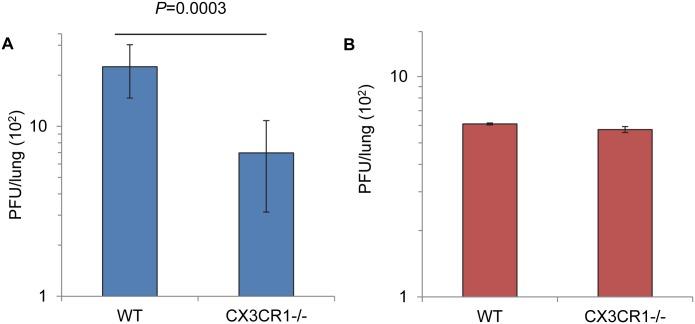
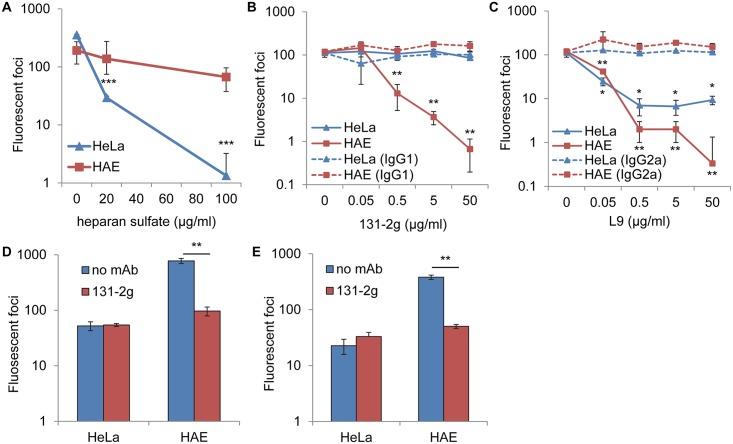
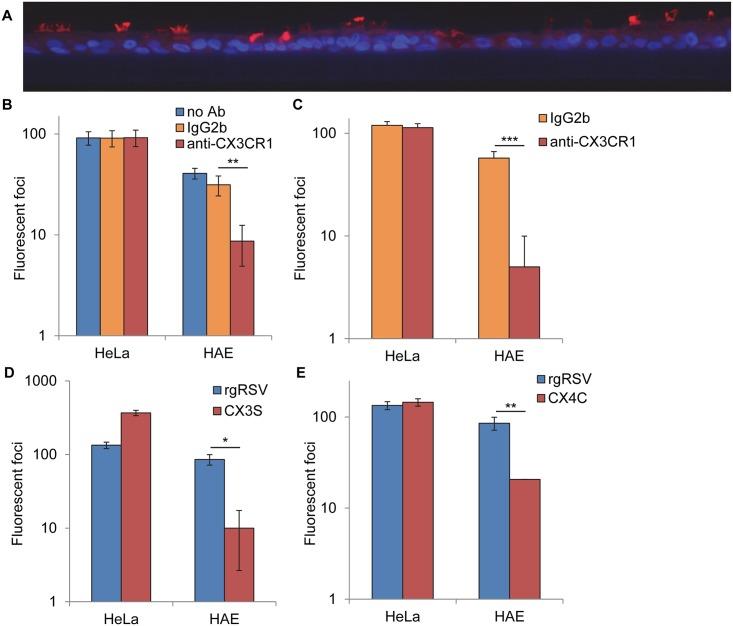
Respiratory syncytial virus (RSV) is the most frequent cause of lower respiratory disease in infants, but no vaccine or effective therapy is available. The initiation of RSV infection of immortalized cells is largely dependent on cell surface heparan sulfate (HS), a receptor for the RSV attachment (G) glycoprotein in immortalized cells. However, RSV infects the ciliated cells in primary well differentiated human airway epithelial (HAE) cultures via the apical surface, but HS is not detectable on this surface. Here we show that soluble HS inhibits infection of immortalized cells, but not HAE cultures, confirming that HS is not the receptor on HAE cultures. Conversely, a "non-neutralizing" monoclonal antibody against the G protein that does not block RSV infection of immortalized cells, does inhibit infection of HAE cultures. This antibody was previously shown to block the interaction between the G protein and the chemokine receptor CX3CR1 and we have mapped the binding site for this antibody to the CX3C motif and its surrounding region in the G protein. We show that CX3CR1 is present on the apical surface of ciliated cells in HAE cultures and especially on the cilia. RSV infection of HAE cultures is reduced by an antibody against CX3CR1 and by mutations in the G protein CX3C motif. Additionally, mice lacking CX3CR1 are less susceptible to RSV infection. These findings demonstrate that RSV uses CX3CR1 as a cellular receptor on HAE cultures and highlight the importance of using a physiologically relevant model to study virus entry and antibody neutralization.
呼吸道合胞病毒(RSV)是婴儿下呼吸道疾病最常见的病因,但目前尚无疫苗或有效疗法。永生化细胞的RSV感染起始很大程度上依赖于细胞表面硫酸乙酰肝素(HS),它是永生化细胞中RSV附着(G)糖蛋白的受体。然而,RSV通过顶端表面感染原代高分化人气道上皮(HAE)培养物中的纤毛细胞,但在该表面未检测到HS。在此我们表明,可溶性HS可抑制永生化细胞的感染,但不抑制HAE培养物的感染,这证实HS不是HAE培养物上的受体。相反,一种针对G蛋白的“非中和性”单克隆抗体,它不阻断RSV对永生化细胞的感染,但确实抑制HAE培养物的感染。该抗体先前已被证明可阻断G蛋白与趋化因子受体CX3CR1之间的相互作用,并且我们已将该抗体的结合位点定位到G蛋白中的CX3C基序及其周围区域。我们表明CX3CR1存在于HAE培养物中纤毛细胞的顶端表面,尤其是在纤毛上。抗CX3CR1抗体和G蛋白CX3C基序中的突变可减少HAE培养物的RSV感染。此外,缺乏CX3CR1的小鼠对RSV感染的易感性较低。这些发现表明RSV在HAE培养物上利用CX3CR1作为细胞受体,并突出了使用生理相关模型研究病毒进入和抗体中和的重要性。


 Zotero 插件