
社区居住老年人的人口统计学特征、社会地位、牙齿状况及与口腔健康相关的生活质量
Demographics, social position, dental status and oral health-related quality of life in community-dwelling older adults.
作者信息
Rebelo Maria Augusta Bessa, Cardoso Evangeline Maria, Robinson Peter G, Vettore Mario Vianna
机构信息
School of Dentistry, Federal University of Amazonas, Rua Rio Itannana, 111, Bairro Nossa Sra das Gracas, Manaus, AM, CEP: 69.053-040, Brazil.
Academic Unit of Dental Public Health, School of Clinical Dentistry, University of Sheffield, 19 Claremont Crescent, Sheffield, S10 5SX, UK.
出版信息
Qual Life Res. 2016 Jul;25(7):1735-42. doi: 10.1007/s11136-015-1209-y. Epub 2015 Dec 26.
PURPOSE
To identify demographic, socioeconomic and dental clinical predictors of oral health-related quality of life (OHRQoL) in elderly people.
METHODS
Cross-sectional study involving 613 elderly people aged 65-74 years in Manaus, Brazil. Interviews and oral examinations were carried out to collect demographic characteristics (age and sex) and socioeconomic data (income and education), dental clinical measures (DMFT, need of upper and lower dentures) and OHRQoL (GOHAI questionnaire). Structural equation modelling was used to estimate direct and indirect pathways between the variables.
RESULTS
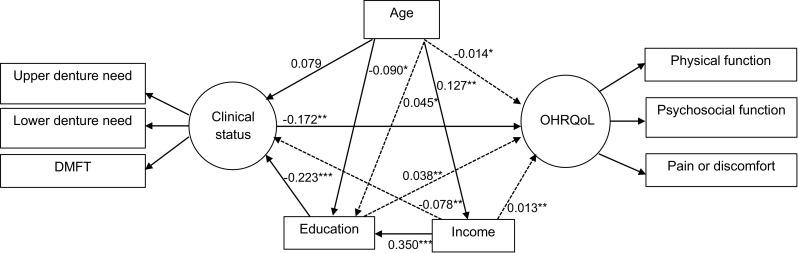
Being older predicted lower schooling but higher income. Higher income was linked to better dental status, which was linked to better OHRQoL. There were also indirect pathways. Age and education were linked to OHRQoL, mediated by clinical dental status. Income was associated with dental clinical status via education, and income predicted OHRQoL via education and clinical measures.
CONCLUSION
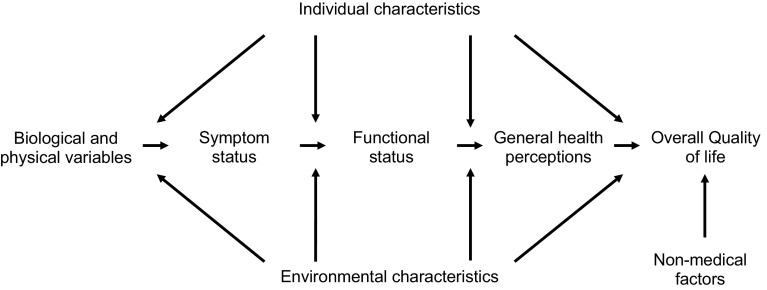
Our findings elucidate the complex pathways between individual, environmental factors and clinical factors that may determine OHRQoL and support the application of public health approaches to improve oral health in older people.
目的
确定老年人口腔健康相关生活质量(OHRQoL)的人口统计学、社会经济和牙科临床预测因素。
方法
对巴西玛瑙斯613名65 - 74岁的老年人进行横断面研究。进行访谈和口腔检查,以收集人口统计学特征(年龄和性别)、社会经济数据(收入和教育程度)、牙科临床指标(DMFT、上下颌假牙需求)和OHRQoL(GOHAI问卷)。采用结构方程模型估计变量之间的直接和间接路径。
结果
年龄较大预示着受教育程度较低但收入较高。较高的收入与较好的牙齿状况相关,而较好的牙齿状况又与较好的OHRQoL相关。也存在间接路径。年龄和教育程度通过临床牙齿状况介导与OHRQoL相关。收入通过教育与牙科临床状况相关,并且收入通过教育和临床指标预测OHRQoL。
结论
我们的研究结果阐明了个体、环境因素和临床因素之间可能决定OHRQoL的复杂路径,并支持应用公共卫生方法来改善老年人的口腔健康。


 Zotero 插件