
阿利西替尼诱导HT29和Caco-2细胞的细胞周期停滞、凋亡、自噬并抑制上皮-间质转化。
Alisertib Induces Cell Cycle Arrest, Apoptosis, Autophagy and Suppresses EMT in HT29 and Caco-2 Cells.
作者信息
Ren Bao-Jun, Zhou Zhi-Wei, Zhu Da-Jian, Ju Yong-Le, Wu Jin-Hao, Ouyang Man-Zhao, Chen Xiao-Wu, Zhou Shu-Feng
机构信息
Department of Gastrointestinal Surgery, Shunde First People's Hospital Affiliated to Southern Medical University, Guangdong 528300, China.
Department of Pharmaceutical Sciences, College of Pharmacy, University of South Florida, 12901 Bruce B. Downs Blvd., MDC 30, Tampa, FL 33612, USA.
出版信息
Int J Mol Sci. 2015 Dec 29;17(1):41. doi: 10.3390/ijms17010041.
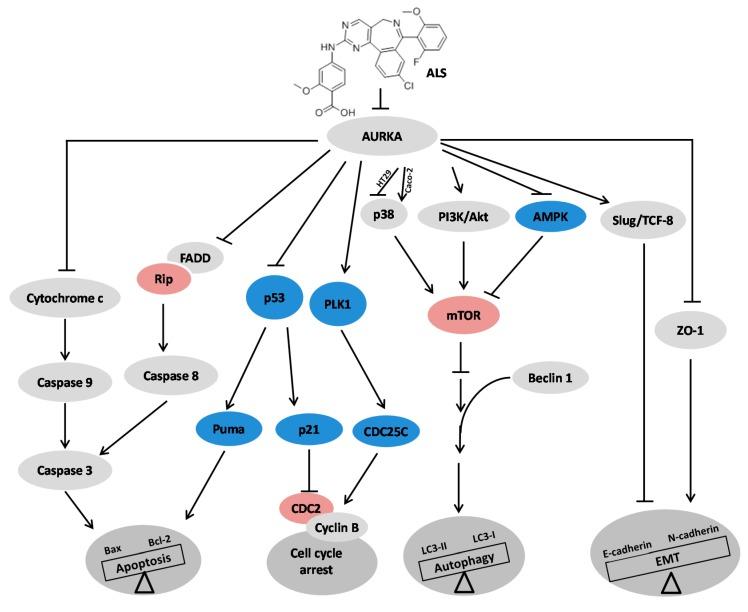
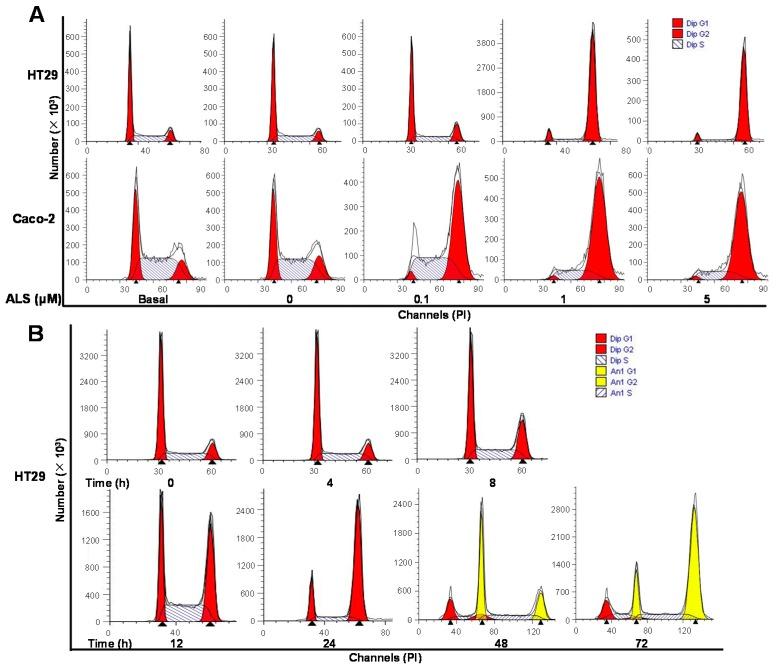
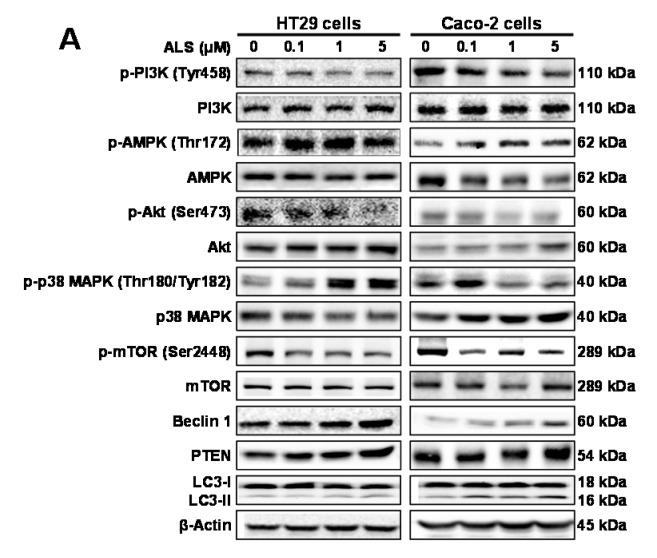
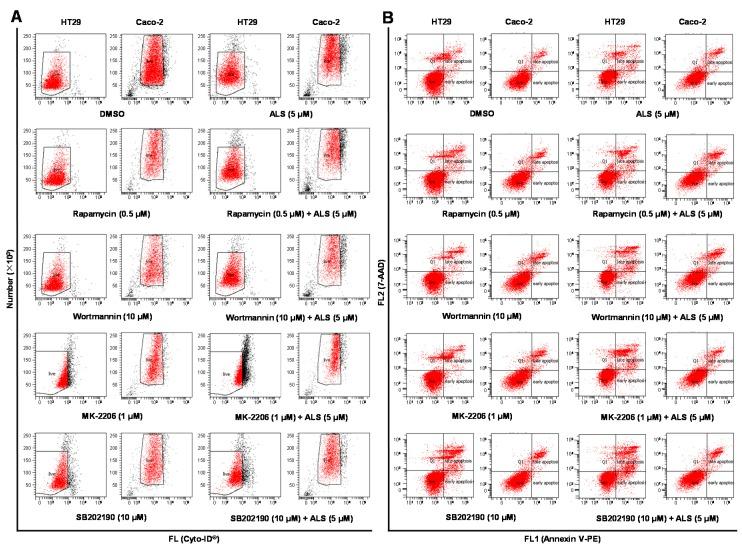
Colorectal cancer (CRC) is one of the most common malignancies worldwide with substantial mortality and morbidity. Alisertib (ALS) is a selective Aurora kinase A (AURKA) inhibitor with unclear effect and molecular interactome on CRC. This study aimed to evaluate the molecular interactome and anticancer effect of ALS and explore the underlying mechanisms in HT29 and Caco-2 cells. ALS markedly arrested cells in G₂/M phase in both cell lines, accompanied by remarkable alterations in the expression level of key cell cycle regulators. ALS induced apoptosis in HT29 and Caco-2 cells through mitochondrial and death receptor pathways. ALS also induced autophagy in HT29 and Caco-2 cells, with the suppression of phosphoinositide 3-kinase (PI3K)/protein kinase B (Akt)/mammalian target of rapamycin (mTOR), but activation of 5' AMP-activated protein kinase (AMPK) signaling pathways. There was a differential modulating effect of ALS on p38 MAPK signaling pathway in both cell lines. Moreover, induction or inhibition of autophagy modulated basal and ALS-induced apoptosis in both cell lines. ALS potently suppressed epithelial to mesenchymal transition (EMT) in HT29 and Caco-2 cells. Collectively, it suggests that induction of cell cycle arrest, promotion of apoptosis and autophagy, and suppression of EMT involving mitochondrial, death receptor, PI3K/Akt/mTOR, p38 MAPK, and AMPK signaling pathways contribute to the cancer cell killing effect of ALS on CRC cells.
结直肠癌(CRC)是全球最常见的恶性肿瘤之一,具有较高的死亡率和发病率。阿利西替尼(ALS)是一种选择性极光激酶A(AURKA)抑制剂,其对结直肠癌的作用效果及分子相互作用组尚不明确。本研究旨在评估ALS的分子相互作用组和抗癌作用,并探讨其在HT29和Caco-2细胞中的潜在机制。ALS在两种细胞系中均使细胞显著停滞于G₂/M期,同时关键细胞周期调节因子的表达水平发生显著变化。ALS通过线粒体和死亡受体途径诱导HT29和Caco-2细胞凋亡。ALS还诱导HT29和Caco-2细胞发生自噬,抑制磷酸肌醇3激酶(PI3K)/蛋白激酶B(Akt)/雷帕霉素哺乳动物靶蛋白(mTOR),但激活5' AMP激活蛋白激酶(AMPK)信号通路。ALS对两种细胞系中的p38丝裂原活化蛋白激酶(MAPK)信号通路具有不同的调节作用。此外,自噬的诱导或抑制调节了两种细胞系中的基础凋亡和ALS诱导的凋亡。ALS有效抑制HT29和Caco-2细胞的上皮-间质转化(EMT)。总体而言,这表明诱导细胞周期停滞、促进凋亡和自噬以及抑制涉及线粒体、死亡受体、PI3K/Akt/mTOR、p38 MAPK和AMPK信号通路参与的EMT,共同促成了ALS对结直肠癌细胞的杀伤作用。




 Zotero 插件