
一种针对人乳头瘤病毒16型(HPV16)的人源单克隆抗体识别一个免疫显性且中和性的表位,该表位与H16.V5的表位部分重叠。
A human monoclonal antibody against HPV16 recognizes an immunodominant and neutralizing epitope partially overlapping with that of H16.V5.
作者信息
Xia Lin, Xian Yangfei, Wang Daning, Chen Yuanzhi, Huang Xiaofen, Bi Xingjian, Yu Hai, Fu Zheng, Liu Xinlin, Li Shaowei, An Zhiqiang, Luo Wenxin, Zhao Qinjian, Xia Ningshao
机构信息
State Key Laboratory of Molecular Vaccinology and Molecular Diagnostics, National Institute of Diagnostics and Vaccine Development in Infectious Diseases, School of Life Science, Xiamen University; Xiamen 361105, China.
Texas Therapeutics Institute, The Brown Foundation of Molecular Medicine, University of Texas Health Science Center at Houston, Houston TX77030, USA.
出版信息
Sci Rep. 2016 Jan 11;6:19042. doi: 10.1038/srep19042.
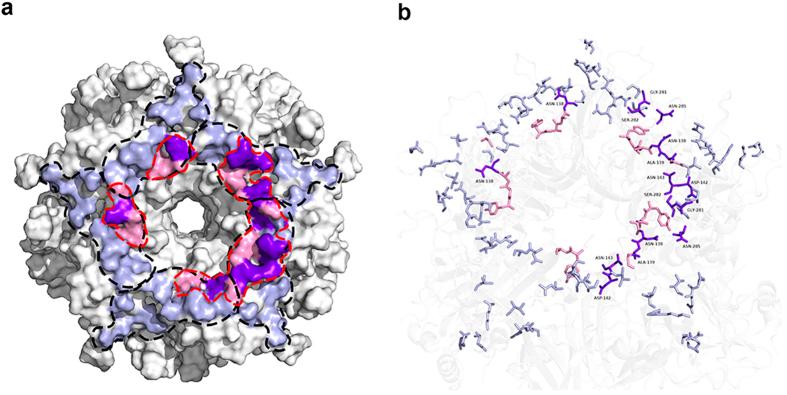
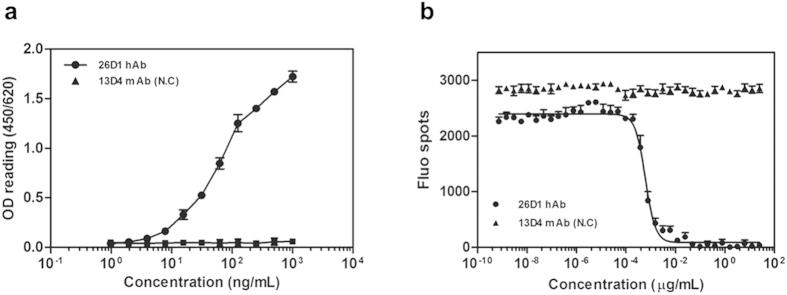
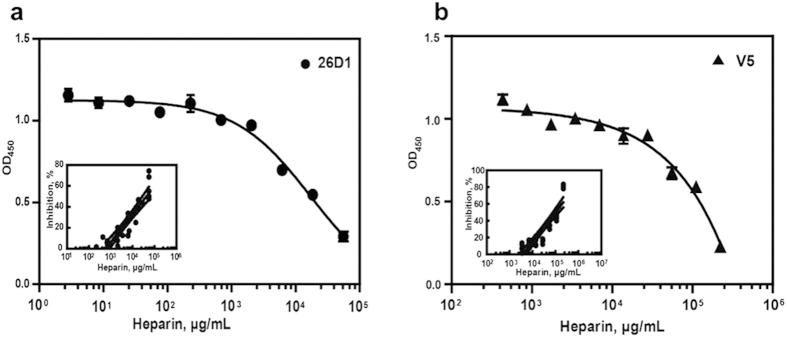
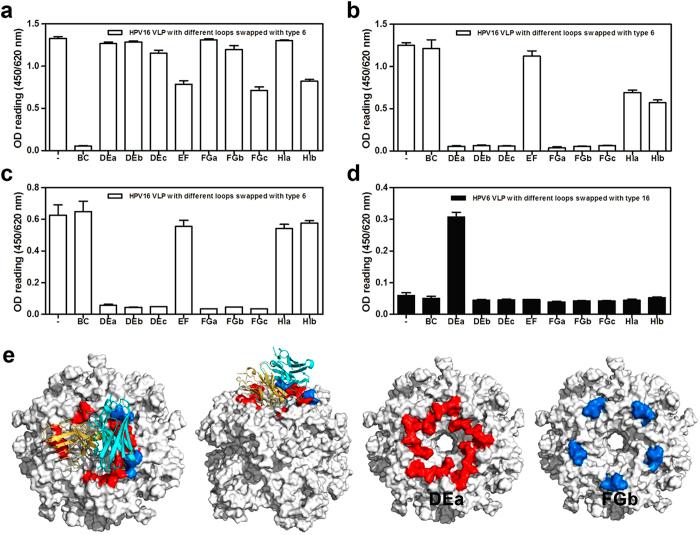
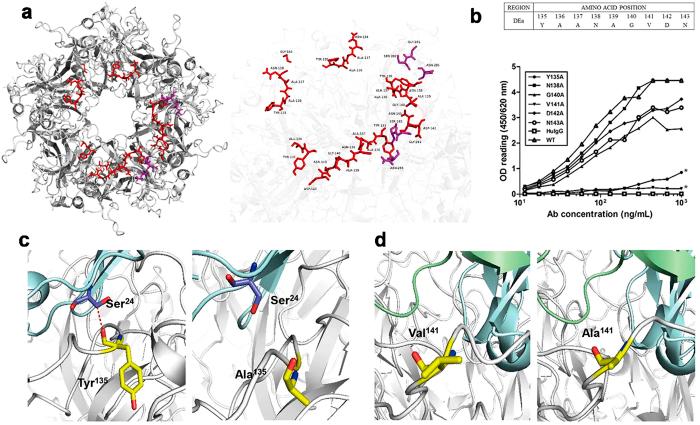
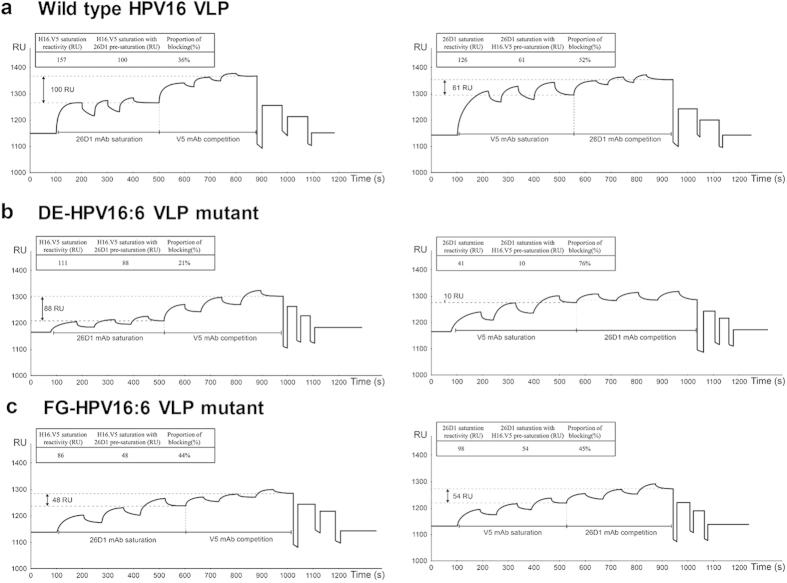
The presence of neutralizing epitopes in human papillomavirus (HPV) L1 virus-like particles (VLPs) is the structural basis of prophylactic vaccines. An anti-HPV16 neutralizing monoclonal antibody (N-mAb) 26D1 was isolated from a memory B cell of a human vaccinee. The pre-binding of heparan sulfate to VLPs inhibited the binding of both N-mAbs to the antigen, indicating that the epitopes are critical for viral cell attachment/entry. Hybrid VLP binding with surface loop swapping between types indicated the essential roles of the DE and FG loops for both 26D1 (DEa in particular) and H16.V5 binding. Specifically, Tyr(135) and Val(141) on the DEa loop were shown to be critical residues for 26D1 binding via site-directed mutagenesis. Partially overlap between the epitopes between 26D1 and H16.V5 was shown using pairwise epitope mapping, and their binding difference is demonstrated to be predominantly in DE loop region. In addition, 26D1 epitope is immunodominant epitope recognized by both antibodies elicited by the authentic virus from infected individuals and polyclonal antibodies from vaccinees. Overall, a partially overlapping but distinct neutralizing epitope from that of H16.V5 was identified using a human N-mAb, shedding lights to the antibody arrays as part of human immune response to vaccination and infection.
人乳头瘤病毒(HPV)L1病毒样颗粒(VLP)中存在中和表位是预防性疫苗的结构基础。从一名人类疫苗接种者的记忆B细胞中分离出一种抗HPV16中和单克隆抗体(N-mAb)26D1。硫酸乙酰肝素与VLP的预结合抑制了两种N-mAb与抗原的结合,表明这些表位对病毒细胞附着/进入至关重要。不同类型之间表面环交换的杂交VLP结合表明DE环和FG环对26D1(特别是DEa)和H16.V5结合都起着重要作用。具体而言,通过定点诱变显示DEa环上的Tyr(135)和Val(141)是26D1结合的关键残基。使用成对表位图谱显示26D1和H16.V5之间的表位存在部分重叠,并且它们的结合差异主要表现在DE环区域。此外,26D1表位是受感染个体的真实病毒引发的抗体和疫苗接种者的多克隆抗体都能识别的免疫显性表位。总体而言,使用人N-mAb鉴定出了一个与H16.V5部分重叠但不同的中和表位,这为作为人类对疫苗接种和感染免疫反应一部分的抗体阵列提供了线索。
 Zotero 插件