
抗菌药物消费及生产类型对牛呼吸道和消化道细菌耐药性的影响
Effect of Antimicrobial Consumption and Production Type on Antibacterial Resistance in the Bovine Respiratory and Digestive Tract.
作者信息
Catry Boudewijn, Dewulf Jeroen, Maes Dominiek, Pardon Bart, Callens Benedicte, Vanrobaeys Mia, Opsomer Geert, de Kruif Aart, Haesebrouck Freddy
机构信息
Healthcare-Associated Infections and Antimicrobial Resistance, Scientific Institute of Public Health (WIV-ISP), Brussels, Belgium.
Faculty of Veterinary Medicine, Ghent University, Merelbeke, Belgium.
出版信息
PLoS One. 2016 Jan 28;11(1):e0146488. doi: 10.1371/journal.pone.0146488. eCollection 2016.
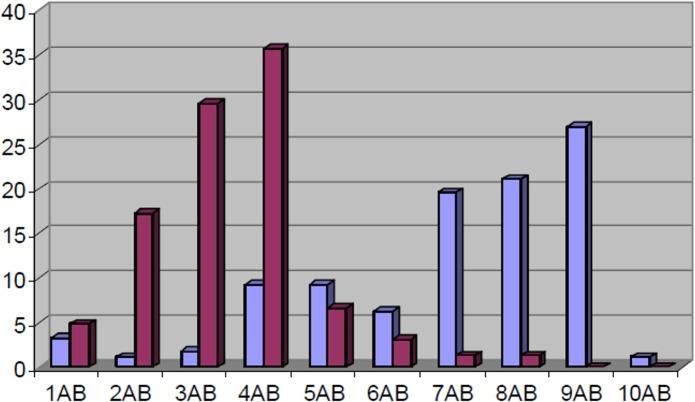
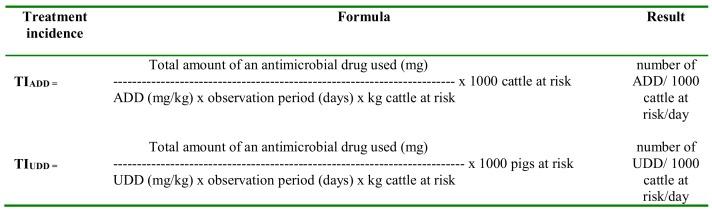
The aim of this study was to investigate the relationship between antimicrobial use and the occurrence of antimicrobial resistance in the digestive and respiratory tract in three different production systems of food producing animals. A longitudinal study was set up in 25 Belgian bovine herds (10 dairy, 10 beef, and 5 veal herds) for a 2 year monitoring of antimicrobial susceptibilities in E. coli and Pasteurellaceae retrieved from the rectum and the nasal cavity, respectively. During the first year of observation, the antimicrobial use was prospectively recorded on 15 of these farms (5 of each production type) and transformed into the treatment incidences according to the (animal) defined daily dose (TIADD) and (actually) used daily dose (TIUDD). Antimicrobial resistance rates of 4,174 E. coli (all herds) and 474 Pasteurellaceae (beef and veal herds only) isolates for 12 antimicrobial agents demonstrated large differences between intensively reared veal calves (abundant and inconstant) and more extensively reared dairy and beef cattle (sparse and relatively stable). Using linear mixed effect models, a strong relation was found between antimicrobial treatment incidences and resistance profiles of 1,639 E. coli strains (p<0.0001) and 309 Pasteurellaceae (p≤0.012). These results indicate that a high antimicrobial selection pressure, here found to be represented by low dosages of oral prophylactic and therapeutic group medication, converts not only the commensal microbiota from the digestive tract but also the opportunistic pathogenic bacteria in the respiratory tract into reservoirs of multi-resistance.
本研究的目的是调查在三种不同的食用动物生产系统中,抗菌药物使用与消化道和呼吸道中抗菌药物耐药性发生之间的关系。在25个比利时牛群(10个奶牛群、10个肉牛群和5个犊牛群)中开展了一项纵向研究,对分别从直肠和鼻腔采集的大肠杆菌和巴氏杆菌科细菌进行了为期2年的抗菌药物敏感性监测。在观察的第一年,前瞻性记录了其中15个农场(每种生产类型各5个)的抗菌药物使用情况,并根据(动物)限定日剂量(TIADD)和(实际)使用日剂量(TIUDD)转化为治疗发生率。对4174株大肠杆菌(所有牛群)和474株巴氏杆菌科细菌(仅肉牛和犊牛群)针对12种抗菌药物的耐药率进行分析,结果显示,集约化饲养的犊牛(抗菌药物使用量大且不恒定)与粗放式饲养的奶牛和肉牛(抗菌药物使用量少且相对稳定)之间存在很大差异。使用线性混合效应模型发现,1639株大肠杆菌(p<0.0001)和309株巴氏杆菌科细菌(p≤0.012)的抗菌治疗发生率与耐药谱之间存在密切关系。这些结果表明,高抗菌药物选择压力(此处表现为低剂量口服预防性和治疗性群体用药)不仅会使消化道中的共生微生物群,还会使呼吸道中的机会致病菌转变为多重耐药菌库。
 Zotero 插件