
被动热应激期间人体腿部的温度和血流分布
Temperature and blood flow distribution in the human leg during passive heat stress.
作者信息
Chiesa Scott T, Trangmar Steven J, González-Alonso José
机构信息
Centre for Human Performance, Exercise and Rehabilitation, Brunel University London, Uxbridge, United Kingdom.
Centre for Human Performance, Exercise and Rehabilitation, Brunel University London, Uxbridge, United Kingdom
出版信息
J Appl Physiol (1985). 2016 May 1;120(9):1047-58. doi: 10.1152/japplphysiol.00965.2015. Epub 2016 Jan 28.
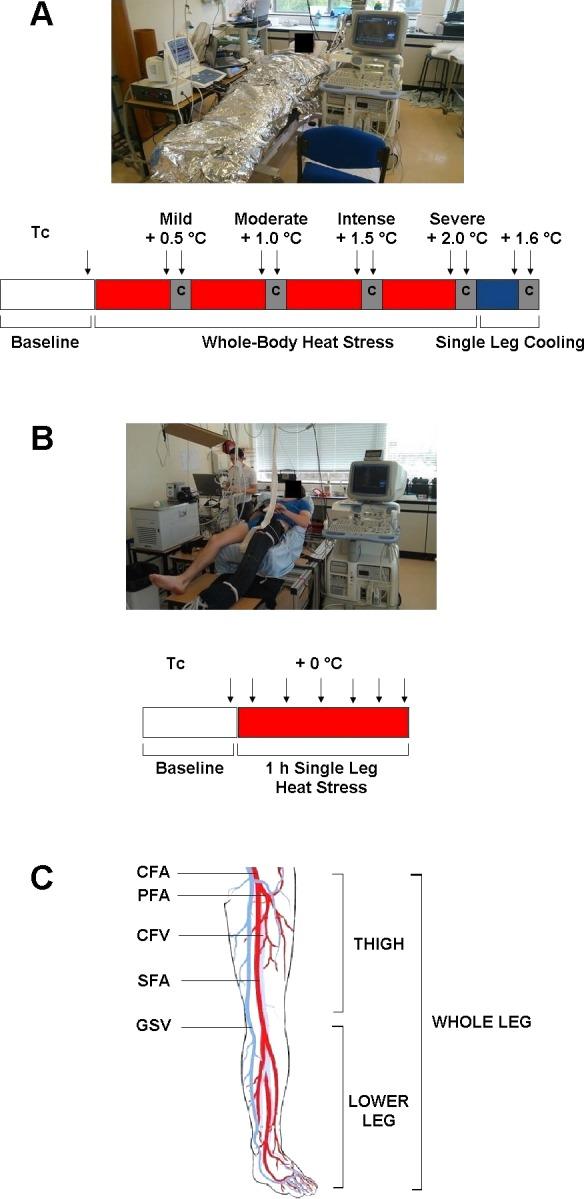
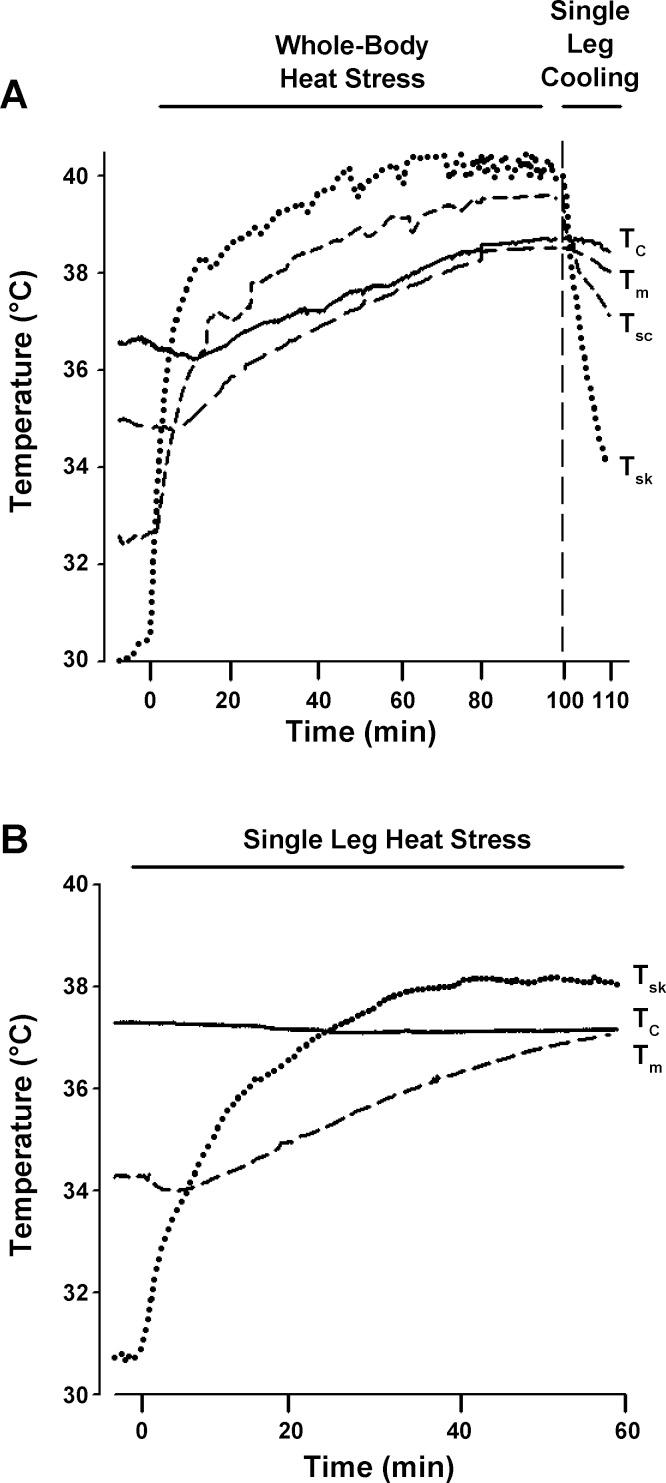
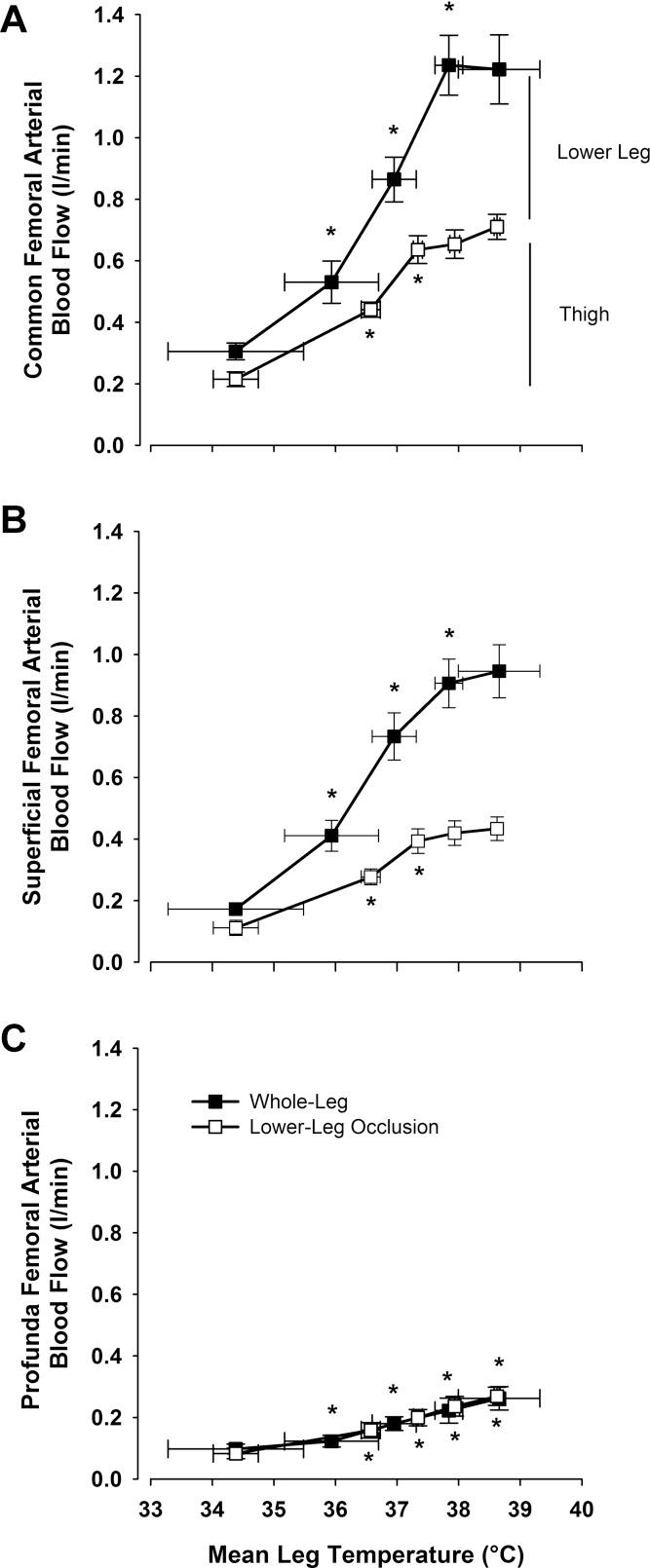
The influence of temperature on the hemodynamic adjustments to direct passive heat stress within the leg's major arterial and venous vessels and compartments remains unclear. Fifteen healthy young males were tested during exposure to either passive whole body heat stress to levels approaching thermal tolerance [core temperature (Tc) + 2°C; study 1; n = 8] or single leg heat stress (Tc + 0°C; study 2; n = 7). Whole body heat stress increased perfusion and decreased oscillatory shear index in relation to the rise in leg temperature (Tleg) in all three major arteries supplying the leg, plateauing in the common and superficial femoral arteries before reaching severe heat stress levels. Isolated leg heat stress increased arterial blood flows and shear patterns to a level similar to that obtained during moderate core hyperthermia (Tc + 1°C). Despite modest increases in great saphenous venous (GSV) blood flow (0.2 l/min), the deep venous system accounted for the majority of returning flow (common femoral vein 0.7 l/min) during intense to severe levels of heat stress. Rapid cooling of a single leg during severe whole body heat stress resulted in an equivalent blood flow reduction in the major artery supplying the thigh deep tissues only, suggesting central temperature-sensitive mechanisms contribute to skin blood flow alone. These findings further our knowledge of leg hemodynamic responses during direct heat stress and provide evidence of potentially beneficial vascular alterations during isolated limb heat stress that are equivalent to those experienced during exposure to moderate levels of whole body hyperthermia.
温度对腿部主要动脉、静脉血管及腔室针对直接被动热应激的血流动力学调节的影响仍不明确。15名健康年轻男性参与了测试,他们分别暴露于接近热耐受水平的被动全身热应激环境下[核心温度(Tc)+2°C;研究1;n = 8],或单腿热应激环境下(Tc + 0°C;研究2;n = 7)。全身热应激使供应腿部的所有三条主要动脉的灌注增加,且随着腿部温度(Tleg)升高,振荡剪切指数降低,在股总动脉和股浅动脉中,该指数在达到严重热应激水平之前趋于平稳。孤立的腿部热应激使动脉血流和剪切模式增加至与中度核心体温过高(Tc + 1°C)时相似的水平。尽管大隐静脉(GSV)血流有适度增加(0.2升/分钟),但在高强度至严重热应激水平下,深部静脉系统占回流的大部分(股总静脉0.7升/分钟)。在严重全身热应激期间对单腿进行快速冷却,仅导致供应大腿深部组织的主要动脉中的血流等量减少,这表明中枢温度敏感机制仅对皮肤血流有影响。这些发现增进了我们对直接热应激期间腿部血流动力学反应的了解,并提供了证据,表明孤立肢体热应激期间可能存在有益的血管改变,这些改变与暴露于中度全身体温过高时所经历的改变相当。



 Zotero 插件