
高成本通过进化与自组织之间的相互作用增强合作。
High cost enhances cooperation through the interplay between evolution and self-organisation.
作者信息
Colizzi Enrico Sandro, Hogeweg Paulien
机构信息
Theoretical Biology, Utrecht University, Padualaan 8, Utrecht, 3524ZL, The Netherlands.
出版信息
BMC Evol Biol. 2016 Feb 1;16:31. doi: 10.1186/s12862-016-0600-9.
BACKGROUND
Cooperation is ubiquitous in biological systems, yet its evolution is a long lasting evolutionary problem. A general and intuitive result from theoretical models of cooperative behaviour is that cooperation decreases when its costs are higher, because selfish individuals gain selective advantage.
RESULTS
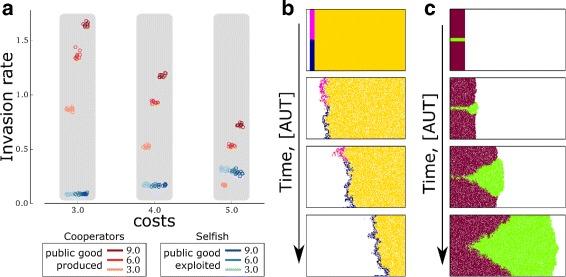
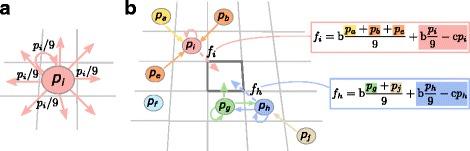
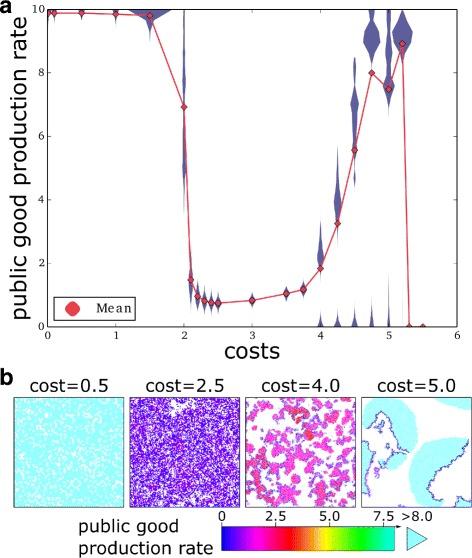
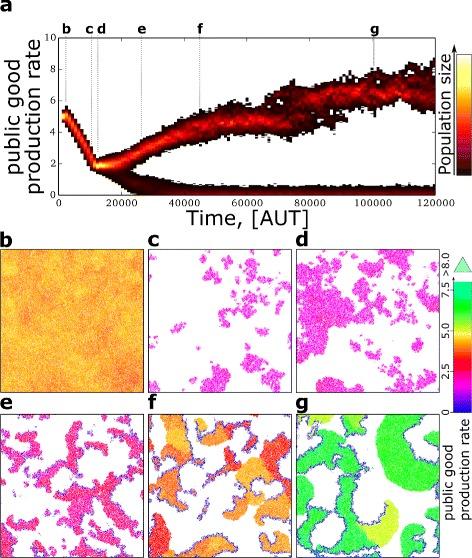
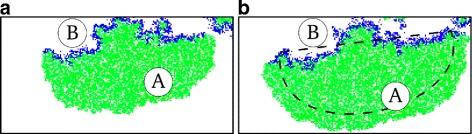
Contrary to this intuition, we show that cooperation can increase with higher costs. We analyse a minimal model where individuals live on a lattice and evolve the degree of cooperation. We find that a feedback establishes between the evolutionary dynamics of public good production and the spatial self-organisation of the population. The evolutionary dynamics lead to the speciation of a cooperative and a selfish lineage. The ensuing spatial self-organisation automatically diversifies the selection pressure on the two lineages. This enables selfish individuals to successfully invade cooperators at the expenses of their autonomous replication, and cooperators to increase public good production while expanding in the empty space left behind by cheaters. We show that this emergent feedback leads to higher degrees of cooperation when costs are higher.
CONCLUSIONS
An emergent feedback between evolution and self-organisation leads to high degrees of cooperation at high costs, under simple and general conditions. We propose this as a general explanation for the evolution of cooperative behaviours under seemingly prohibitive conditions.
背景
合作在生物系统中无处不在,但其进化却是一个长期存在的进化问题。合作行为理论模型得出的一个普遍且直观的结果是,当合作成本较高时,合作会减少,因为自私个体获得了选择优势。
结果
与这种直觉相反,我们发现合作可以随着成本的增加而增加。我们分析了一个最小模型,其中个体生活在晶格上并进化合作程度。我们发现公共物品生产的进化动力学与种群的空间自组织之间建立了一种反馈。进化动力学导致了一个合作谱系和一个自私谱系的物种形成。随之而来的空间自组织自动使对这两个谱系的选择压力多样化。这使得自私个体能够以牺牲其自主复制为代价成功入侵合作者,而合作者则在骗子留下的空空间中扩张时增加公共物品的生产。我们表明,这种涌现的反馈在成本较高时会导致更高程度的合作。
结论
在简单且一般的条件下,进化与自组织之间的涌现反馈会在高成本情况下导致高度的合作。我们将此作为在看似不利条件下合作行为进化的一般解释提出。
 Zotero 插件