
血浆神经丝轻蛋白(NFL)浓度是 HIV 感染中枢神经系统损伤的生物标志物:一项横断面研究。
Plasma Concentration of the Neurofilament Light Protein (NFL) is a Biomarker of CNS Injury in HIV Infection: A Cross-Sectional Study.
机构信息
Department of Infectious Diseases, Institute of Biomedicine, Sahlgrenska Academy, University of Gothenburg, Gothenburg, Sweden.
Department of Neurology, University of California San Francisco, USA.
出版信息
EBioMedicine. 2015 Nov 22;3:135-140. doi: 10.1016/j.ebiom.2015.11.036. eCollection 2016 Jan.
BACKGROUND
Cerebrospinal fluid (CSF) neurofilament light chain protein (NFL) is a sensitive marker of neuronal injury in a variety of neurodegenerative conditions, including the CNS dysfunction injury that is common in untreated HIV infection. However, an important limitation is the requirement for lumbar puncture. For this reason, a sensitive and reliable blood biomarker of CNS injury would represent a welcome advance in both clinical and research settings.
METHODS
To explore whether plasma concentrations of NFL might be used to detect CNS injury in HIV infection, an ultrasensitive Single molecule array (Simoa) immunoassay was developed. Using a cross-sectional design, we measured NFL in paired CSF and plasma samples from 121 HIV-infected subjects divided into groups according to stage of their systemic disease, presence of overt HIV-associated dementia (HAD), and after antiretroviral treatment (ART)-induced viral suppression. HIV-negative controls were also examined.
FINDINGS
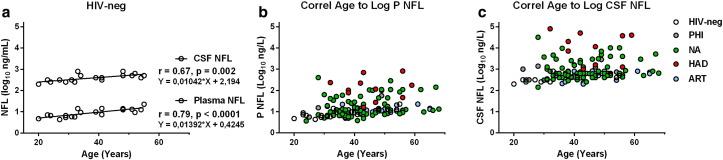
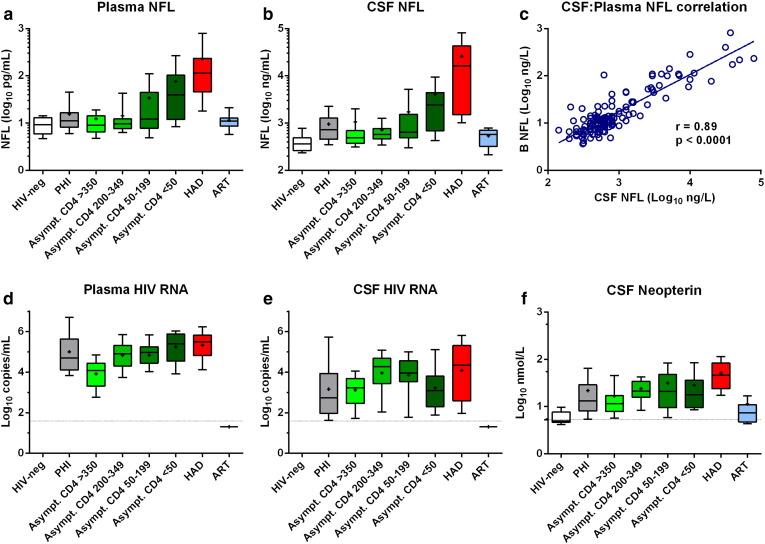
Plasma and CSF NFL concentrations were very highly correlated (r = 0.89, P < 0.0001). While NFL was more than 50-fold lower plasma than CSF it was within the quantifiable range of the new plasma assay in all subjects, including the HIV negatives and the HIV positives with normal CSF NFL concentrations. The pattern of NFL changes were almost identical in plasma and CSF, both exhibiting similar age-related increases in concentrations along with highest values in HAD and substantial elevations in ART-naïve neuroasymptomatic subjects with low blood CD4(+) T cells.
INTERPRETATION
These results show that plasma NFL may prove a valuable tool to evaluate ongoing CNS injury in HIV infection that may be applied in the clinic and in research settings to assess the presence if active CNS injury. Because CSF NFL is also elevated in a variety of other CNS disorders, sensitive measures of plasma NFL may similarly prove useful in other settings.
背景
脑脊液(CSF)神经丝轻链蛋白(NFL)是多种神经退行性疾病中神经元损伤的敏感标志物,包括未经治疗的 HIV 感染中常见的中枢神经系统功能障碍损伤。然而,一个重要的限制是需要腰椎穿刺。出于这个原因,一种敏感和可靠的中枢神经系统损伤血液生物标志物将是临床和研究领域的一个受欢迎的进展。
方法
为了探索 NFL 血浆浓度是否可用于检测 HIV 感染中的中枢神经系统损伤,开发了超灵敏单分子阵列(Simoa)免疫测定法。使用横断面设计,我们测量了 121 名 HIV 感染受试者的配对 CSF 和血浆样本中的 NFL,这些受试者根据其全身疾病的阶段、是否存在明显的 HIV 相关痴呆(HAD)以及抗逆转录病毒治疗(ART)诱导的病毒抑制进行分组。还检查了 HIV 阴性对照。
结果
血浆和 CSF NFL 浓度非常高相关(r = 0.89,P <0.0001)。虽然 NFL 比 CSF 低 50 多倍,但在所有受试者中,包括 HIV 阴性和 CSF NFL 浓度正常的 HIV 阳性者,新的血浆测定法都在可量化范围内。在血浆和 CSF 中,NFL 的变化模式几乎相同,两者均表现出类似的与年龄相关的浓度增加,以及在 HAD 中达到最高值,以及在 ART 初治无症状且血液 CD4(+)T 细胞低的神经无症状受试者中显著升高。
解释
这些结果表明,血浆 NFL 可能成为评估 HIV 感染中持续中枢神经系统损伤的有价值工具,可在临床和研究环境中用于评估是否存在活跃的中枢神经系统损伤。由于 CSF NFL 在多种其他中枢神经系统疾病中也升高,因此敏感的血浆 NFL 测量可能在其他情况下同样有用。
 Zotero 插件