
大麻素喹诺酮VCE - 004.8可减轻博来霉素诱导的硬皮病,并通过过氧化物酶体增殖物激活受体γ和CB2途径发挥强大的抗纤维化作用。
The cannabinoid quinol VCE-004.8 alleviates bleomycin-induced scleroderma and exerts potent antifibrotic effects through peroxisome proliferator-activated receptor-γ and CB2 pathways.
作者信息
del Río Carmen, Navarrete Carmen, Collado Juan A, Bellido M Luz, Gómez-Cañas María, Pazos M Ruth, Fernández-Ruiz Javier, Pollastro Federica, Appendino Giovanni, Calzado Marco A, Cantarero Irene, Muñoz Eduardo
机构信息
Maimonides Biomedical Research Institute of Córdoba, Reina Sofía University Hospital, Dept of Cell Biology, Physiology and Immunology, University of Córdoba, Avda Menéndez Pidal s/n, 14004. Córdoba, Spain.
VivaCell Biotechnology España, Parque Científico Tecnológico Rabanales 21, 14014, Córdoba, Spain.
出版信息
Sci Rep. 2016 Feb 18;6:21703. doi: 10.1038/srep21703.
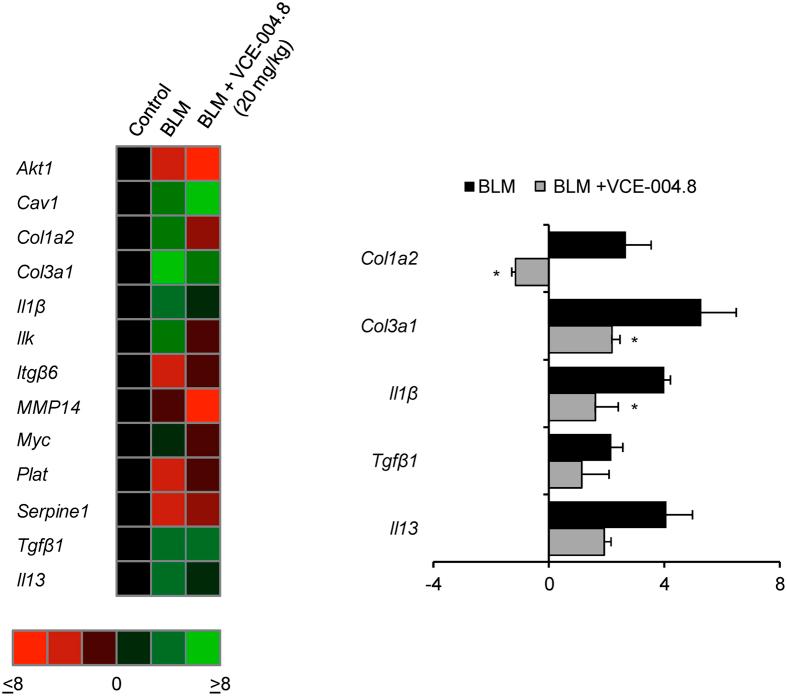
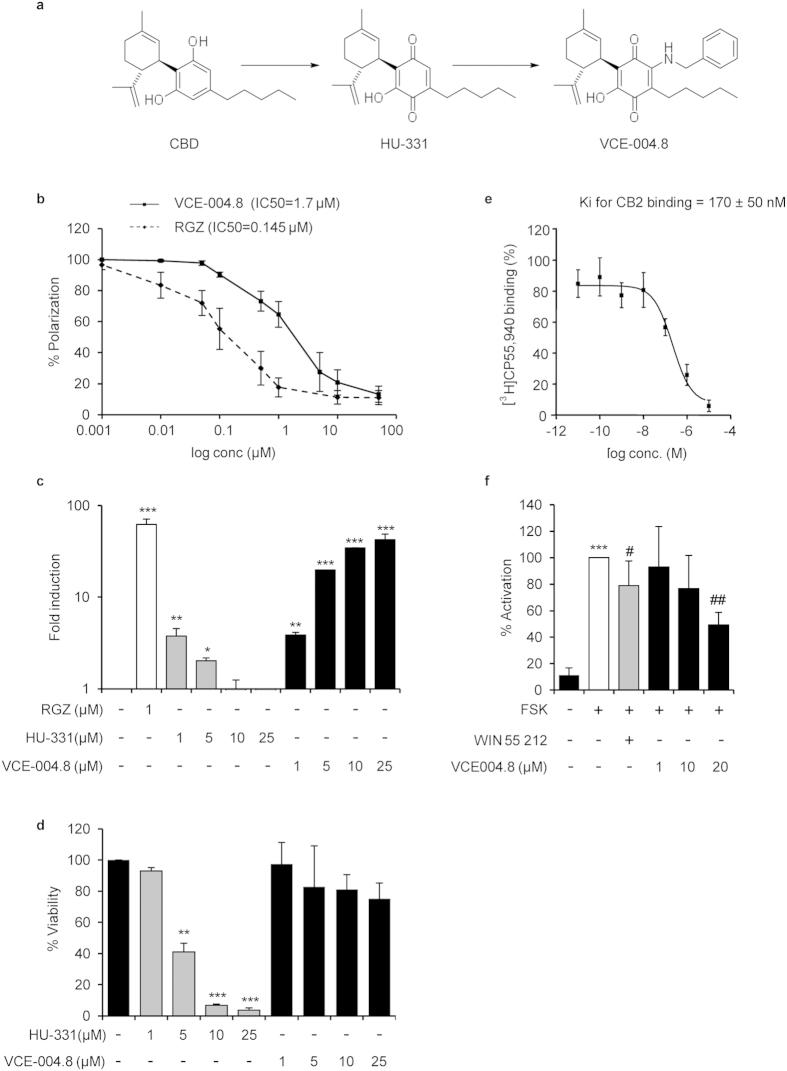
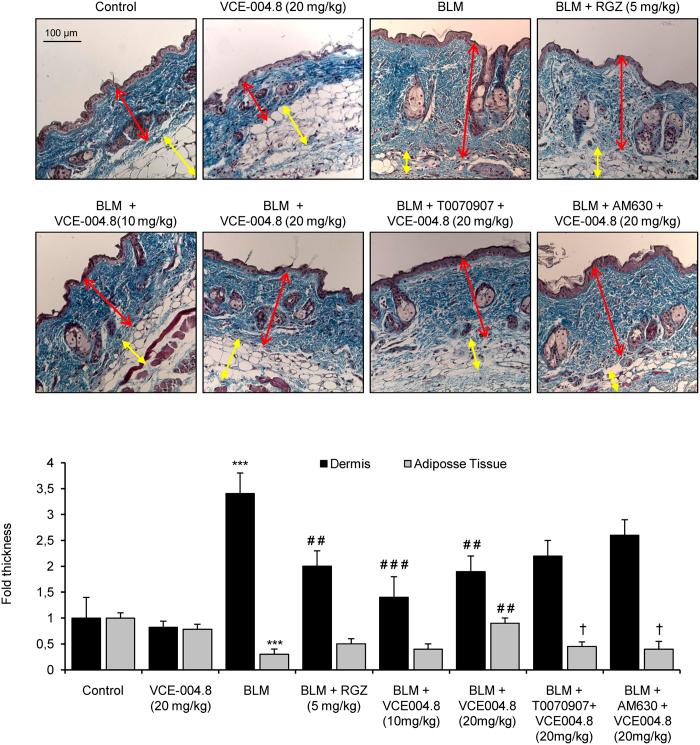
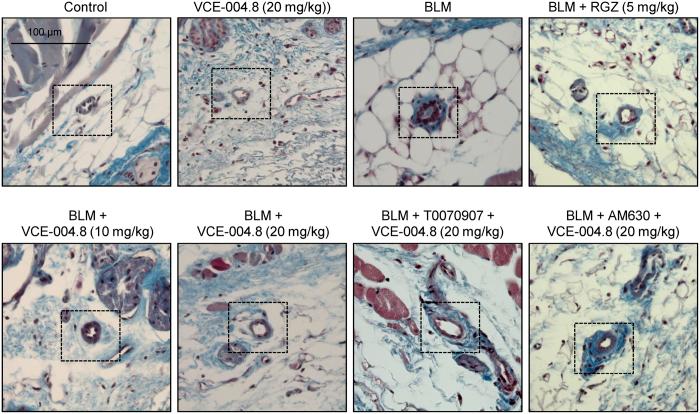
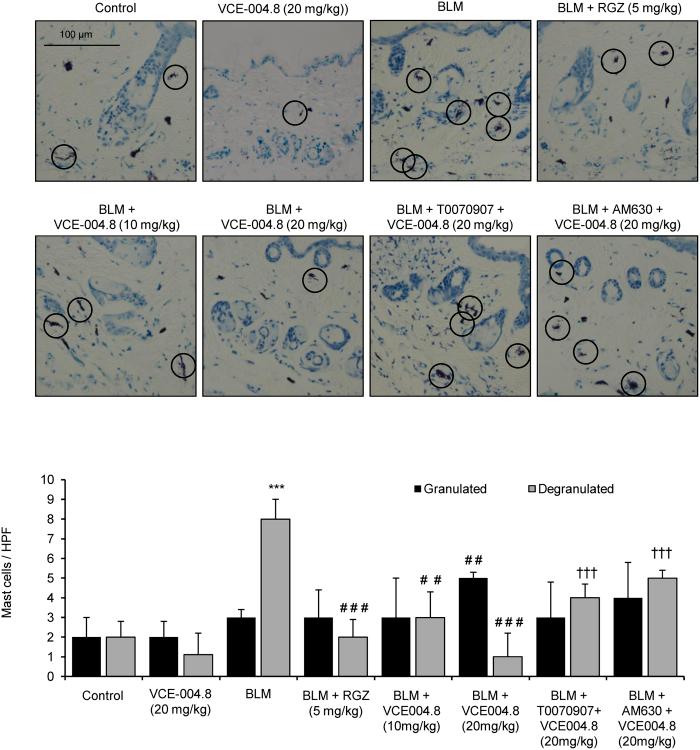
Scleroderma is a group of rare diseases associated with early and transient inflammation and vascular injury, followed by fibrosis affecting the skin and multiple internal organs. Fibroblast activation is the hallmark of scleroderma, and disrupting the intracellular TGFβ signaling may provide a novel approach to controlling fibrosis. Because of its potential role in modulating inflammatory and fibrotic responses, both PPARγ and CB2 receptors represent attractive targets for the development of cannabinoid-based therapies. We have developed a non-thiophilic and chemically stable derivative of the CBD quinol (VCE-004.8) that behaves as a dual agonist of PPARγ and CB2 receptors, VCE-004.8 inhibited TGFβ-induced Col1A2 gene transcription and collagen synthesis. Moreover, VCE-004.8 inhibited TGFβ-mediated myofibroblast differentiation and impaired wound-healing activity. The anti-fibrotic efficacy in vivo was investigated in a murine model of dermal fibrosis induced by bleomycin. VCE-004.8 reduced dermal thickness, blood vessels collagen accumulation and prevented mast cell degranulation and macrophage infiltration in the skin. These effects were impaired by the PPARγ antagonist T0070907 and the CB2 antagonist AM630. In addition, VCE-004.8 downregulated the expression of several key genes associated with fibrosis, qualifying this semi-synthetic cannabinoid as a novel compound for the management of scleroderma and, potentially, other fibrotic diseases.
硬皮病是一组罕见疾病,与早期短暂性炎症和血管损伤相关,随后出现影响皮肤和多个内脏器官的纤维化。成纤维细胞活化是硬皮病的标志,破坏细胞内转化生长因子β(TGFβ)信号传导可能为控制纤维化提供一种新方法。由于其在调节炎症和纤维化反应中的潜在作用,过氧化物酶体增殖物激活受体γ(PPARγ)和大麻素2型(CB2)受体都是基于大麻素疗法开发的有吸引力的靶点。我们已开发出一种CBD喹啉的非亲硫且化学稳定的衍生物(VCE - 004.8),它作为PPARγ和CB2受体的双重激动剂,VCE - 004.8抑制TGFβ诱导的I型胶原蛋白α2(Col1A2)基因转录和胶原蛋白合成。此外,VCE - 004.8抑制TGFβ介导的肌成纤维细胞分化并损害伤口愈合活性。在博来霉素诱导的皮肤纤维化小鼠模型中研究了其体内抗纤维化功效。VCE - 004.8可减少皮肤厚度、血管胶原蛋白积累,并防止皮肤中肥大细胞脱颗粒和巨噬细胞浸润。这些作用被PPARγ拮抗剂T0070907和CB2拮抗剂AM630削弱。此外,VCE - 004.8下调了几个与纤维化相关的关键基因的表达,使这种半合成大麻素成为治疗硬皮病以及潜在治疗其他纤维化疾病的新型化合物。



 Zotero 插件