
环子孢子蛋白内源性表达的氨基末端会干扰子孢子对蚊子唾液腺的入侵。
Endogenously-expressed NH2-terminus of circumsporozoite protein interferes with sporozoite invasion of mosquito salivary glands.
作者信息
Kojin Bianca B, Costa-da-Silva André Luis, Maciel Ceres, Henriques Dayane Alves, Carvalho Danilo O, Martin Kelcie, Marinotti Osvaldo, James Anthony A, Bonaldo Myrna C, Capurro Margareth Lara
机构信息
Laboratório de Mosquitos Geneticamente Modificados, Departamento de Parasitologia, Instituto de Ciências Biomédicas, Universidade de São Paulo, São Paulo, SP, 05508-000, Brazil.
BSL3+ Laboratory, Instituto de Ciências Biomédicas, Universidade de São Paulo, São Paulo, SP, 05508-900, Brazil.
出版信息
Malar J. 2016 Mar 10;15:153. doi: 10.1186/s12936-016-1207-8.
BACKGROUND
The circumsporozoite protein is the most abundant polypeptide expressed by sporozoites, the malaria parasite stage capable of infecting humans. Sporozoite invasion of mosquito salivary glands prior to transmission is likely mediated by a receptor/ligand-like interaction of the parasites with the target tissues, and the amino (NH2)-terminal portion of CSP is involved in this interaction but not the TSR region on the carboxyl (C)-terminus. Peptides based on the NH2-terminal domain could compete with the parasites for the salivary gland receptors and thus inhibit penetration.
METHODS
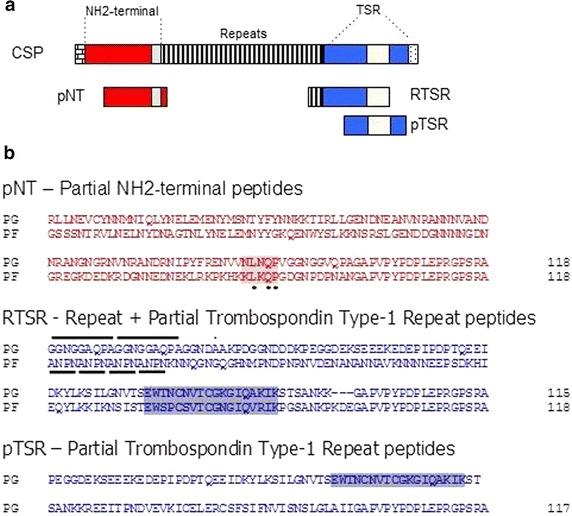
Peptides based on the NH2-terminus and TSR domains of the CSP from avian or human malaria parasites, Plasmodium gallinaceum and Plasmodium falciparum, respectively, were expressed endogenously in mosquito haemolymph using a transient (Sindbis virus-mediated) or stable (piggyBac-mediated transgenesis) system.
RESULTS
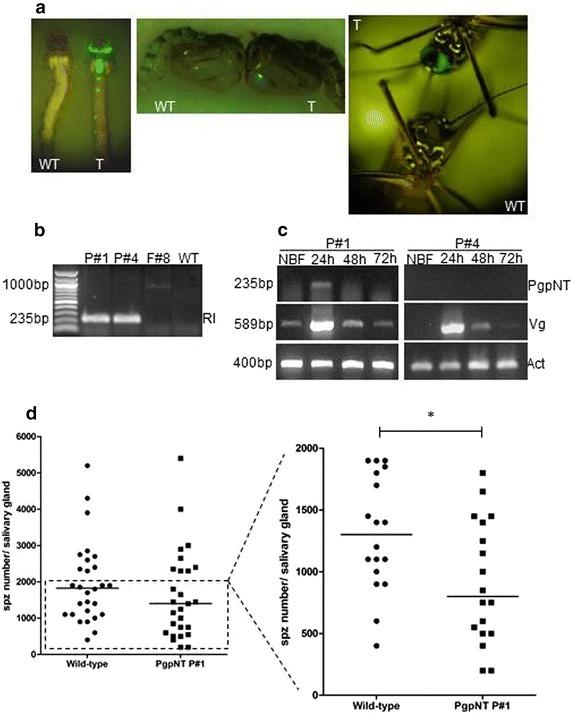
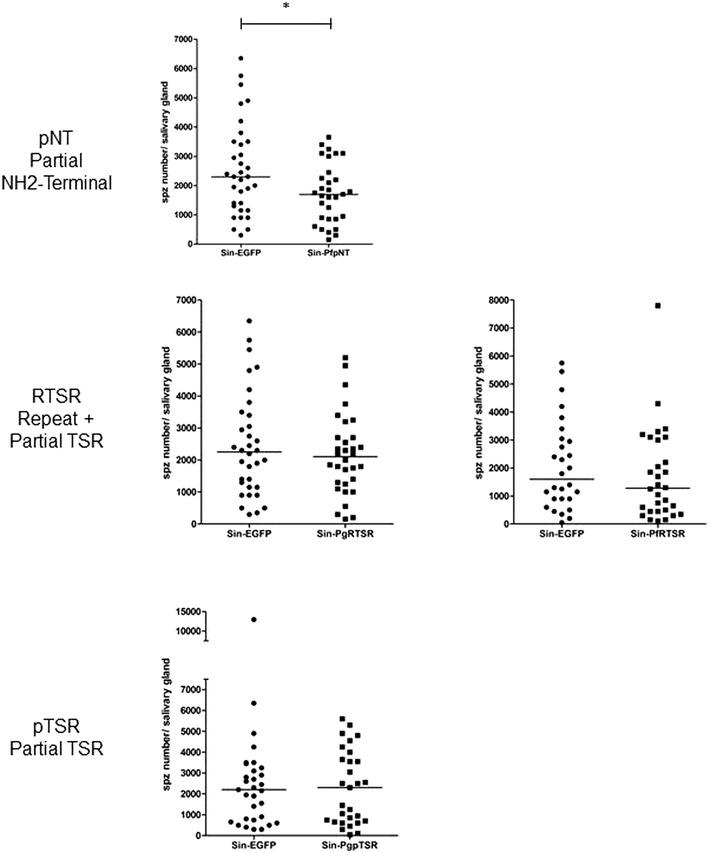
Transient endogenous expression of partial NH2-terminus peptide from P. falciparum CSP in P. gallinaceum-infected Aedes aegypti resulted in a reduced number of sporozoites in the salivary glands. When a transgenic approach was used to express a partial CSP NH2-terminal domain from P. gallinaceum the number of sporozoites in the salivary glands did not show a difference when compared to controls. However, a significant difference could be observed when mosquitoes with a lower infection were analysed. The same result could not be observed with mosquitoes endogenously expressing peptides based on the TSR domain from either P. gallinaceum or P. falciparum.
CONCLUSION
These results support the conclusion that CSP partial NH2-terminal domain can be endogenously expressed to promote a competition for the receptor used by sporozoites to invade salivary glands, and they could be used to block this interaction and reduce parasite transmission. The same effect cannot be obtained with peptides based on the TSR domain.
背景
环子孢子蛋白是疟原虫子孢子表达的最丰富的多肽,疟原虫子孢子是能够感染人类的疟原虫阶段。在传播之前,子孢子侵入蚊子唾液腺可能是由寄生虫与靶组织之间的受体/配体样相互作用介导的,并且环子孢子蛋白的氨基(NH2)末端部分参与这种相互作用,但羧基(C)末端的TSR区域不参与。基于NH2末端结构域的肽可以与寄生虫竞争唾液腺受体,从而抑制侵入。
方法
分别来自禽类疟原虫和人类疟原虫(鸡疟原虫和恶性疟原虫)的环子孢子蛋白的基于NH2末端和TSR结构域的肽,使用瞬时(辛德毕斯病毒介导)或稳定(piggyBac介导的转基因)系统在蚊子血淋巴中内源性表达。
结果
恶性疟原虫环子孢子蛋白的部分NH2末端肽在感染鸡疟原虫的埃及伊蚊中瞬时内源性表达,导致唾液腺中子孢子数量减少。当使用转基因方法表达来自鸡疟原虫的部分环子孢子蛋白NH2末端结构域时,与对照相比,唾液腺中子孢子数量没有差异。然而,当分析感染率较低的蚊子时,可以观察到显著差异。对于内源性表达基于鸡疟原虫或恶性疟原虫TSR结构域的肽的蚊子,未观察到相同结果。
结论
这些结果支持以下结论:环子孢子蛋白部分NH2末端结构域可以内源性表达,以促进对子孢子侵入唾液腺所使用的受体的竞争,并且它们可用于阻断这种相互作用并减少寄生虫传播。基于TSR结构域的肽不能获得相同的效果。

 Zotero 插件