
20S蛋白酶体中蛋白水解和自催化激活的统一机制。
A unified mechanism for proteolysis and autocatalytic activation in the 20S proteasome.
作者信息
Huber Eva M, Heinemeyer Wolfgang, Li Xia, Arendt Cassandra S, Hochstrasser Mark, Groll Michael
机构信息
Center for Integrated Protein Science at the Department Chemie, Lehrstuhl für Biochemie, Technische Universität München, Lichtenbergstrasse 4, 85747 Garching, Germany.
Department of Molecular Biophysics and Biochemistry, Yale University, 266 Whitney Avenue, New Haven, Connecticut 06520-8114, USA.
出版信息
Nat Commun. 2016 Mar 11;7:10900. doi: 10.1038/ncomms10900.
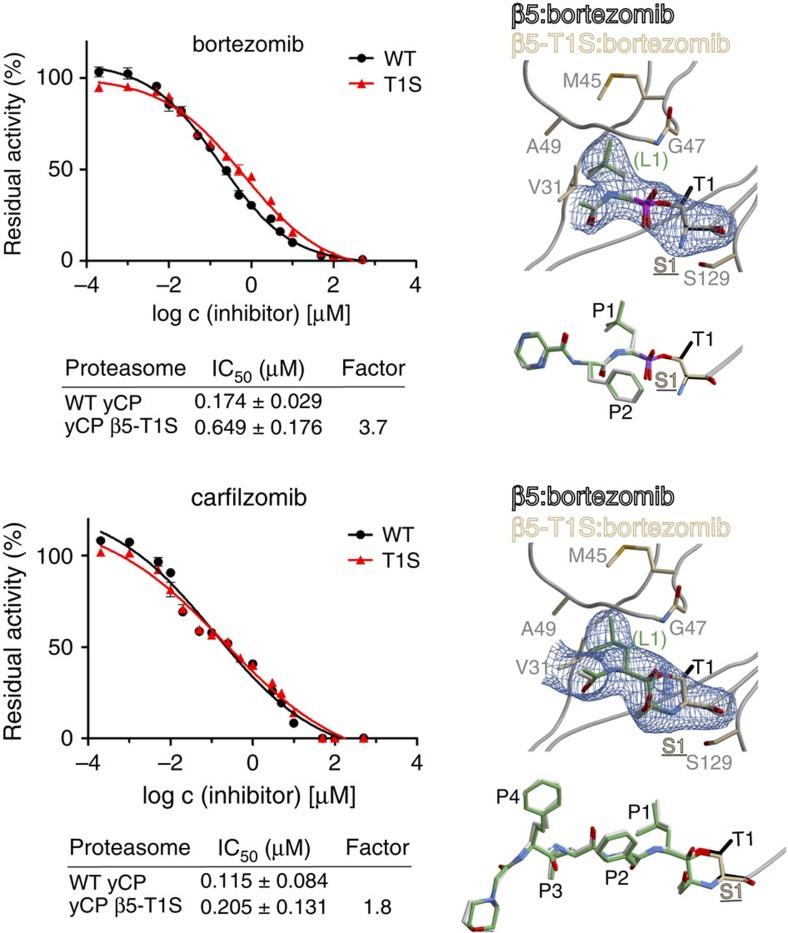
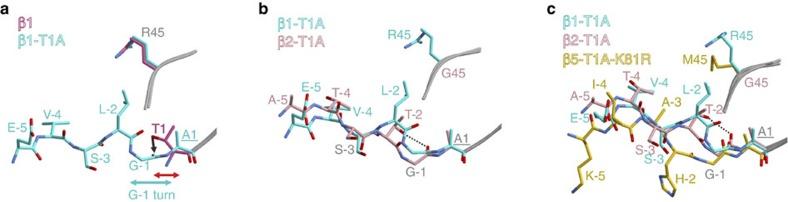
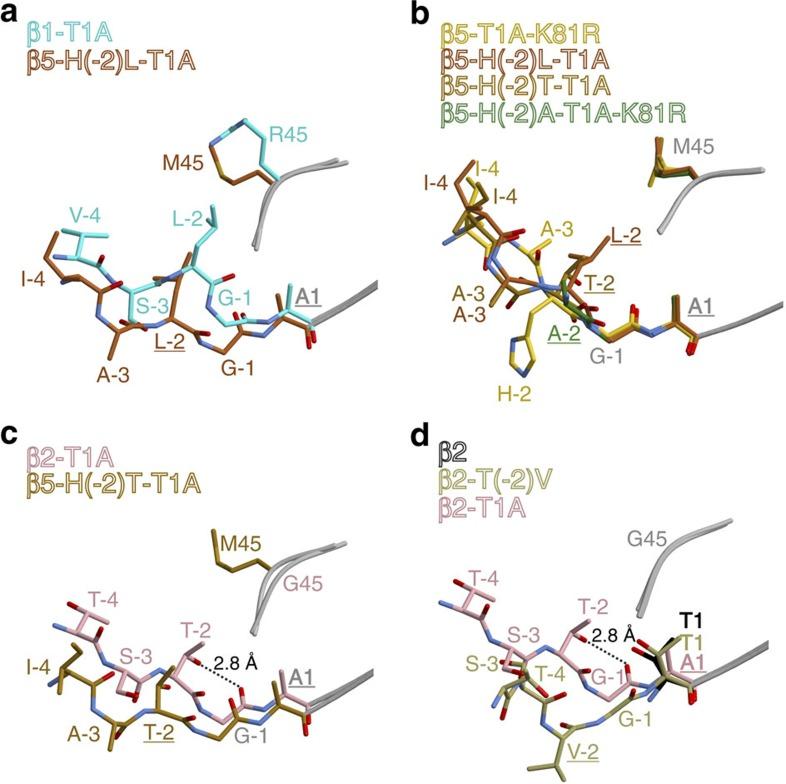
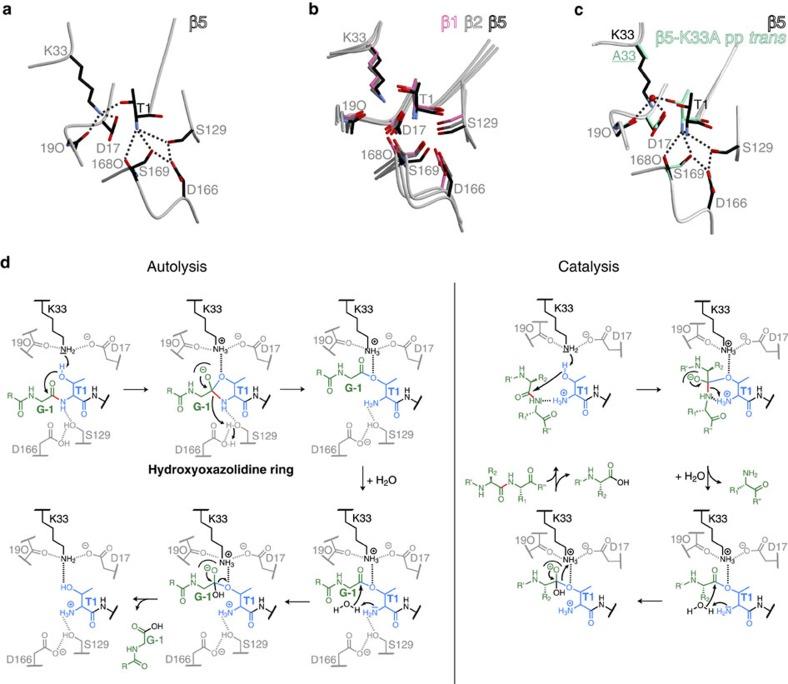
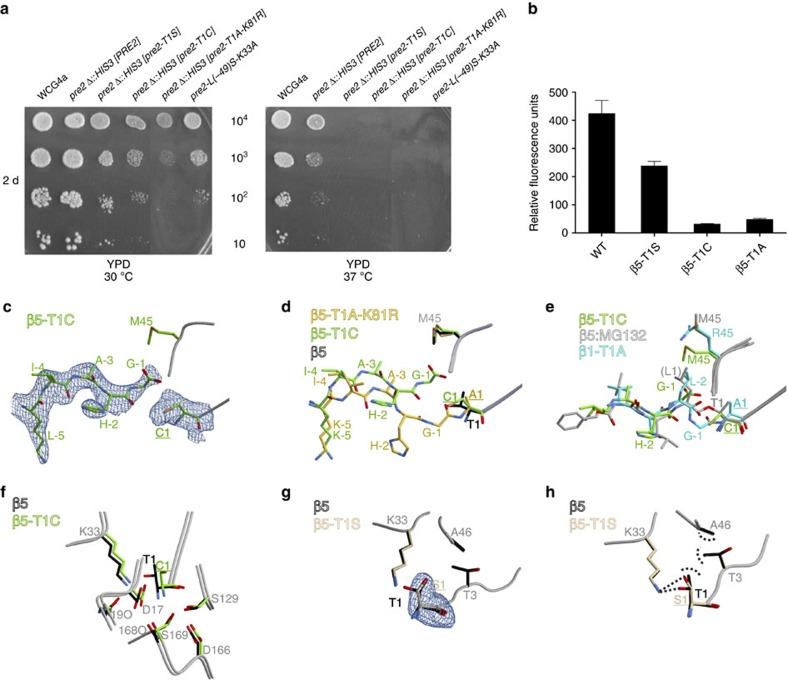
Biogenesis of the 20S proteasome is tightly regulated. The N-terminal propeptides protecting the active-site threonines are autocatalytically released only on completion of assembly. However, the trigger for the self-activation and the reason for the strict conservation of threonine as the active site nucleophile remain enigmatic. Here we use mutagenesis, X-ray crystallography and biochemical assays to suggest that Lys33 initiates nucleophilic attack of the propeptide by deprotonating the Thr1 hydroxyl group and that both residues together with Asp17 are part of a catalytic triad. Substitution of Thr1 by Cys disrupts the interaction with Lys33 and inactivates the proteasome. Although a Thr1Ser mutant is active, it is less efficient compared with wild type because of the unfavourable orientation of Ser1 towards incoming substrates. This work provides insights into the basic mechanism of proteolysis and propeptide autolysis, as well as the evolutionary pressures that drove the proteasome to become a threonine protease.
20S蛋白酶体的生物合成受到严格调控。保护活性位点苏氨酸的N端前肽只有在组装完成后才会自动催化释放。然而,自我激活的触发因素以及苏氨酸作为活性位点亲核试剂严格保守的原因仍然是个谜。在这里,我们使用诱变、X射线晶体学和生化分析表明,赖氨酸33通过使苏氨酸1的羟基去质子化引发前肽的亲核攻击,并且这两个残基与天冬氨酸17一起是催化三联体的一部分。将苏氨酸1替换为半胱氨酸会破坏与赖氨酸33的相互作用并使蛋白酶体失活。虽然苏氨酸1丝氨酸突变体是有活性的,但由于丝氨酸1相对于进入底物的不利取向,其效率低于野生型。这项工作为蛋白水解和前肽自溶的基本机制以及驱使蛋白酶体成为苏氨酸蛋白酶的进化压力提供了见解。
 Zotero 插件