
波兰南部儿科患者侵袭性感染中金黄色葡萄球菌菌株的克隆结构与特征:年龄、spa分型、克隆复合体和基因标记之间的关联
Clonal Structure and Characterization of Staphylococcus aureus Strains from Invasive Infections in Paediatric Patients from South Poland: Association between Age, spa Types, Clonal Complexes, and Genetic Markers.
作者信息
Ilczyszyn Weronika M, Sabat Artur J, Akkerboom Viktoria, Szkarlat Anna, Klepacka Joanna, Sowa-Sierant Iwona, Wasik Barbara, Kosecka-Strojek Maja, Buda Aneta, Miedzobrodzki Jacek, Friedrich Alexander W
机构信息
Department of Microbiology, Faculty of Biochemistry, Biophysics and Biotechnology, Jagiellonian University, Krakow, Poland.
Department of Medical Microbiology, University of Groningen, University Medical Center Groningen, Groningen, The Netherlands.
出版信息
PLoS One. 2016 Mar 18;11(3):e0151937. doi: 10.1371/journal.pone.0151937. eCollection 2016.
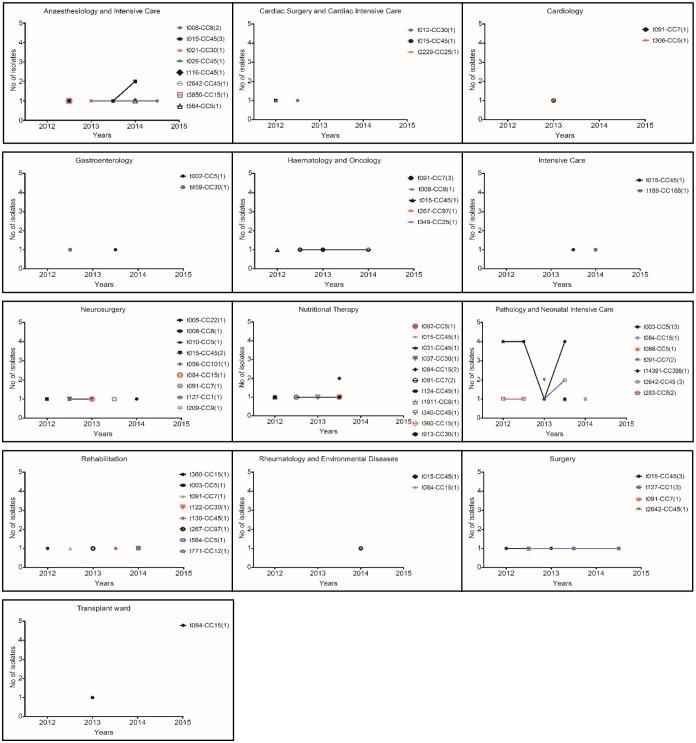
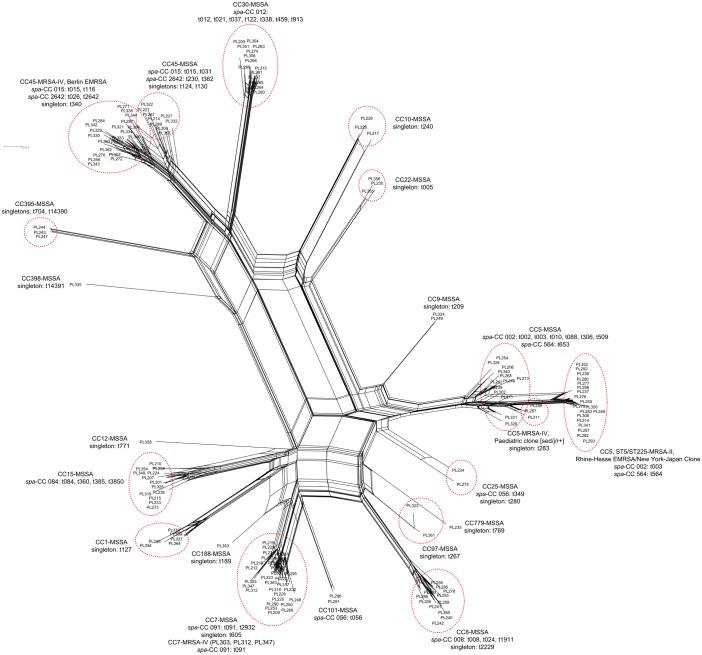
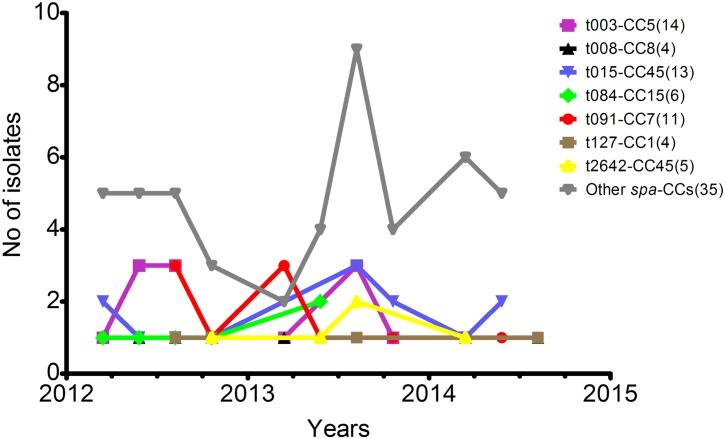
The aim of current study was to examine clonal structure and genetic profile of invasive Staphylococcus aureus isolates recovered from infants and children treated at the Jagiellonian University Children's Hospital of Krakow, Poland. The 107 invasive S. aureus isolates, collected between February 2012 and August 2014, were analysed retrospectively. Antimicrobial susceptibility testing, spa typing and DNA microarray analysis were performed to determine clonal distribution, diversity and gene content in regard to patients characteristics. In total, 107 isolates were recovered from 88 patients with clinical symptoms of invasive bacterial infection. The final set of 92 non-duplicate samples included 38 MRSA isolates. Additionally, a set of 54 S. aureus isolates collected during epidemiological screening was genotyped and analysed. There were 72 healthcare-associated (HCA) and 20 community-onset (CO) infection events caused by 33 and 5 MRSA isolates, respectively. The majority of isolates were affiliated with the major European clonal complexes CC5 (t003, spa-CC 002), CC45 (spa-CC 015), CC7 or CC15 (t084, t091, spa-CC 084). Two epidemic clones (CC5-MRSA-II or CC45-MRSA-IV) dominated among MRSA isolates, while MSSA population contained 15 different CCs. The epidemiological screening isolates belonged to similar genetic lineages as those collected from invasive infection cases. The HCA infection events, spa types t003, t2642 or CC5 were significantly associated with infections occurring in neonates and children under 5 years of age. Moreover, carriage of several genetic markers, including erm(A), sea (N315), egc-cluster, chp was significantly higher in isolates obtained from children in this age group. The spa types t091 and t008 were underrepresented among patients aged 5 years or younger, whereas spa type t008, CC8 and presence of splE was associated with infection in children aged 10 years or older. The HCA-MRSA strains were most frequently found in children under 5 years, although the majority of invasive infections was associated with MSSA strains. Moreover, an association between age group of children from the study population and a specific strain genotype (spa type, clonal complex or genetic content) was observed among the patients.
本研究旨在检测从波兰克拉科夫雅盖隆大学儿童医院接受治疗的婴幼儿和儿童中分离出的侵袭性金黄色葡萄球菌菌株的克隆结构和基因图谱。对2012年2月至2014年8月期间收集的107株侵袭性金黄色葡萄球菌菌株进行回顾性分析。进行了药敏试验、spa分型和DNA微阵列分析,以确定与患者特征相关的克隆分布、多样性和基因含量。总共从88例有侵袭性细菌感染临床症状的患者中分离出107株菌株。最终的92份非重复样本包括38株耐甲氧西林金黄色葡萄球菌(MRSA)菌株。此外,对在流行病学筛查期间收集的一组54株金黄色葡萄球菌菌株进行了基因分型和分析。分别由33株和5株MRSA菌株引起72例医疗保健相关(HCA)感染事件和20例社区获得性(CO)感染事件。大多数菌株隶属于主要的欧洲克隆复合体CC5(t003,spa-CC 002)、CC45(spa-CC 015)、CC7或CC15(t084,t091,spa-CC 084)。两个流行克隆(CC5-MRSA-II或CC45-MRSA-IV)在MRSA菌株中占主导地位,而甲氧西林敏感金黄色葡萄球菌(MSSA)群体包含15个不同的克隆复合体。流行病学筛查分离株与从侵袭性感染病例中收集的分离株属于相似的遗传谱系。HCA感染事件、spa型t003、t2642或CC5与新生儿和5岁以下儿童发生的感染显著相关。此外,在该年龄组儿童分离株中,包括erm(A)、sea(N315)、egc簇、chp在内的几种遗传标记的携带率显著更高。spa型t091和t008在5岁或以下患者中代表性不足,而spa型t008、CC8和splE的存在与10岁或以上儿童的感染相关。HCA-MRSA菌株最常见于5岁以下儿童,尽管大多数侵袭性感染与MSSA菌株有关。此外,在研究人群的儿童年龄组与特定菌株基因型(spa型、克隆复合体或基因含量)之间观察到关联。

 Zotero 插件