
补充荨麻能否减轻Wistar大鼠的汞中毒?
Can Urtica dioica supplementation attenuate mercury intoxication in Wistar rats?
作者信息
Siouda Wafa, Abdennour Cherif
机构信息
Department of Biology, Faculty of Sciences, Laboratory of Animal Ecophysiology, University Badji Mokhtar-Annaba, Annaba 3000, Algeria.
出版信息
Vet World. 2015 Dec;8(12):1458-65. doi: 10.14202/vetworld.2015.1458-1465.
AIM
The objective of this study was to investigate the possible protective role of nettle Urtica dioica (UD) against Hg-induced toxicity.
MATERIALS AND METHODS
A total of 28 rats were equally divided into four groups: the control, the Hg (0.8 g HgCl2/kg in the diet), the UD (1.5 ml UD/rat by gavage), and the Hg+UD group. HgCl2 was daily dissolved in distilled water and immediately mixed with the standard diet. A solution of daily infused fresh nettle leaves in boiling water (16 g in 25 ml) was obtained and then it was administrated by gavage. Biochemical and reproductive markers, in addition to glutathione (GSH) level (liver, kidney and testis) and the histological profiles (testis and epididymis) were evaluated after 1 month exposure.
RESULTS
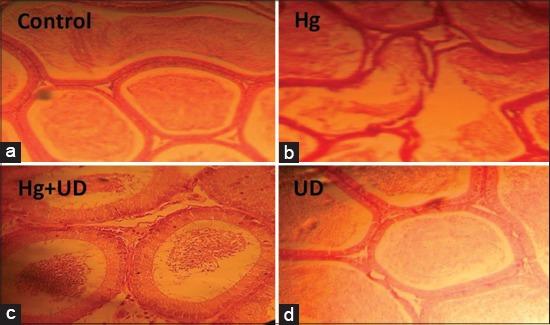
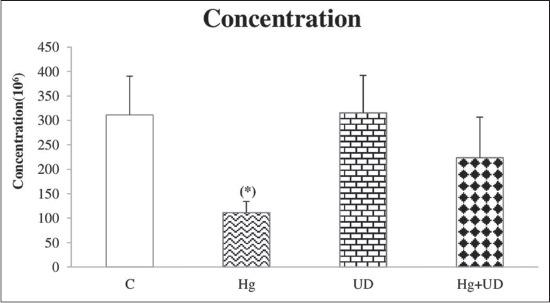
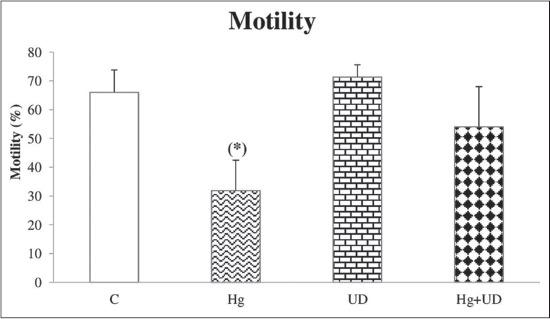
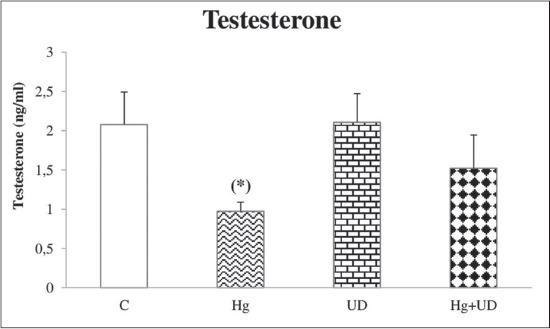
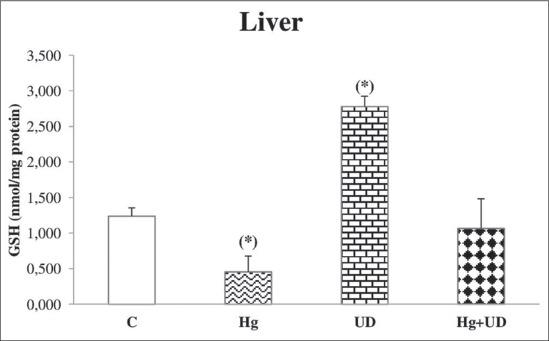
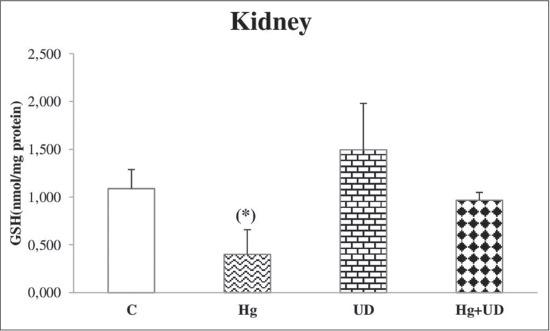
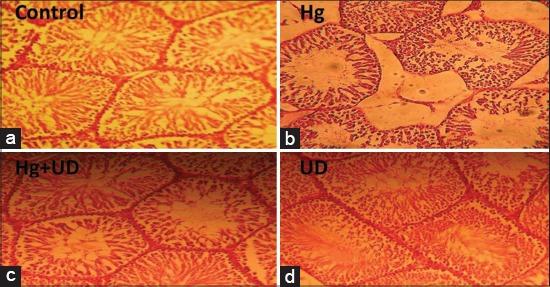
Compared to the control, the levels of glucose, triglycerides, urea, creatinine, alanine aminotransferase (ALT), aspartate aminotransferase (AST), and alkaline phosphatase (ALP) were significantly raised in the Hg group. In the latter group, the concentrations of Mg, Fe, and Ca were significantly decreased. Besides, Hg+UD group has only showed raised AST activity and reduced Mg level. Concerning the fertility markers, Hg has provoked a significant decrease in the spermatozoa's concentration and motility and in plasma testosterone level as well. Furthermore, hepatic, renal and testicular GSH concentrations have declined significantly in the Hg treated rat compared to the control. A remarkable enhancement of the GSH level was observed in all organs of the UD group. The histological examinations of the Hg group have revealed marked testicular degeneration of the most seminiferous tubules, and showed few sperms in the lumen of epididymis ducts. However, the Hg+UD rats have demonstrated an improved histological structure with the presence of important numbers of sperms in the lumen. In addition, a clear stabilization of organized seminiferous tubules and an increased sperms' numbers were noted in the UD supplemented rats.
CONCLUSION
Nettle leaves have not only played a clear protective role during Hg intoxication, but it also enhanced hepatic, renal and testicular GSH level of Wistar rats.
目的
本研究的目的是调查荨麻(Urtica dioica,UD)对汞诱导的毒性可能具有的保护作用。
材料与方法
总共28只大鼠被平均分为四组:对照组、汞组(饮食中含0.8 g HgCl₂/kg)、UD组(通过灌胃给予每只大鼠1.5 ml UD)和汞+UD组。HgCl₂每日溶解于蒸馏水中,并立即与标准饮食混合。制备每日将新鲜荨麻叶浸泡在沸水中(16 g于25 ml水中)的溶液,然后通过灌胃给药。在暴露1个月后,评估生化和生殖指标,以及谷胱甘肽(GSH)水平(肝脏、肾脏和睾丸)和组织学特征(睾丸和附睾)。
结果
与对照组相比,汞组的葡萄糖、甘油三酯、尿素、肌酐、丙氨酸转氨酶(ALT)、天冬氨酸转氨酶(AST)和碱性磷酸酶(ALP)水平显著升高。在该组中,镁、铁和钙的浓度显著降低。此外,汞+UD组仅显示AST活性升高和镁水平降低。关于生育指标,汞导致精子浓度和活力以及血浆睾酮水平显著下降。此外,与对照组相比,汞处理的大鼠肝脏、肾脏和睾丸中的GSH浓度显著下降。在UD组的所有器官中均观察到GSH水平显著升高。汞组的组织学检查显示大多数生精小管有明显的睾丸退化,附睾管腔内精子数量很少。然而,汞+UD组大鼠的组织学结构有所改善,管腔内有大量精子。此外,在补充UD的大鼠中,观察到生精小管结构明显稳定且精子数量增加。
结论
荨麻叶不仅在汞中毒期间发挥了明显的保护作用,还提高了Wistar大鼠肝脏、肾脏和睾丸中的GSH水平。

 Zotero 插件