
参与人类脂肪细胞分化和肥胖的脂肪生成miRNA及元特征miRNA。
Adipogenic miRNA and meta-signature miRNAs involved in human adipocyte differentiation and obesity.
作者信息
Shi Chunmei, Huang Fangyan, Gu Xiaohong, Zhang Min, Wen Juan, Wang Xing, You Lianghui, Cui Xianwei, Ji Chenbo, Guo Xirong
机构信息
Department of Children Health Care, Nanjing Maternity and Child Health Care Hospital Affiliated to Nanjing Medical University, Nanjing, China.
Institute of Pediatrics, Nanjing Medical University, Nanjing, China.
出版信息
Oncotarget. 2016 Jun 28;7(26):40830-40845. doi: 10.18632/oncotarget.8518.
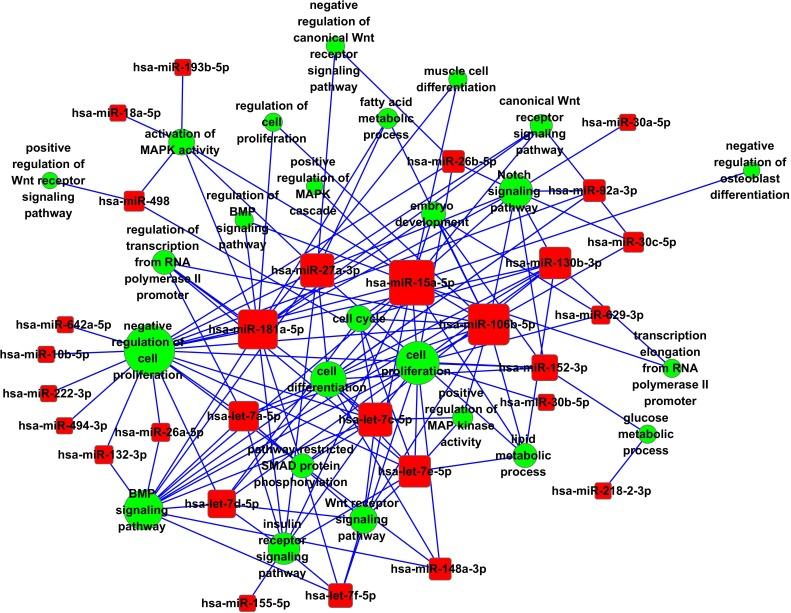
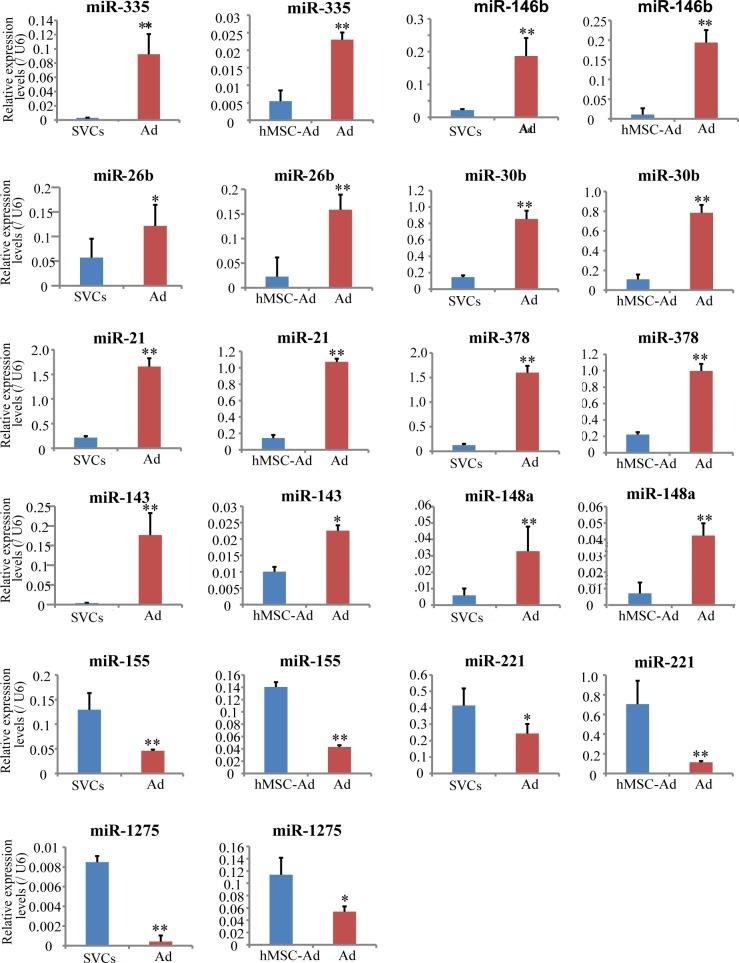
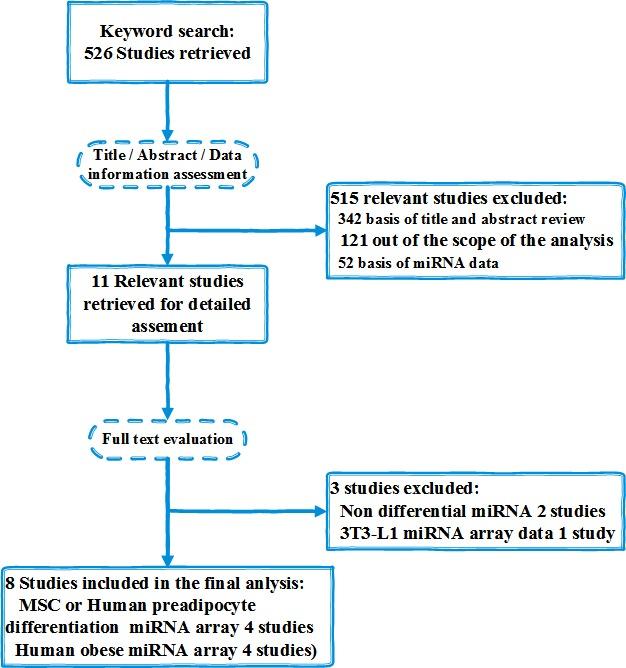
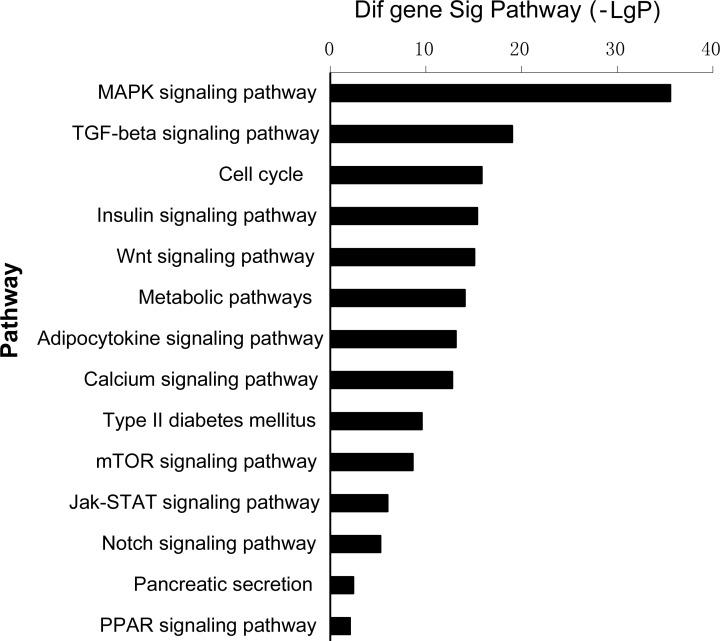
MicroRNAs (miRNAs) have been identified as a new class of regulatory molecules that influence many biological functions, including metabolism, adipocyte differentiation. To determine the role of adipogenic miRNAs in the adipocyte differentiation process, we used microarray technology to monitor miRNA levels in human adipose-derived mesenchymal stem cells (hMSCs-Ad), human stromal vascular cells (SVCs) and differentiated adipocytes. 79 miRNAs were found to be differentially expressed, most of which are located in obesity related chromosomal regions but have not been previously linked to adipocyte differentiation process. A systematic search was made for relevant studies in academic data bases, involving the Gene Expression Omnibus (GEO) ArrayExpress, Pubmed and Embase database. Eight studies on human adipocyte differentiation or obesity were included in the final analysis. After combining our microarray data with meta-analysis of published microarray data, we detected 42 differently expressed miRNAs (meta-signature miRNAs) in mature adipocytes compared to SVCs or hMSCs-Ad. Our study shows meta-signature miRNAs specific for adipogenesis, several of which are correlated with key gene targets demonstrating functional relationships to pathways in BMP signaling pathway, Cell differentiation, Wnt signaling, insulin receptor signaling pathway, MAPK signaling, Cell cycle and lipid metabolic process. Our study shows that the first evidence of hsa-let-7 family, hsa-miR-15a-5p, hsa-miR-27a-3p, hsa-miR-106b-5p, hsa-miR-148a-3p and hsa-miR-26b-5p got a great weight in adipogenesis. We concluded that meta-signature miRNAs involved in adipocyte differentiation and provided pathophysiological roles and novel insight into obesity and its related metabolic diseases.
微小RNA(miRNA)已被鉴定为一类新的调节分子,可影响许多生物学功能,包括代谢、脂肪细胞分化。为了确定脂肪生成相关miRNA在脂肪细胞分化过程中的作用,我们使用微阵列技术监测人脂肪来源间充质干细胞(hMSCs-Ad)、人基质血管细胞(SVCs)和分化脂肪细胞中的miRNA水平。发现79种miRNA存在差异表达,其中大多数位于与肥胖相关的染色体区域,但此前尚未与脂肪细胞分化过程相关联。我们在学术数据库中进行了系统检索,涉及基因表达综合数据库(GEO)、ArrayExpress、PubMed和Embase数据库。最终分析纳入了八项关于人脂肪细胞分化或肥胖的研究。将我们的微阵列数据与已发表微阵列数据的荟萃分析相结合后,我们检测到与SVCs或hMSCs-Ad相比,成熟脂肪细胞中有42种差异表达的miRNA(荟萃特征miRNA)。我们的研究显示了特定于脂肪生成的荟萃特征miRNA,其中几种与关键基因靶点相关,表明与骨形态发生蛋白(BMP)信号通路、细胞分化、Wnt信号、胰岛素受体信号通路、丝裂原活化蛋白激酶(MAPK)信号、细胞周期和脂质代谢过程中的途径存在功能关系。我们的研究表明,人源let-7家族、hsa-miR-15a-5p、hsa-miR-27a-3p、hsa-miR-106b-5p、hsa-miR-148a-3p和hsa-miR-26b-5p首次在脂肪生成中发挥重要作用。我们得出结论,荟萃特征miRNA参与脂肪细胞分化,并为肥胖及其相关代谢疾病提供了病理生理作用和新的见解。


 Zotero 插件