
细胞外微小RNA-21和微小RNA-26a在抗原诱导的肺部炎症大鼠及复发性喘息儿童的体液中升高。
Extracellular microRNA-21 and microRNA-26a increase in body fluids from rats with antigen induced pulmonary inflammation and children with recurrent wheezing.
作者信息
Jiang Congshan, Yu Hongchuan, Sun Qingzhu, Zhu Wenhua, Xu Jing, Gao Ning, Zhang Rui, Liu Li, Wu Xiaoying, Yang Xudong, Meng Liesu, Lu Shemin
机构信息
Department of Biochemistry and Molecular Biology, School of Basic Medical Sciences, Xi'an Jiaotong University Health Science Center, West Yanta Road No.76, Xi'an, Shaanxi, PR China.
Key Laboratory of Environment and Genes Related to Diseases (Xi'an Jiaotong University), Ministry of Education, Xi'an, Shaanxi, PR China.
出版信息
BMC Pulm Med. 2016 Apr 14;16:50. doi: 10.1186/s12890-016-0216-2.
BACKGROUND
This study aims to find out whether extracellular miRNAs is implicated in recurrent childhood wheezing with asthmatic risk.
METHODS
One hundred and forty children of Chinese Han population were recruited for this study. Plasma and intracellular miRNAs from children with recurrent wheezing and rats with antigen induced pulmonary inflammation (AIPI) were detected by using reverse transcription-quantitative PCR. Differential leukocytes in blood were automatically counted. Total IgE was detected by enzyme-linked immunosorbent assay. Clinical implication in diagnosis was evaluated using receiver operating characteristic curves.
RESULTS
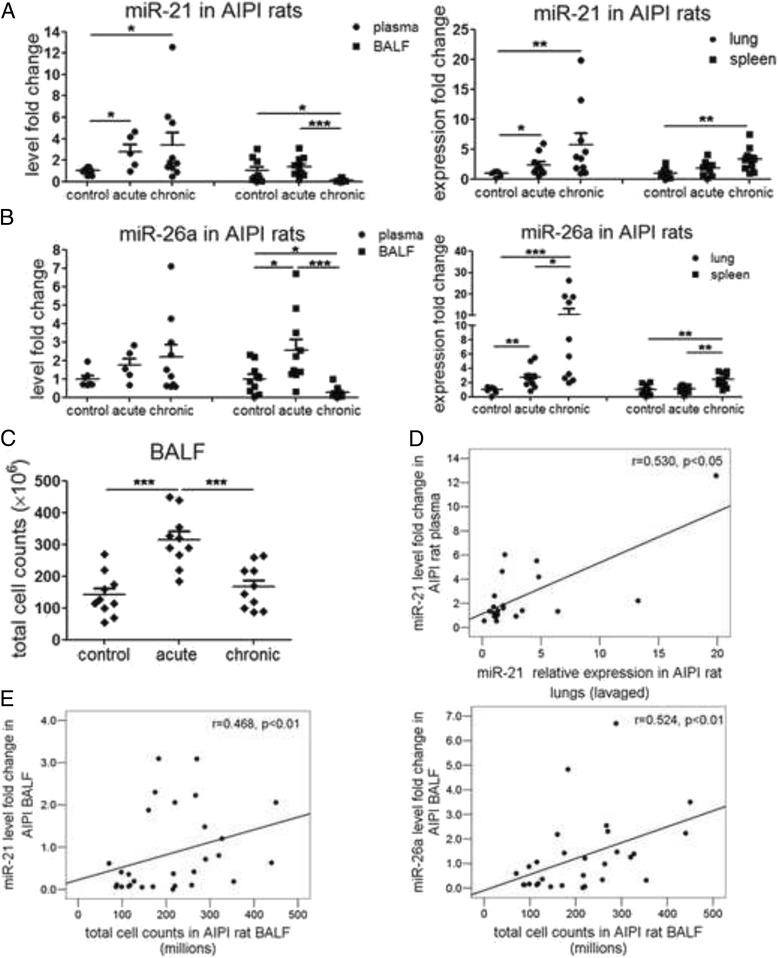
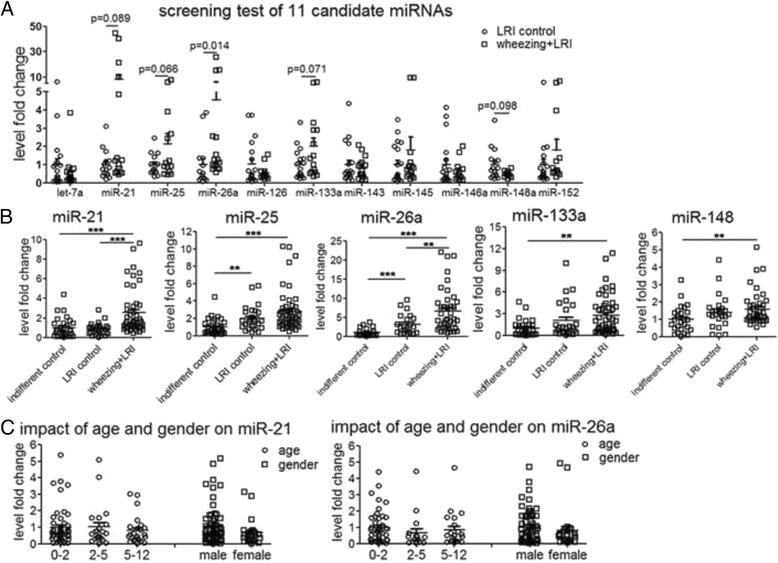
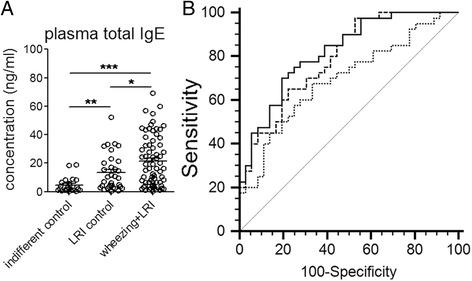
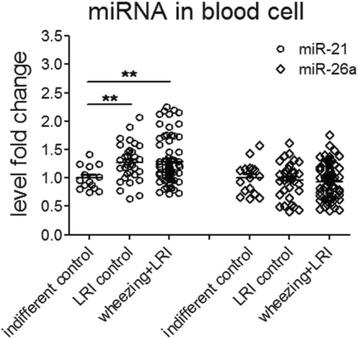
The increase of plasma miR-21 and miR-26a was screened out from 11 candidate miRNAs and validated in wheezing children. The level of expression for both miRNAs were comparable in different age and gender. Plasma miR-21 was more preferable to miR-26a and total IgE for diagnosis. Plasma miR-21 and miR-26a levels were not significantly correlated with various leukocyte counts or miRNA expression in blood cells. In acute and chronic AIPI rats, miR-21 levels increased in both plasma and lavaged lung compared with control. Moreover, circulating miR-21 and miR-26a levels were highly positively correlated with infiltrated cell counts in bronchoalveolar lavage fluid of AIPI rats.
CONCLUSIONS
Circulating miR-21 and miR-26a increase in wheezing children and AIPI rats. This not only manifests their strong clinical implication in recurrent childhood wheezing with asthma risk, but also provides novel insights into the role of extracellular miRNAs during development of airway inflammation and recurrent wheezing.
背景
本研究旨在探究细胞外微小RNA(miRNA)是否与儿童复发性喘息及哮喘风险有关。
方法
招募了140名中国汉族儿童参与本研究。采用逆转录定量聚合酶链反应检测复发性喘息儿童及抗原诱导性肺炎(AIPI)大鼠血浆和细胞内的miRNA。自动计数血液中的不同白细胞。采用酶联免疫吸附测定法检测总IgE。使用受试者工作特征曲线评估诊断中的临床意义。
结果
从11种候选miRNA中筛选出血浆miR-21和miR-26a升高,并在喘息儿童中得到验证。这两种miRNA的表达水平在不同年龄和性别中相当。血浆miR-21在诊断方面比miR-26a和总IgE更具优势。血浆miR-21和miR-26a水平与各种白细胞计数或血细胞中的miRNA表达无显著相关性。在急性和慢性AIPI大鼠中,与对照组相比,血浆和灌洗肺中的miR-21水平均升高。此外,循环miR-21和miR-26a水平与AIPI大鼠支气管肺泡灌洗液中的浸润细胞计数高度正相关。
结论
喘息儿童和AIPI大鼠的循环miR-21和miR-26a升高。这不仅表明它们在有哮喘风险的儿童复发性喘息中具有很强的临床意义,还为细胞外miRNA在气道炎症和复发性喘息发展过程中的作用提供了新的见解。
 Zotero 插件