
恶性疟原虫在蛋白质运输过程中的一个单点决定了被人类抗体靶向的受感染红细胞表面主要抗原的表达。
A single point in protein trafficking by Plasmodium falciparum determines the expression of major antigens on the surface of infected erythrocytes targeted by human antibodies.
作者信息
Chan Jo-Anne, Howell Katherine B, Langer Christine, Maier Alexander G, Hasang Wina, Rogerson Stephen J, Petter Michaela, Chesson Joanne, Stanisic Danielle I, Duffy Michael F, Cooke Brian M, Siba Peter M, Mueller Ivo, Bull Peter C, Marsh Kevin, Fowkes Freya J I, Beeson James G
机构信息
Burnet Institute for Medical Research and Public Health, 85 Commercial Road, Melbourne, VIC, 3001, Australia.
Walter and Eliza Hall Institute of Medical Research, Parkville, VIC, Australia.
出版信息
Cell Mol Life Sci. 2016 Nov;73(21):4141-58. doi: 10.1007/s00018-016-2267-1. Epub 2016 May 19.
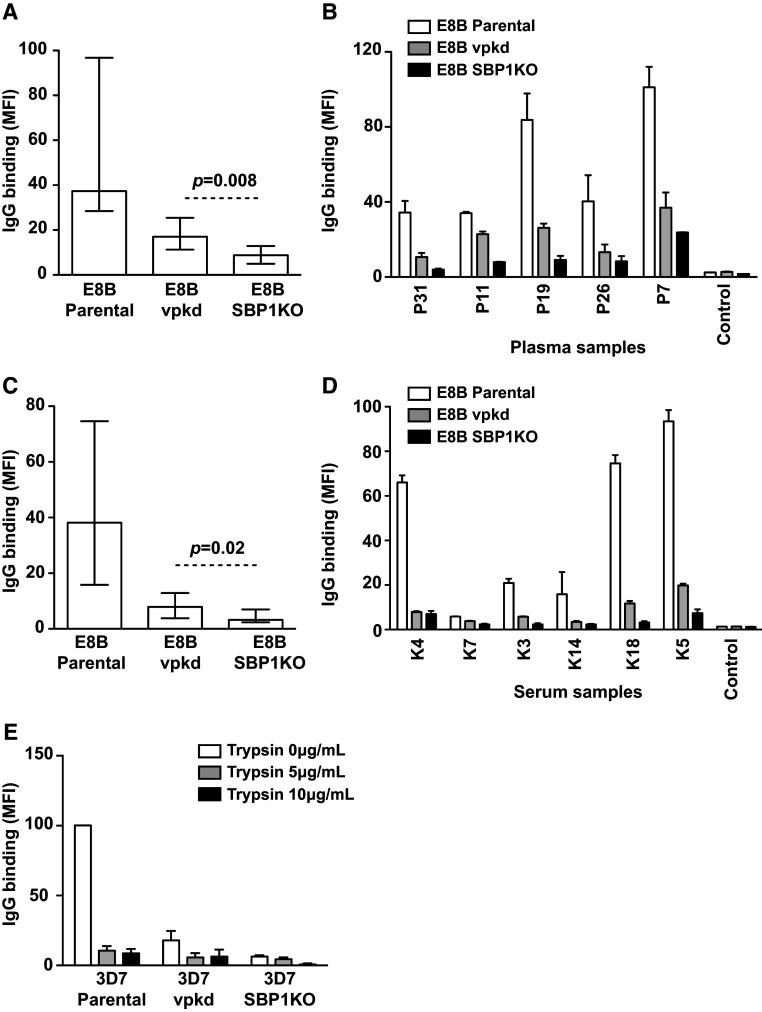
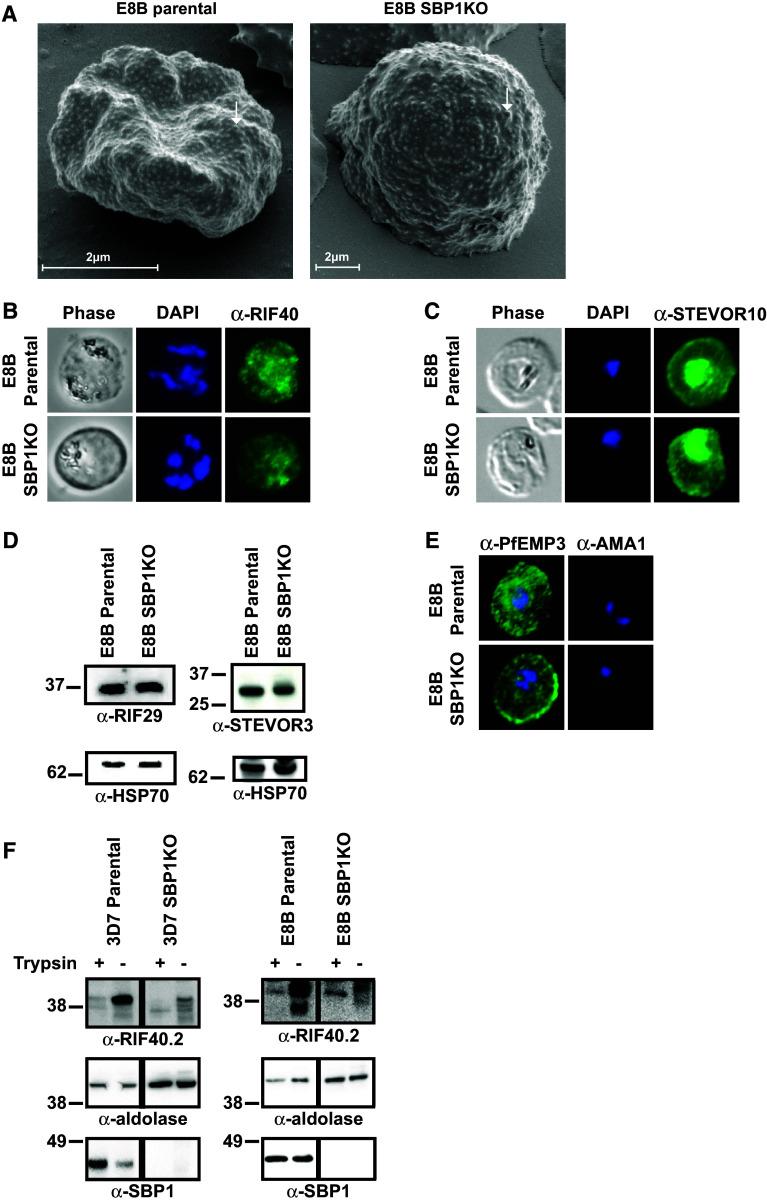
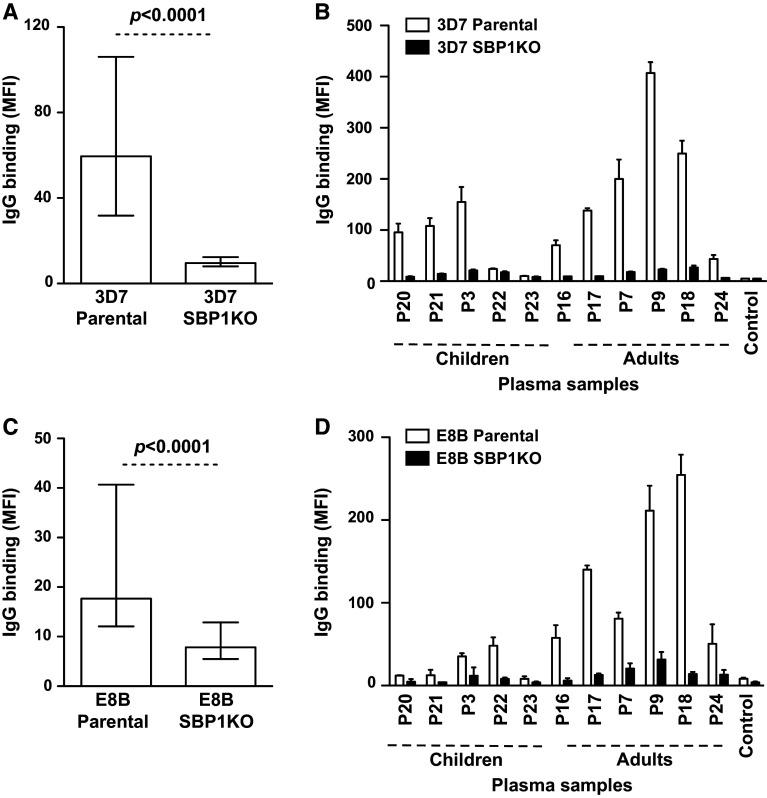
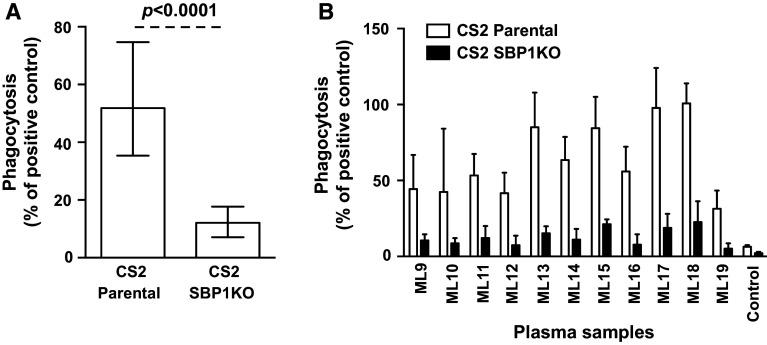
Antibodies to blood-stage antigens of Plasmodium falciparum play a pivotal role in human immunity to malaria. During parasite development, multiple proteins are trafficked from the intracellular parasite to the surface of P. falciparum-infected erythrocytes (IEs). However, the relative importance of different proteins as targets of acquired antibodies, and key pathways involved in trafficking major antigens remain to be clearly defined. We quantified antibodies to surface antigens among children, adults, and pregnant women from different malaria-exposed regions. We quantified the importance of antigens as antibody targets using genetically engineered P. falciparum with modified surface antigen expression. Genetic deletion of the trafficking protein skeleton-binding protein-1 (SBP1), which is involved in trafficking the surface antigen PfEMP1, led to a dramatic reduction in antibody recognition of IEs and the ability of human antibodies to promote opsonic phagocytosis of IEs, a key mechanism of parasite clearance. The great majority of antibody epitopes on the IE surface were SBP1-dependent. This was demonstrated using parasite isolates with different genetic or phenotypic backgrounds, and among antibodies from children, adults, and pregnant women in different populations. Comparisons of antibody reactivity to parasite isolates with SBP1 deletion or inhibited PfEMP1 expression suggest that PfEMP1 is the dominant target of acquired human antibodies, and that other P. falciparum IE surface proteins are minor targets. These results establish SBP1 as part of a critical pathway for the trafficking of major surface antigens targeted by human immunity, and have key implications for vaccine development, and quantifying immunity in populations.
针对恶性疟原虫血液阶段抗原的抗体在人类对疟疾的免疫中起关键作用。在寄生虫发育过程中,多种蛋白质从细胞内寄生虫转运至恶性疟原虫感染的红细胞(IEs)表面。然而,不同蛋白质作为获得性抗体靶点的相对重要性以及参与主要抗原转运的关键途径仍有待明确界定。我们对来自不同疟疾暴露地区的儿童、成人和孕妇体内针对表面抗原的抗体进行了定量分析。我们使用表面抗原表达经过修饰的基因工程恶性疟原虫,定量分析了抗原作为抗体靶点的重要性。参与表面抗原恶性疟原虫红细胞膜蛋白1(PfEMP1)转运的骨架结合蛋白1(SBP1)的基因缺失,导致IEs的抗体识别以及人类抗体促进IEs调理吞噬作用(寄生虫清除的关键机制)的能力显著降低。IEs表面绝大多数抗体表位依赖于SBP1。这在具有不同基因或表型背景的寄生虫分离株中以及在不同人群的儿童、成人和孕妇的抗体中得到了证实。对具有SBP1缺失或PfEMP1表达受抑制的寄生虫分离株的抗体反应性比较表明,PfEMP1是获得性人类抗体的主要靶点,而其他恶性疟原虫IE表面蛋白是次要靶点。这些结果确立了SBP1作为人类免疫靶向的主要表面抗原转运关键途径的一部分,对疫苗开发以及人群免疫定量具有重要意义。



 Zotero 插件