
一种用于鉴定杂种不亲和基因的基因组方法。
A genomic approach to identify hybrid incompatibility genes.
作者信息
Cooper Jacob C, Phadnis Nitin
机构信息
a Department of Biology , University of Utah , Salt Lake City , UT , USA.
出版信息
Fly (Austin). 2016 Jul 2;10(3):142-8. doi: 10.1080/19336934.2016.1193657. Epub 2016 May 26.
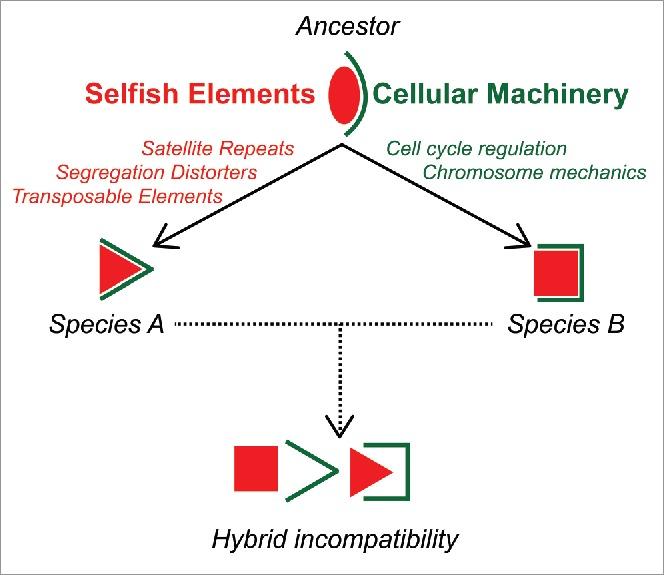
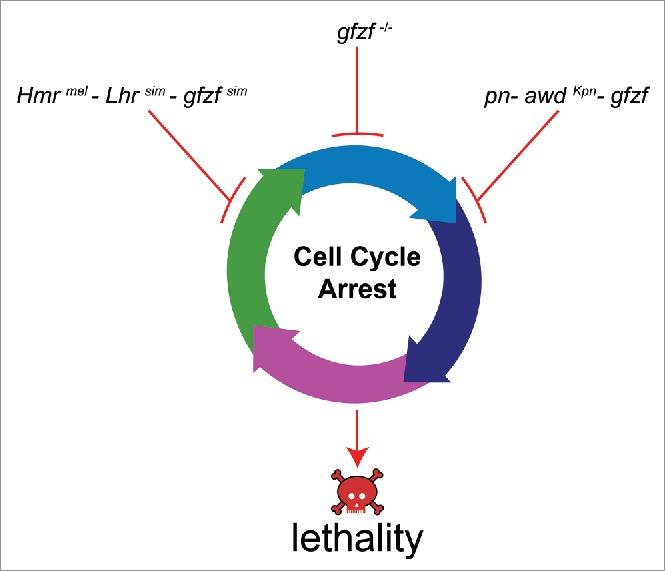
Uncovering the genetic and molecular basis of barriers to gene flow between populations is key to understanding how new species are born. Intrinsic postzygotic reproductive barriers such as hybrid sterility and hybrid inviability are caused by deleterious genetic interactions known as hybrid incompatibilities. The difficulty in identifying these hybrid incompatibility genes remains a rate-limiting step in our understanding of the molecular basis of speciation. We recently described how whole genome sequencing can be applied to identify hybrid incompatibility genes, even from genetically terminal hybrids. Using this approach, we discovered a new hybrid incompatibility gene, gfzf, between Drosophila melanogaster and Drosophila simulans, and found that it plays an essential role in cell cycle regulation. Here, we discuss the history of the hunt for incompatibility genes between these species, discuss the molecular roles of gfzf in cell cycle regulation, and explore how intragenomic conflict drives the evolution of fundamental cellular mechanisms that lead to the developmental arrest of hybrids.
揭示种群间基因流动障碍的遗传和分子基础是理解新物种如何形成的关键。诸如杂种不育和杂种 inviability 等内在合子后生殖障碍是由称为杂种不相容性的有害遗传相互作用引起的。识别这些杂种不相容基因的困难仍然是我们理解物种形成分子基础的一个限速步骤。我们最近描述了如何应用全基因组测序来识别杂种不相容基因,即使是来自遗传上终端的杂种。使用这种方法,我们在黑腹果蝇和拟果蝇之间发现了一个新的杂种不相容基因 gfzf,并发现它在细胞周期调控中起重要作用。在这里,我们讨论了寻找这些物种间不相容基因的历史,讨论了 gfzf 在细胞周期调控中的分子作用,并探讨了基因组内冲突如何驱动导致杂种发育停滞的基本细胞机制的进化。
 Zotero 插件