
对中心粒组装支架机制的计算支持。
Computational support for a scaffolding mechanism of centriole assembly.
作者信息
Klein Heinrich C R, Guichard Paul, Hamel Virginie, Gönczy Pierre, Schwarz Ulrich S
机构信息
Institute for Theoretical Physics and BioQuant, Heidelberg University, D-69120 Heidelberg, Germany.
Swiss Institute for Experimental Cancer Research (ISREC), School of Life Sciences, Swiss Federal Institute of Technology Lausanne (EPFL), CH-1015 Lausanne, Switzerland.
出版信息
Sci Rep. 2016 Jun 8;6:27075. doi: 10.1038/srep27075.
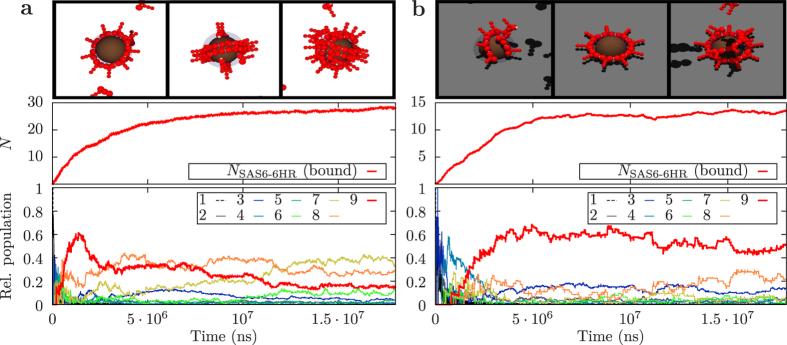
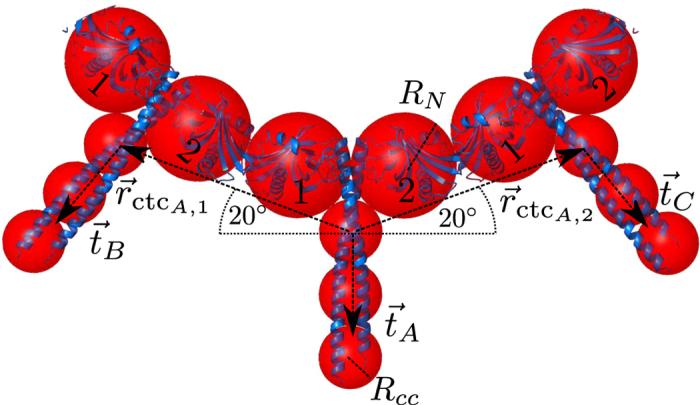
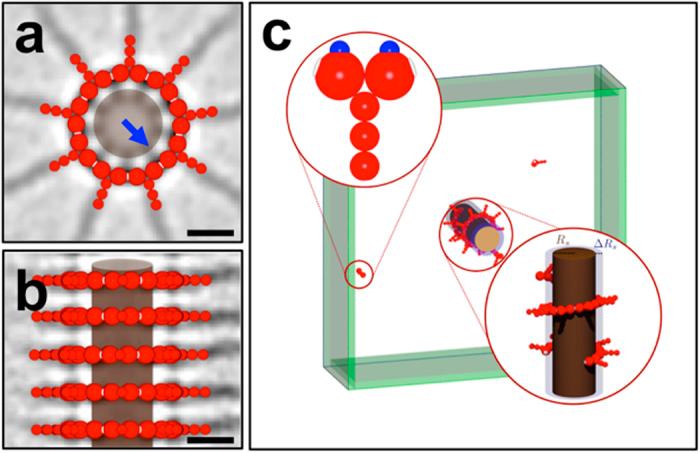
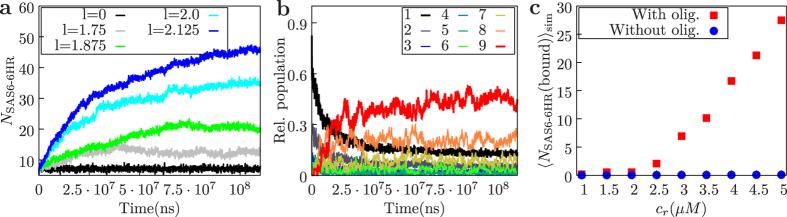
Centrioles are essential for forming cilia, flagella and centrosomes. Successful centriole assembly requires proteins of the SAS-6 family, which can form oligomeric ring structures with ninefold symmetry in vitro. While important progress has been made in understanding SAS-6 protein biophysics, the mechanisms enabling ring formation in vivo remain elusive. Likewise, the mechanisms by which a nascent centriole forms near-orthogonal to an existing one are not known. Here, we investigate possible mechanisms of centriole assembly using coarse-grained Brownian dynamics computer simulations in combination with a rate equation approach. Our results suggest that without any external factors, strong stabilization associated with ring closure would be needed to enable efficient ring formation. Strikingly, our simulations reveal that a scaffold-assisted assembly mechanism can trigger robust ring formation owing to local cooperativity, and that this mechanism can also impart orthogonalilty to centriole assembly. Overall, our findings provide novel insights into the organizing principles governing the assembly of this important organelle.
中心粒对于形成纤毛、鞭毛和中心体至关重要。成功的中心粒组装需要SAS-6家族的蛋白质,这些蛋白质在体外可形成具有九重对称性的寡聚环结构。虽然在理解SAS-6蛋白质生物物理学方面已取得重要进展,但体内环形成的机制仍然难以捉摸。同样,新生中心粒与现有中心粒近乎正交形成的机制也尚不清楚。在此,我们结合速率方程方法,使用粗粒度布朗动力学计算机模拟来研究中心粒组装的可能机制。我们的结果表明,在没有任何外部因素的情况下,需要与环闭合相关的强稳定作用才能实现高效的环形成。引人注目的是,我们的模拟揭示了一种支架辅助组装机制,由于局部协同作用可触发强大的环形成,并且这种机制还可赋予中心粒组装正交性。总体而言,我们的研究结果为支配这一重要细胞器组装的组织原则提供了新见解。


 Zotero 插件