
鸟类喂食活动对野生鸟类健康的影响。
Effects of bird-feeding activities on the health of wild birds.
作者信息
Wilcoxen Travis E, Horn David J, Hogan Brianna M, Hubble Cody N, Huber Sarah J, Flamm Joseph, Knott Madeline, Lundstrom Lisa, Salik Faaria, Wassenhove Samantha J, Wrobel Elizabeth R
机构信息
Biology Department, Millikin University, 1184 West Main Street, Decatur, IL 62522, USA.
Biology Department, Millikin University, 1184 West Main Street, Decatur, IL 62522, USA; Natural Resources Conservation Service, United States Department of Agriculture, 2623 Sunrise Drive, Springfield, IL 62703, USA.
出版信息
Conserv Physiol. 2015 Dec 21;3(1):cov058. doi: 10.1093/conphys/cov058. eCollection 2015.
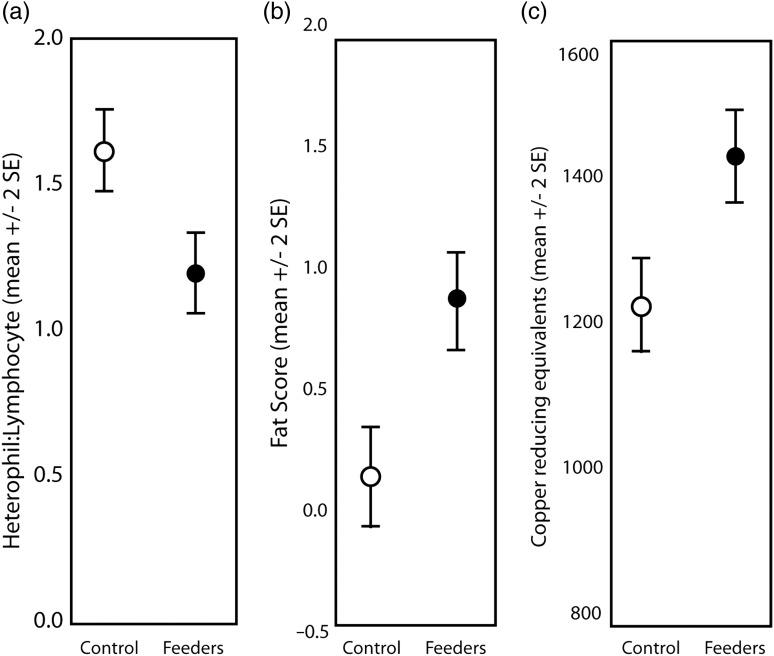
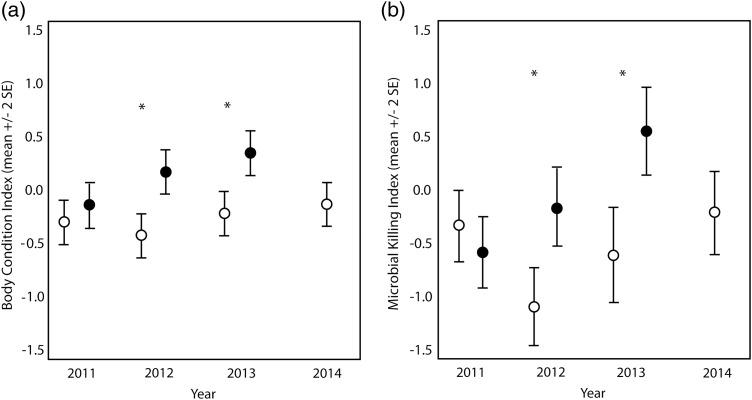
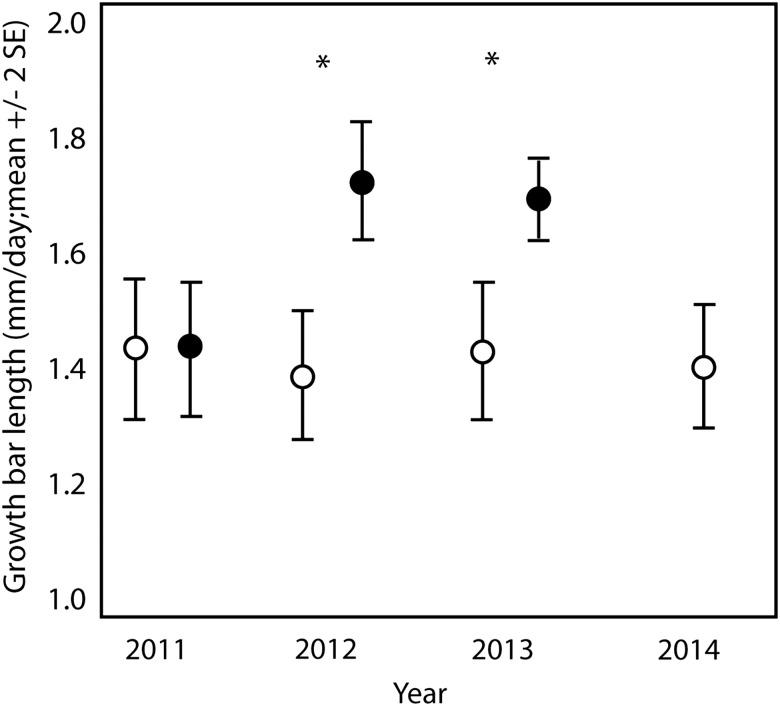
Among the most popular reasons that people feed wild birds is that they want to help birds. The extent to which supplemental food helps birds, however, is not well established. From spring 2011 to spring 2014, we examined how feeding of wild birds influences the health of individual birds at forested sites in central Illinois, USA. Specifically, we compared three forested sites where we provided supplemental food with three forested sites for which no supplemental food was available and monitored changes in the individual health of birds. In addition, we determined whether any changes in bird health had occurred after feeders had been removed from sites 10 months before. Generally, the individual health of birds improved with supplemental feeding, including increased antioxidant levels, reduced stress (heterophil-to-lymphocyte ratio) and more rapid feather growth. In some species, we also found improved body condition index scores and innate immune defense. The difference among sites was not present 10 months after feeders were removed, suggesting that the impact on health was indeed related to supplemental feeding. Potential negative effects of supplemental feeding were also found, including an increase in infectious disease prevalence among individual birds at forested sites where supplemental food was offered. Birds with clear signs of pathology showed deficits in most of the physiological metrics in which birds at feeder sites typically showed improved health condition. At the peak of prevalence of infectious disease, 8.3% of all birds at feeders exhibited symptoms of conjunctivitis, pox, dermal disease or cloacal disease. We found both positive and negative impacts of wild bird feeding, and that, in general, birds that had access to supplemental food were in better physiological condition. Moreover, the negative effects we found may be mitigated by hobbyists engaging in safer bird-feeding practices.
人们喂养野生鸟类最常见的原因之一是他们想要帮助鸟类。然而,补充食物对鸟类有多大帮助尚未明确。从2011年春季到2014年春季,我们研究了在美国伊利诺伊州中部森林地区喂养野生鸟类如何影响个体鸟类的健康。具体而言,我们将提供补充食物的三个森林地区与三个没有补充食物的森林地区进行了比较,并监测了鸟类个体健康的变化。此外,我们还确定了在喂食器于10个月前从这些地点移除后,鸟类健康是否发生了任何变化。一般来说,补充喂养使鸟类的个体健康状况得到改善,包括抗氧化水平提高、压力减轻(嗜异性粒细胞与淋巴细胞比率降低)以及羽毛生长加快。在一些物种中,我们还发现身体状况指数得分和先天免疫防御能力有所改善。喂食器移除10个月后,各地点之间的差异不再存在,这表明对健康的影响确实与补充喂养有关。我们还发现了补充喂养的潜在负面影响,包括在提供补充食物的森林地区,个体鸟类传染病患病率增加。有明显病理迹象的鸟类在大多数生理指标上表现不佳,而在有喂食器的地点的鸟类通常健康状况有所改善。在传染病流行高峰期,所有在喂食器处的鸟类中有8.3%表现出结膜炎、痘病、皮肤病或泄殖腔疾病的症状。我们发现了野生鸟类喂养的积极和消极影响,总体而言,能够获得补充食物的鸟类生理状况更好。此外,我们发现的负面影响可能会通过爱好者采取更安全的鸟类喂养做法而得到缓解。

 Zotero 插件