
肿瘤抑制因子Smad4/DPC4中的点突变增强了其被糖原合成酶激酶3(GSK3)磷酸化的过程,并可逆地使转化生长因子-β(TGF-β)信号失活。
Point mutations in the tumor suppressor Smad4/DPC4 enhance its phosphorylation by GSK3 and reversibly inactivate TGF-β signaling.
作者信息
Demagny Hadrien, De Robertis Edward M
机构信息
Howard Hughes Medical Institute and Department of Biological Chemistry; University of California ; Los Angeles, CA USA.
出版信息
Mol Cell Oncol. 2015 Apr 14;3(1):e1025181. doi: 10.1080/23723556.2015.1025181. eCollection 2016 Jan.
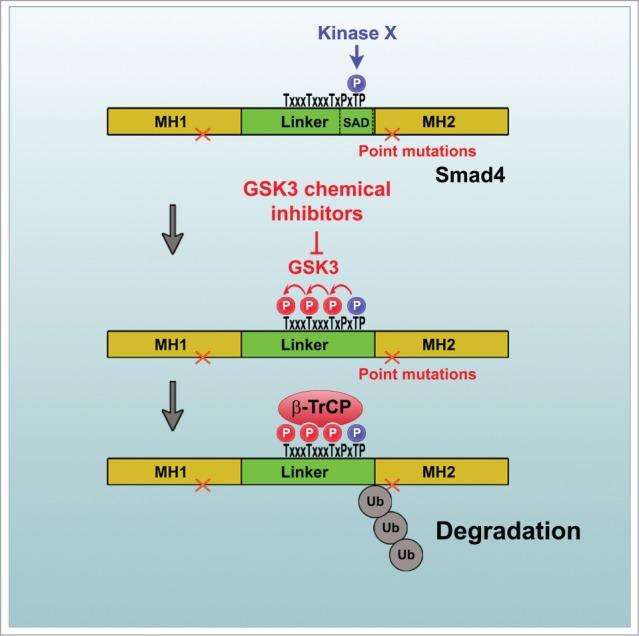
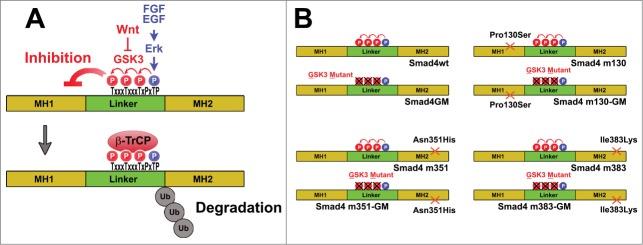
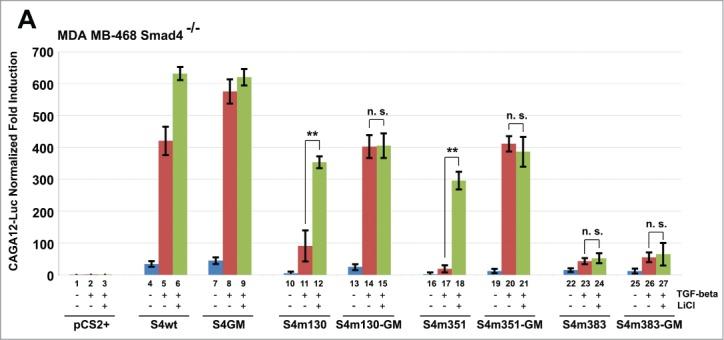
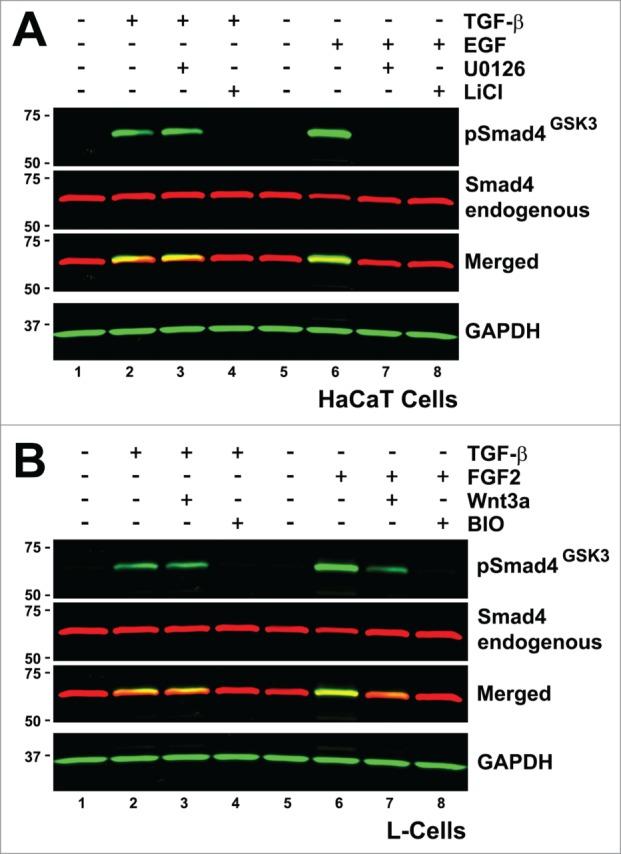
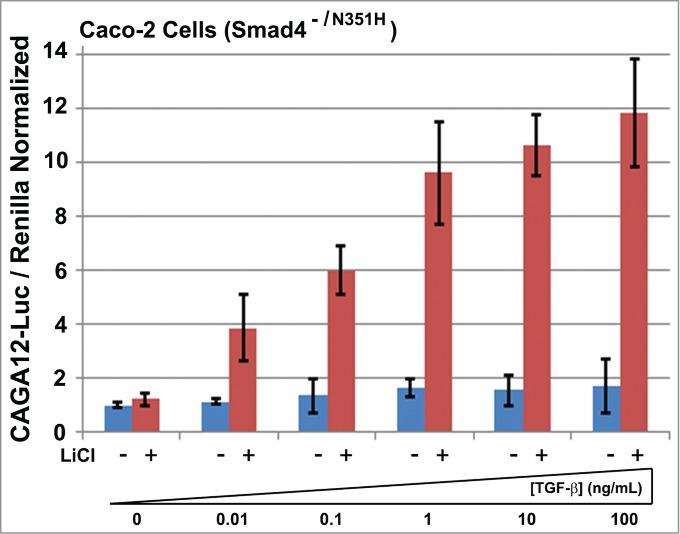
The tumor suppressor Smad4/DPC4 is an essential transcription factor in the TGF-β pathway and is frequently mutated or deleted in prostate, colorectal, and pancreatic carcinomas. We recently discovered that Smad4 activity and stability are regulated by the FGF/EGF and Wnt signaling pathways through a series of MAPK and GSK3 phosphorylation sites located in its linker region. In the present study, we report that loss-of-function associated with 2 point mutations commonly found in colorectal and pancreatic cancers results from enhanced Smad4 phosphorylation by GSK3, generating a phosphodegron that leads to subsequent β-TrCP-mediated polyubiquitination and proteasomal degradation. Using chemical GSK3 inhibitors, we show that Smad4 point mutant proteins can be stabilized and TGF-β signaling restored in cancer cells harboring such mutations.
肿瘤抑制因子Smad4/DPC4是TGF-β信号通路中的一种重要转录因子,在前列腺癌、结直肠癌和胰腺癌中经常发生突变或缺失。我们最近发现,Smad4的活性和稳定性受FGF/EGF和Wnt信号通路调控,通过位于其连接区的一系列MAPK和GSK3磷酸化位点实现。在本研究中,我们报告称,结直肠癌和胰腺癌中常见的2个点突变导致的功能丧失,是由于GSK3增强了Smad4的磷酸化,产生了一个磷酸化降解结构域,导致随后β-TrCP介导的多聚泛素化和蛋白酶体降解。使用化学GSK3抑制剂,我们表明在携带此类突变的癌细胞中,Smad4点突变蛋白可以被稳定,TGF-β信号得以恢复。

 Zotero 插件