
辣椒素引发自噬性细胞存活,其以刺猬信号通路依赖的方式驱动膀胱癌细胞的上皮间质转化和化疗耐药性。
Capsaicin triggers autophagic cell survival which drives epithelial mesenchymal transition and chemoresistance in bladder cancer cells in an Hedgehog-dependent manner.
作者信息
Amantini Consuelo, Morelli Maria Beatrice, Nabissi Massimo, Cardinali Claudio, Santoni Matteo, Gismondi Angela, Santoni Giorgio
机构信息
School of Biosciences and Veterinary Medicine, University of Camerino, Camerino, Italy.
School of Pharmacy, Experimental Medicine Section, University of Camerino, Camerino, Italy.
出版信息
Oncotarget. 2016 Aug 2;7(31):50180-50194. doi: 10.18632/oncotarget.10326.
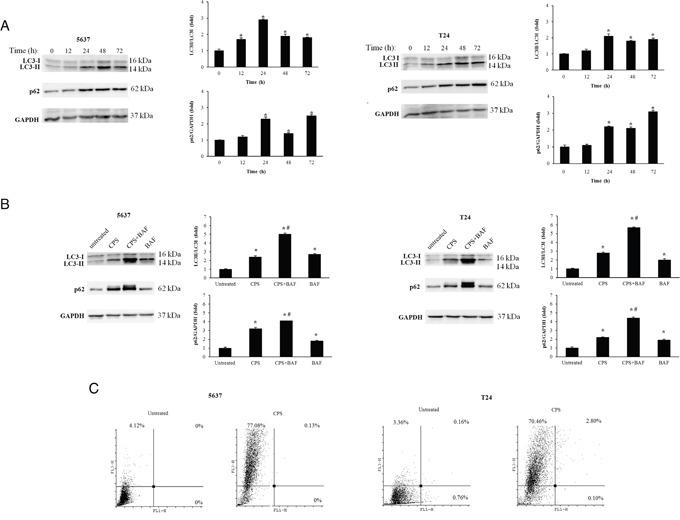
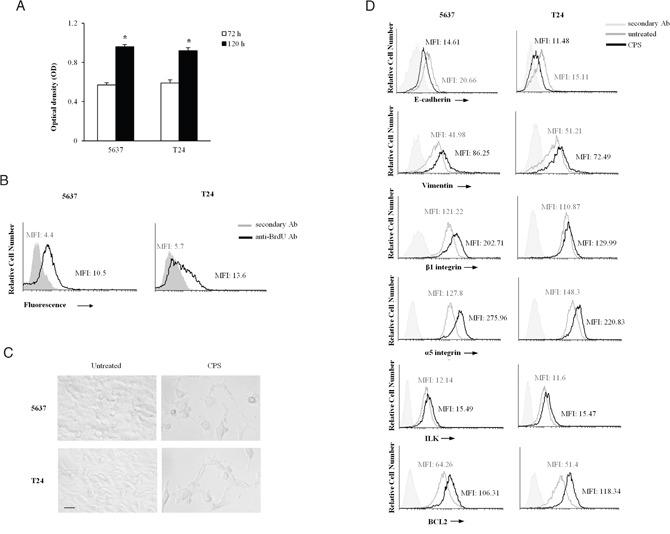
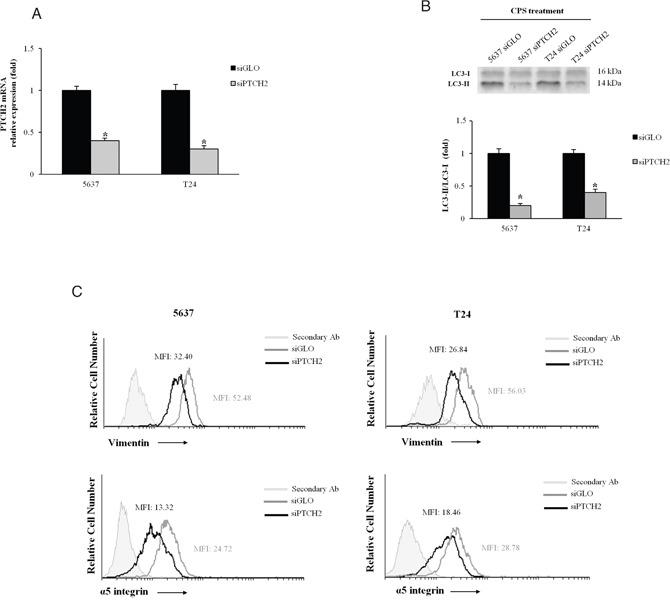
Bladder cancer (BC) is a common urologic tumor characterized by high risk of recurrence and mortality. Capsaicin (CPS), used as an intravesical drug for overactive bladder, was demonstrated to induce cell death in different cancer cells including BC cells.Here we found that treatment of high-grade BC cells with high dose of CPS triggers autophagy. Infact, the CPS treatment alters the redox homeostasis by inducing production of radicals, mitochondrial depolarization, alterations of ADP/ATP ratio and activation of AMPK pathway stimulating the autophagic process in BC cells. The inhibition of autophagy, by using the specific inhibitor bafilomycin A or Beclin 1 knock-down, enhanced the CPS-induced cell death, demonstrating that CPS-induced autophagy acts as a pro-survival process in BC cells. By using PCR arrays and FACS analysis, we found that the CPS-treated BC cells displayed typical mesenchymal features of the epithelial mesenchymal transition (EMT) as elongated shape and over-expression of vimentin, α5 and β1 integrin subunits, integrin-like kinase and the anti-apoptotic Bcl-2 proteins. Moreover, we demonstrated that CPS treatment stimulates upregulation of Dhh/Ptch2/Zeb2 members of the Hedgehog signaling pathway, increases CD24, VEGFA and TIMP1 and decreases CD44 and ALCAM mRNA expression levels. By PTCH2 knock-down we found that the Hedgehog signaling pathway is involved in the CPS-induced autophagy and EMT phenotype.Finally, we also showed that the CPS-resistant EMT-positive BC cells displayed an increased drug-resistance to the cytotoxic effects of mitomycin C, gemcitabine and doxorubicine drugs commonly used in BC therapy.
膀胱癌(BC)是一种常见的泌尿系统肿瘤,其特点是复发和死亡风险高。辣椒素(CPS)作为治疗膀胱过度活动症的膀胱内用药,已被证明可诱导包括BC细胞在内的不同癌细胞死亡。在此,我们发现用高剂量CPS处理高级别BC细胞会引发自噬。事实上,CPS处理通过诱导自由基产生、线粒体去极化、ADP/ATP比值改变以及激活AMPK途径来改变氧化还原稳态,从而刺激BC细胞中的自噬过程。使用特异性抑制剂巴弗洛霉素A或敲低Beclin 1来抑制自噬,增强了CPS诱导的细胞死亡,表明CPS诱导的自噬在BC细胞中起到促生存作用。通过PCR阵列和FACS分析,我们发现经CPS处理的BC细胞呈现出上皮-间质转化(EMT)的典型间充质特征,如形态细长、波形蛋白、α5和β1整合素亚基、整合素样激酶以及抗凋亡Bcl-2蛋白的过表达。此外,我们证明CPS处理可刺激Hedgehog信号通路的Dhh/Ptch2/Zeb2成员上调,增加CD24、VEGFA和TIMP1,并降低CD44和ALCAM mRNA表达水平。通过敲低PTCH2,我们发现Hedgehog信号通路参与了CPS诱导的自噬和EMT表型。最后,我们还表明,对CPS耐药的EMT阳性BC细胞对BC治疗中常用的丝裂霉素C、吉西他滨和阿霉素药物的细胞毒性作用具有更高的耐药性。



 Zotero 插件