
4-氨基吡啶可逆转小脑共济失调 6 型小鼠模型的共济失调和小脑电活动不足。
4-aminopyridine reverses ataxia and cerebellar firing deficiency in a mouse model of spinocerebellar ataxia type 6.
机构信息
Department of Biology, McGill University, Montreal, H3G 0B1, Canada.
Integrated Program in Neuroscience, McGill University, Montreal, H3G 0B1, Canada.
出版信息
Sci Rep. 2016 Jul 6;6:29489. doi: 10.1038/srep29489.
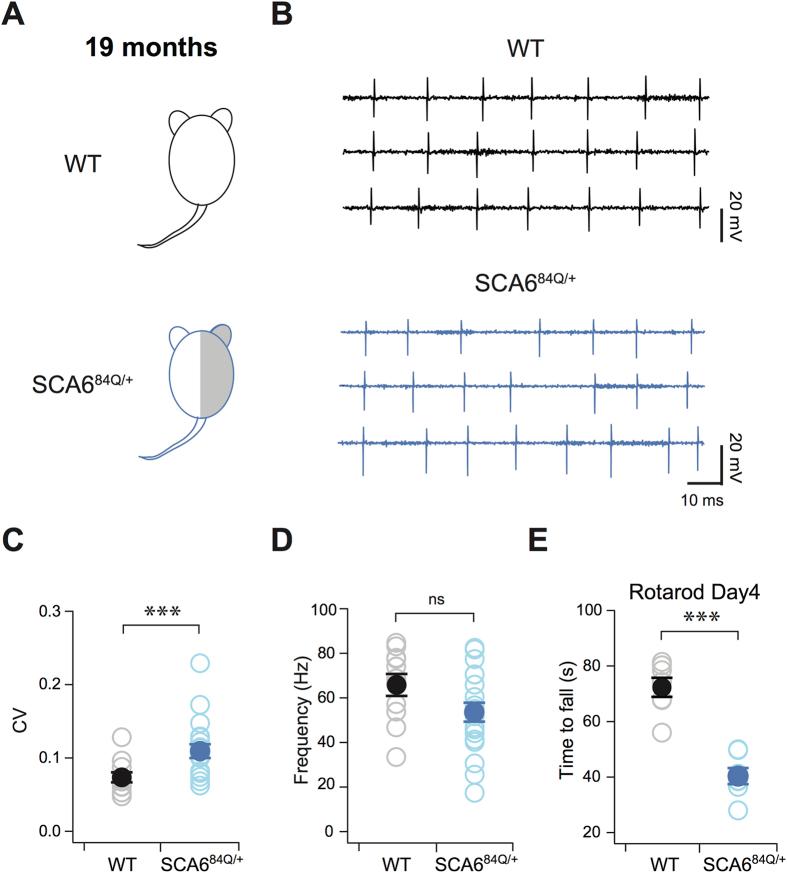
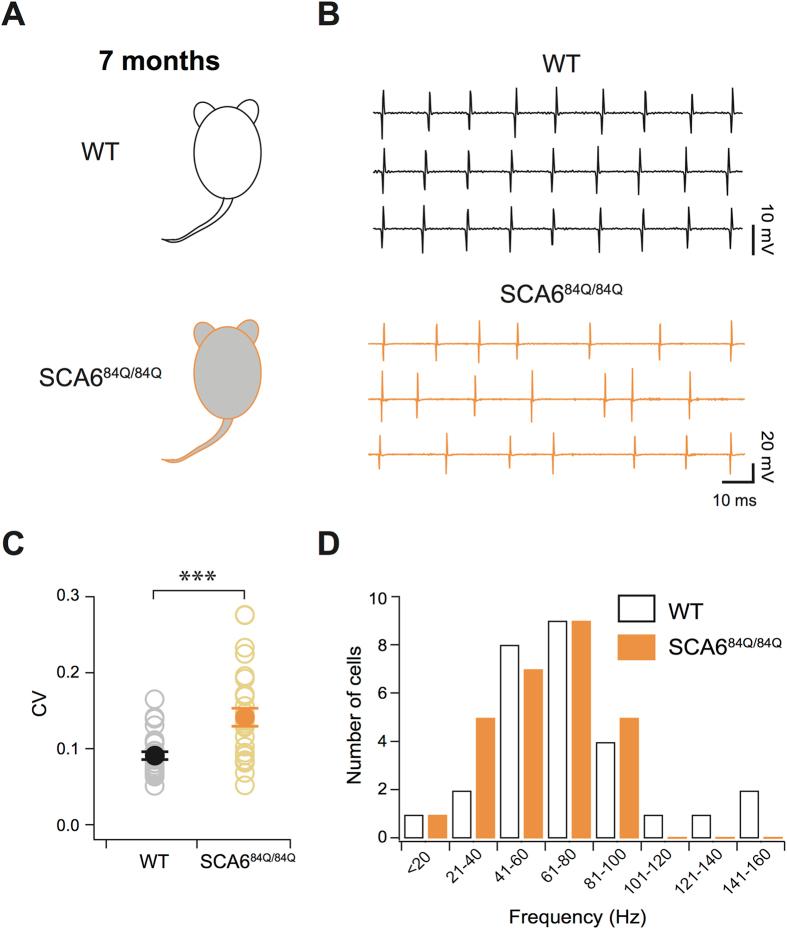
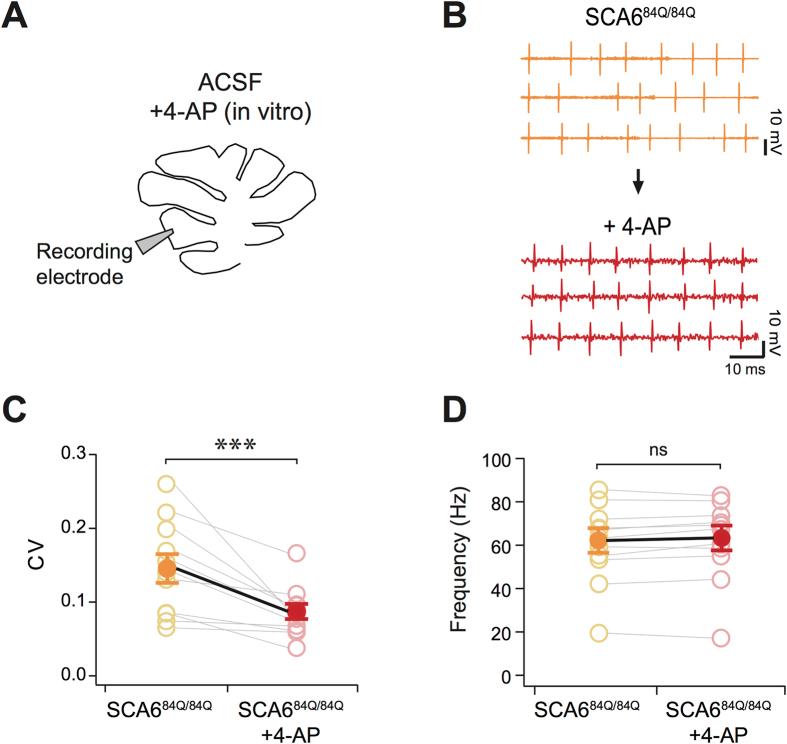
Spinocerebellar ataxia type 6 (SCA6) is a devastating midlife-onset autosomal dominant motor control disease with no known treatment. Using a hyper-expanded polyglutamine (84Q) knock-in mouse, we found that cerebellar Purkinje cell firing precision was degraded in heterozygous (SCA6(84Q/+)) mice at 19 months when motor deficits are observed. Similar alterations in firing precision and motor control were observed at disease onset at 7 months in homozygous (SCA6(84Q/84Q)) mice, as well as a reduction in firing rate. We further found that chronic administration of the FDA-approved drug 4-aminopyridine (4-AP), which targets potassium channels, alleviated motor coordination deficits and restored cerebellar Purkinje cell firing precision to wildtype (WT) levels in SCA6(84Q/84Q) mice both in acute slices and in vivo. These results provide a novel therapeutic approach for treating ataxic symptoms associated with SCA6.
脊髓小脑性共济失调 6 型(SCA6)是一种毁灭性的中年发病的常染色体显性运动控制疾病,目前尚无已知的治疗方法。我们使用超扩展多聚谷氨酰胺(84Q)敲入小鼠发现,在运动缺陷出现时的 19 个月,杂合子(SCA6(84Q/+))小鼠的小脑浦肯野细胞放电精度降低。在疾病发病时的 7 个月,在纯合子(SCA6(84Q/84Q))小鼠中也观察到类似的放电精度和运动控制改变,以及放电率降低。我们进一步发现,慢性给予美国食品和药物管理局批准的药物 4-氨基吡啶(4-AP),其靶向钾通道,可缓解运动协调缺陷,并在 SCA6(84Q/84Q)小鼠的急性切片和体内恢复小脑浦肯野细胞放电精度至野生型(WT)水平。这些结果为治疗与 SCA6 相关的共济失调症状提供了一种新的治疗方法。



 Zotero 插件