
印度贾坎德邦古姆拉地区5岁以下儿童营养不良(年龄别体重)不平等问题的社会决定因素:一项横断面研究
Social determinants of inequities in under-nutrition (weight-for-age) among under-5 children: a cross sectional study in Gumla district of Jharkhand, India.
作者信息
Chatterjee Keya, Sinha Rajesh Kumar, Kundu Alok Kumar, Shankar Dhananjay, Gope Rajkumar, Nair Nirmala, Tripathy Prasanta K
机构信息
Ekjut- NGO in India, Chakradharpur, West Singhbhum, Jharkhand, India.
出版信息
Int J Equity Health. 2016 Jul 8;15(1):104. doi: 10.1186/s12939-016-0392-y.
BACKGROUND
Jharkhand, a state with substantial tribal population in Eastern India has very high rate of undernutrition. The study tries to understand the social determinants of inequities in under-nutrition (weight-for-age) among children aged less than 5 years, in Gumla District of the State.
METHODS
Cross sectional study of 1070 children from 32 villages of 4 Blocks of Gumla District.
RESULTS
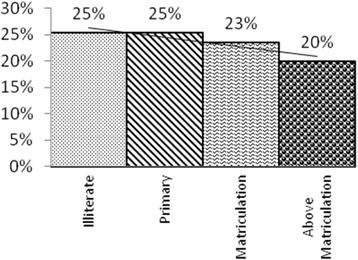
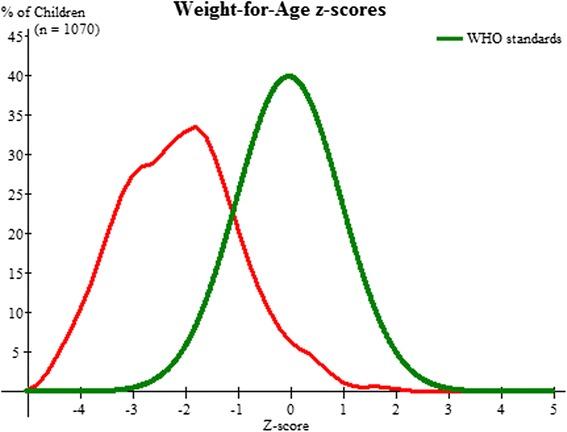
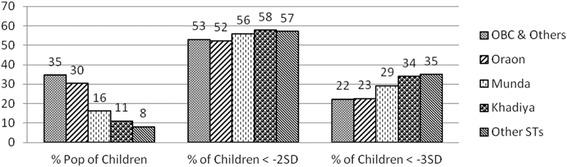
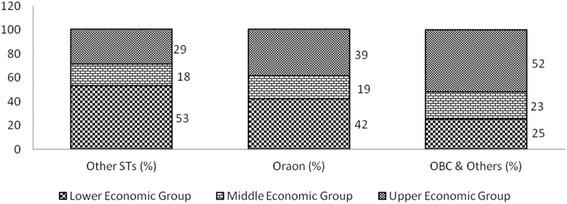
54.3 % (95 % CI 51.3-57.3) children were found to be underweight (less than -2SD), with insignificant difference between girls and boys. Multivariate analysis showed that poverty was the single most important predictor of undernutrition, where a child from the poorest quintile was 70 % more likely to be underweight (aOR 1.70, CI 1.13-2.57), compared to one from the least poor group (Quintile 5). While the difference in weight-for-age status between Scheduled Tribes and "OBC and other communities" was non-significant (95 % OR 1.12, CI 0.88-1.42) in the study context; community disaggregated data revealed that there were large variations within the tribal community, and numerically smaller communities also ranked lower in wealth, and their children showed poorer nutritional status. Other factors like maternal education beyond matriculation level also had some bearing. Bivariate analysis showed that chances of a child being underweight (<-2SD) was 43 % more and being severely underweight (<-3SD) was 26 % more for mothers with less than 10 years of schooling compared to those who had attended school for more than 10 years. Educational attainment of mothers did not show any significant difference between tribal and non-tribal communities.
CONCLUSION
Overall nutritional status of children in Gumla is very grim and calls for immediate interventions, with universal coverage. Risk was almost equal for both genders, and for tribal and non-tribal population, though within tribal communities, it was slightly higher for smaller tribal communities, calling for soft targeting. Comprehensive programme addressing poverty and higher education for girls would be important to overcome the structural barriers, and should be integral part of any intervention. The study highlights the importance of soft targeting vulnerable communities within the universal coverage of government programmes for better nutritional outcomes.
背景
印度东部的贾坎德邦部落人口众多,该邦的营养不良率极高。本研究旨在了解该邦古姆拉地区5岁以下儿童营养不良(年龄别体重)不平等现象的社会决定因素。
方法
对古姆拉地区4个街区32个村庄的1070名儿童进行横断面研究。
结果
发现54.3%(95%置信区间51.3 - 57.3)的儿童体重不足(低于 -2标准差),男女之间差异不显著。多变量分析表明,贫困是营养不良的最重要单一预测因素,最贫困五分之一家庭的儿童体重不足的可能性比最不贫困组(五分之一组)高70%(调整后比值比1.70,置信区间1.13 - 2.57)。在本研究背景下,在册部落与“其他落后阶层及其他社区”之间的年龄别体重状况差异不显著(95%比值比1.12,置信区间0.88 - 1.42);按社区分类的数据显示,部落社区内部存在很大差异,人数较少的社区在财富方面排名也较低,其儿童的营养状况较差。其他因素,如母亲受过高中以上教育也有一定影响。双变量分析表明,与上学超过10年的母亲相比,上学年限少于10年的母亲所生儿童体重不足(<-2标准差)的几率高43%,严重体重不足(<-3标准差)的几率高26%。部落和非部落社区母亲的教育程度没有显著差异。
结论
古姆拉儿童的总体营养状况非常严峻,需要立即进行全面覆盖的干预措施。男女以及部落和非部落人口的风险几乎相等,不过在部落社区内部,较小的部落社区风险略高,需要进行精准定位。解决贫困和提高女童教育水平的综合方案对于克服结构性障碍很重要,应成为任何干预措施的组成部分。该研究强调了在政府项目的全面覆盖范围内对弱势群体进行精准定位以实现更好营养结果的重要性。



 Zotero 插件