
(99m)锝-司他米比乳腺特异性γ成像与乳腺X线摄影、超声及磁共振成像在中国女性乳腺癌检测中的回顾性对比分析
Retrospective and comparative analysis of (99m)Tc-Sestamibi breast specific gamma imaging versus mammography, ultrasound, and magnetic resonance imaging for the detection of breast cancer in Chinese women.
作者信息
Yu Xiuyan, Hu Guoming, Zhang Zhigang, Qiu Fuming, Shao Xuan, Wang Xiaochen, Zhan Hongwei, Chen Yiding, Deng Yongchuan, Huang Jian
机构信息
Department of Surgical Oncology, Second Affiliated Hospital, Zhejiang University School of Medicine, Zhejiang University, Hangzhou, 310009, China.
Department of Gynecology, Second Affiliated Hospital, Zhejiang University School of Medicine, Hangzhou, 310009, China.
出版信息
BMC Cancer. 2016 Jul 11;16:450. doi: 10.1186/s12885-016-2537-1.
BACKGROUND
Diagnosing breast cancer during the early stage may be helpful for decreasing cancer-related mortality. In Western developed countries, mammographies have been the gold standard for breast cancer detection. However, Chinese women usually have denser and smaller-sized breasts compared to Caucasian women, which decreases the diagnostic accuracy of mammography. However, breast specific gamma imaging, a type of molecular functional breast imaging, has been used for the accurate diagnosis of breast cancer and is not influenced by breast density. Our objective was to analyze the breast specific gamma imaging (BSGI) diagnostic value for Chinese women.
METHODS
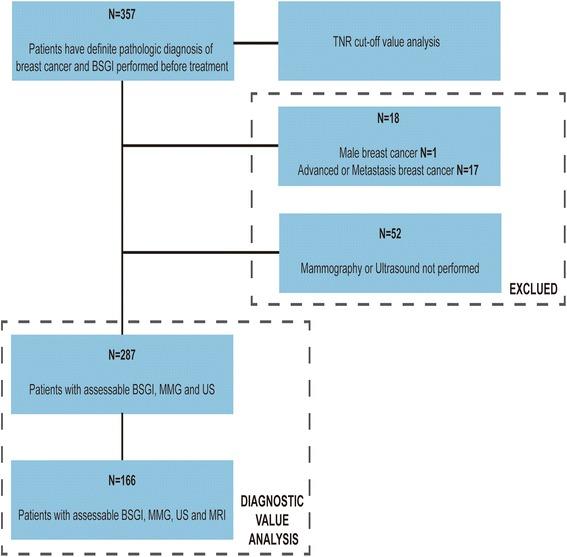
During a 2-year period, 357 women were diagnosed and treated at our oncology department and received BSGI in addition to mammography (MMG), ultrasound (US) and magnetic resonance imaging (MRI) for diagnostic assessment. We investigated the sensitivity and specificity of each method of detection and compared the biological profiles of the four imaging methods.
RESULTS
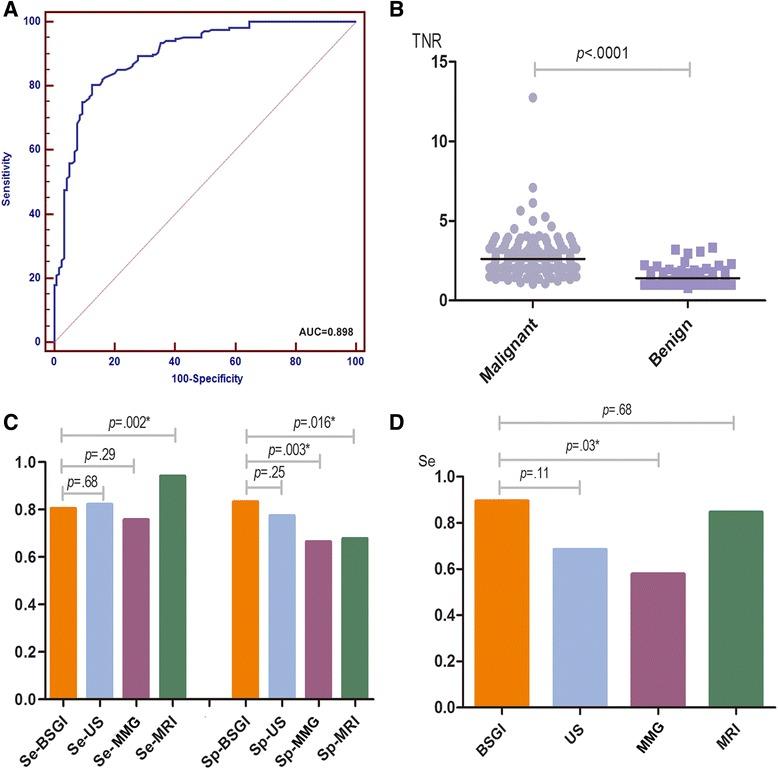
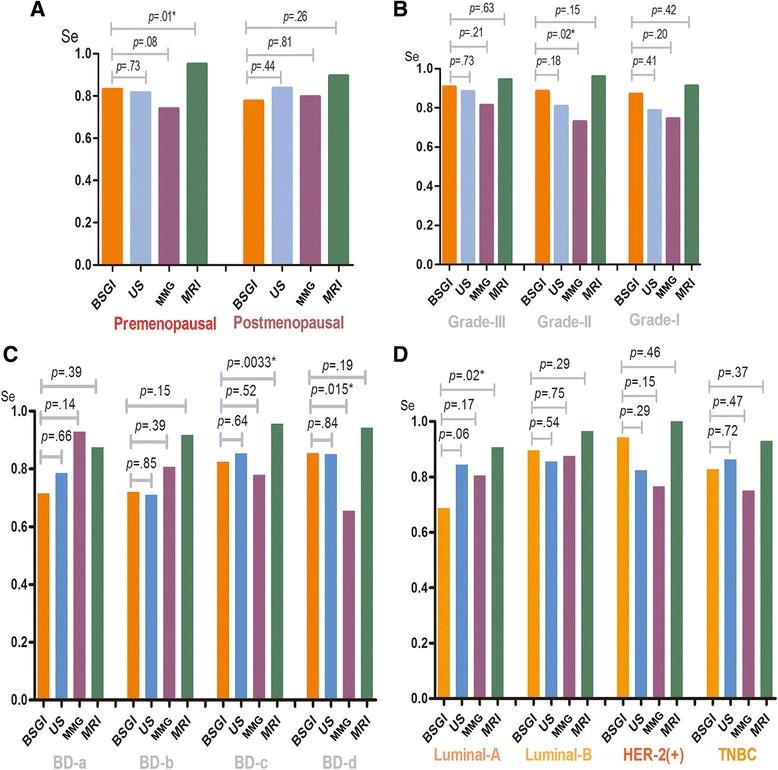
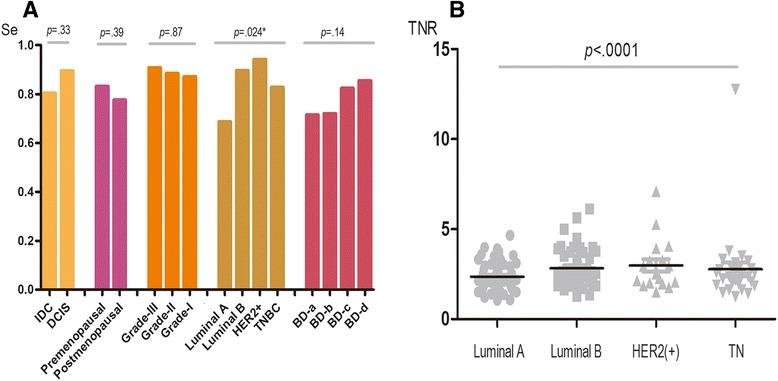
A total of 357 women received a final surgical pathology diagnosis, with 168 malignant diseases (58.5 %) and 119 benign diseases (41.5 %). Of these, 166 underwent the four imaging tests preoperatively. The sensitivity of BSGI was 80.35 and 82.14 % by US, 75.6 % by MMG, and 94.06 % by MRI. Furthermore, the breast cancer diagnosis specificity of BSGI was high (83.19 % vs. 77.31 % vs. 66.39 % vs. 67.69 %, respectively). The BSGI diagnostic sensitivity for mammographic breast density in women was superior to mammography and more sensitive for non-luminal A subtypes (luminal A vs. non-luminal A, 68.63 % vs. 88.30 %).
CONCLUSIONS
BSGI may help improve the ability to diagnose early stage breast cancer for Chinese women, particularly for ductal carcinoma in situ (DCIS), mammographic breast density and non-luminal A breast cancer.
背景
早期诊断乳腺癌可能有助于降低癌症相关死亡率。在西方发达国家,乳房X线摄影一直是乳腺癌检测的金标准。然而,与白种女性相比,中国女性的乳房通常更致密且尺寸更小,这降低了乳房X线摄影的诊断准确性。然而,乳腺特异性γ成像作为一种分子功能乳腺成像,已被用于乳腺癌的准确诊断,且不受乳腺密度的影响。我们的目的是分析乳腺特异性γ成像(BSGI)对中国女性的诊断价值。
方法
在两年期间,357名女性在我们的肿瘤科接受诊断和治疗,除了乳房X线摄影(MMG)、超声(US)和磁共振成像(MRI)外,还接受了BSGI用于诊断评估。我们调查了每种检测方法的敏感性和特异性,并比较了四种成像方法的生物学特征。
结果
共有357名女性接受了最终手术病理诊断,其中168例为恶性疾病(58.5%),119例为良性疾病(41.5%)。其中,166例在术前接受了四种成像检查。BSGI的敏感性为80.35%,US为82.14%,MMG为75.6%,MRI为94.06%。此外,BSGI的乳腺癌诊断特异性较高(分别为83.19%、77.31%、66.39%和67.69%)。BSGI对女性乳腺X线摄影密度的诊断敏感性优于乳房X线摄影,对非腔面A型亚型更敏感(腔面A型与非腔面A型,分别为68.63%和88.30%)。
结论
BSGI可能有助于提高中国女性早期乳腺癌的诊断能力,特别是对于原位导管癌(DCIS)、乳腺X线摄影密度和非腔面A型乳腺癌。

 Zotero 插件