
苹果酸酶的缺失会导致苜蓿中华根瘤菌出现代谢失衡以及海藻糖和腐胺水平的改变。
Loss of malic enzymes leads to metabolic imbalance and altered levels of trehalose and putrescine in the bacterium Sinorhizobium meliloti.
作者信息
Zhang Ye, Smallbone Laura Anne, diCenzo George C, Morton Richard, Finan Turlough M
机构信息
Department of Biology, McMaster University, 1280 Main St. West, Hamilton, ON, L8S 4K1, Canada.
College of Fisheries and Life Science, Shanghai Ocean University, Shanghai, China.
出版信息
BMC Microbiol. 2016 Jul 26;16(1):163. doi: 10.1186/s12866-016-0780-x.
BACKGROUND
Malic enzymes decarboxylate the tricarboxylic acid (TCA) cycle intermediate malate to the glycolytic end-product pyruvate and are well positioned to regulate metabolic flux in central carbon metabolism. Despite the wide distribution of these enzymes, their biological roles are unclear in part because the reaction catalyzed by these enzymes can be by-passed by other pathways. The N2-fixing alfalfa symbiont Sinorhizobium meliloti contains both a NAD(P)-malic enzyme (DME) and a separate NADP-malic enzyme (TME) and to help understand the role of these enzymes, we investigated growth, metabolomic, and transcriptional consequences resulting from loss of these enzymes in free-living cells.
RESULTS
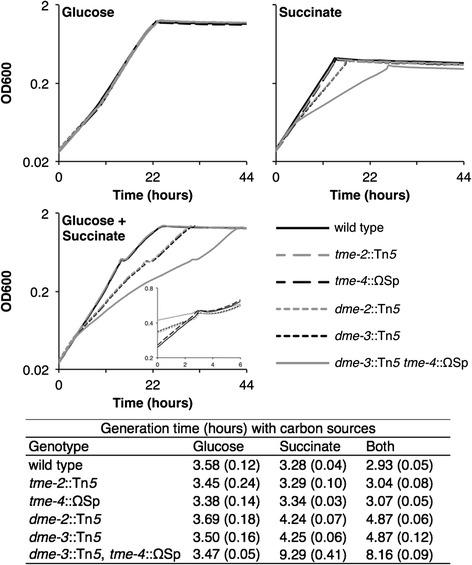
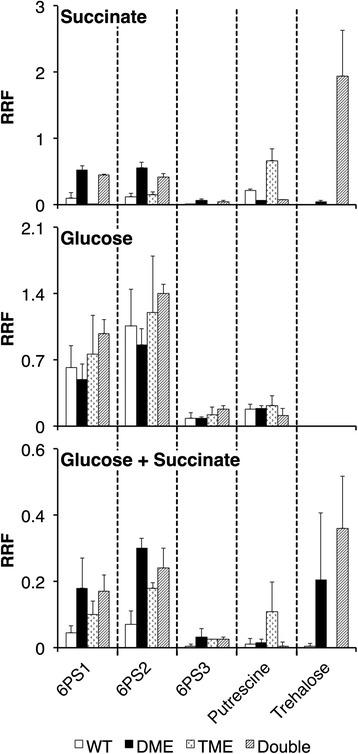
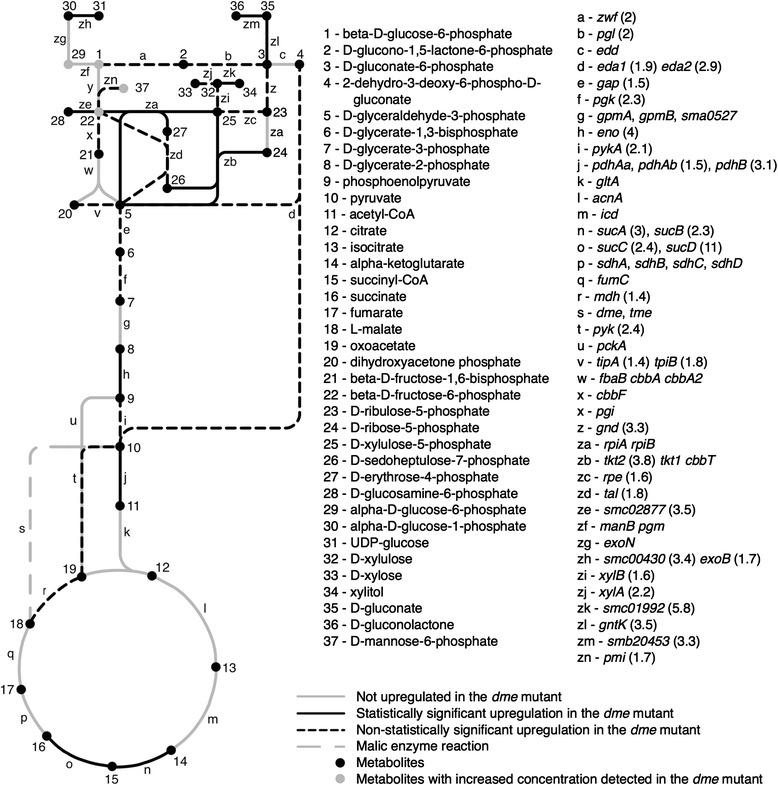
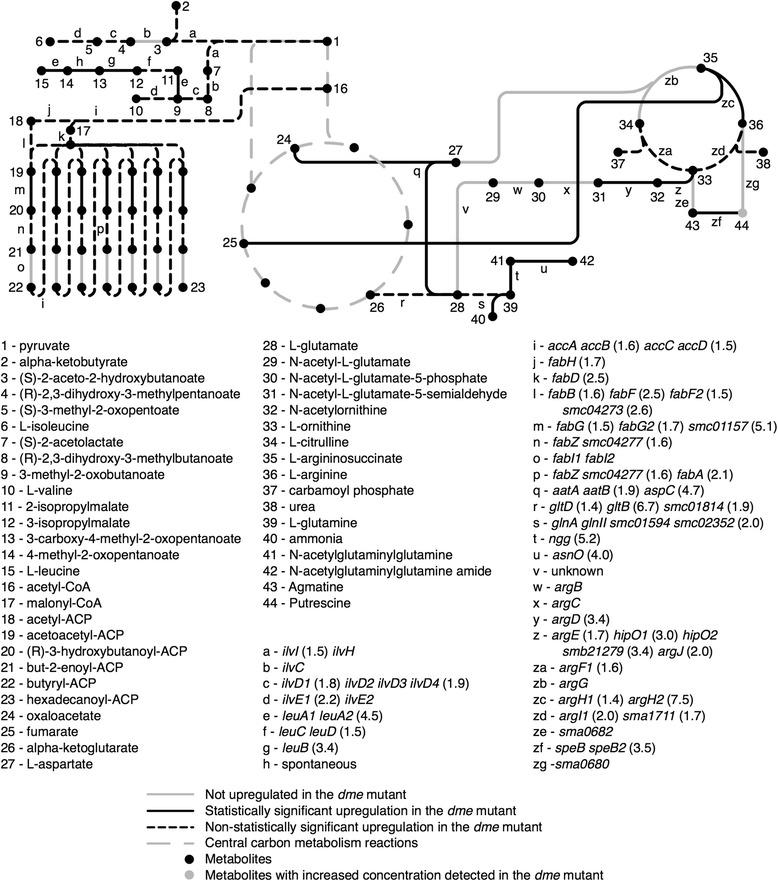
Loss of DME, TME, or both enzymes had no effect on growth with the glycolytic substrate, glucose. In contrast, the dme mutants, but not tme, grew slowly on the gluconeogenic substrate succinate and this slow growth was further reduced upon the addition of glucose. The dme mutant strains incubated with succinate accumulated trehalose and hexose sugar phosphates, secreted malate, and relative to wild-type, these cells had moderately increased transcription of genes involved in gluconeogenesis and pathways that divert metabolites away from the TCA cycle. While tme mutant cells grew at the same rate as wild-type on succinate, they accumulated the compatible solute putrescine.
CONCLUSIONS
NAD(P)-malic enzyme (DME) of S. meliloti is required for efficient metabolism of succinate via the TCA cycle. In dme mutants utilizing succinate, malate accumulates and is excreted and these cells appear to increase metabolite flow via gluconeogenesis with a resulting increase in the levels of hexose-6-phosphates and trehalose. For cells utilizing succinate, TME activity alone appeared to be insufficient to produce the levels of pyruvate required for efficient TCA cycle metabolism. Putrescine was found to accumulate in tme cells growing with succinate, and whether this is related to altered levels of NADPH requires further investigation.
背景
苹果酸酶将三羧酸(TCA)循环中间体苹果酸脱羧生成糖酵解终产物丙酮酸,在调节中心碳代谢的代谢通量方面具有重要作用。尽管这些酶分布广泛,但其生物学作用尚不清楚,部分原因是这些酶催化的反应可被其他途径绕过。固氮苜蓿共生菌苜蓿中华根瘤菌同时含有一种NAD(P)-苹果酸酶(DME)和一种单独的NADP-苹果酸酶(TME)。为了帮助理解这些酶的作用,我们研究了在自由生活细胞中缺失这些酶所导致的生长、代谢组学和转录结果。
结果
缺失DME、TME或两种酶对利用糖酵解底物葡萄糖的生长没有影响。相反,dme突变体(而非tme突变体)在糖异生底物琥珀酸上生长缓慢,添加葡萄糖后这种缓慢生长进一步受到抑制。用琥珀酸培养的dme突变体菌株积累海藻糖和己糖磷酸,分泌苹果酸,并且相对于野生型,这些细胞中参与糖异生和使代谢物从TCA循环转移的途径的基因转录适度增加。虽然tme突变体细胞在琥珀酸上的生长速度与野生型相同,但它们积累了相容性溶质腐胺。
结论
苜蓿中华根瘤菌的NAD(P)-苹果酸酶(DME)是通过TCA循环有效代谢琥珀酸所必需的。在利用琥珀酸的dme突变体中,苹果酸积累并排出,这些细胞似乎通过糖异生增加代谢物流量,导致己糖-6-磷酸和海藻糖水平升高。对于利用琥珀酸的细胞,单独的TME活性似乎不足以产生TCA循环有效代谢所需的丙酮酸水平。发现腐胺在以琥珀酸生长的tme细胞中积累,这是否与NADPH水平改变有关需要进一步研究。
 Zotero 插件