
在结直肠癌中,MACC1受miR - 218的转录后调控。
MACC1 is post-transcriptionally regulated by miR-218 in colorectal cancer.
作者信息
Ilm Katharina, Fuchs Steffen, Mudduluru Giridhar, Stein Ulrike
机构信息
Experimental and Clinical Research Center, Charité University Medicine Berlin and Max-Delbrück-Center for Molecular Medicine in the Helmholtz Association, Berlin, Germany.
German Cancer Consortium (DKTK), Heidelberg, Germany.
出版信息
Oncotarget. 2016 Aug 16;7(33):53443-53458. doi: 10.18632/oncotarget.10803.
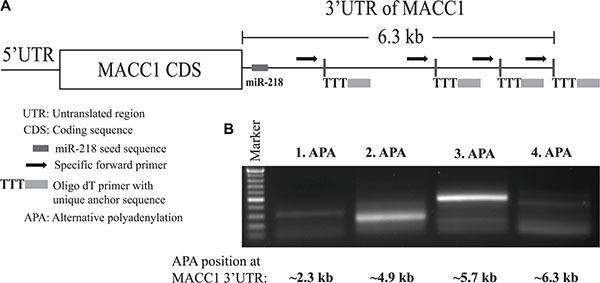
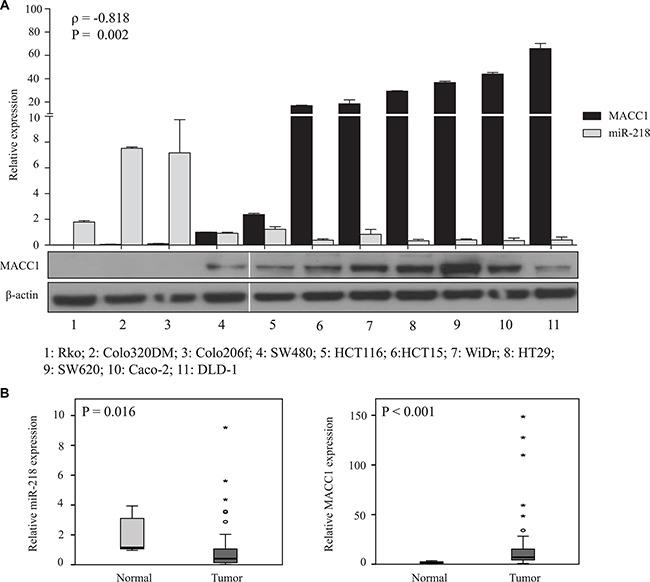
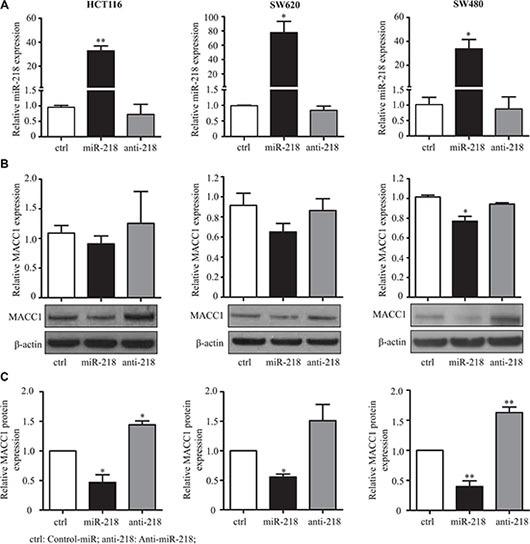
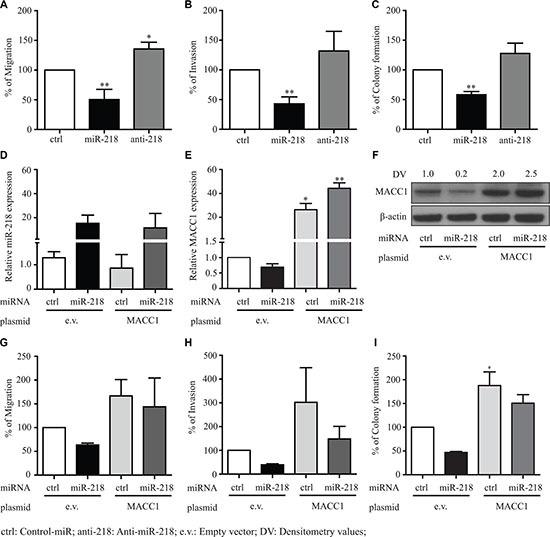
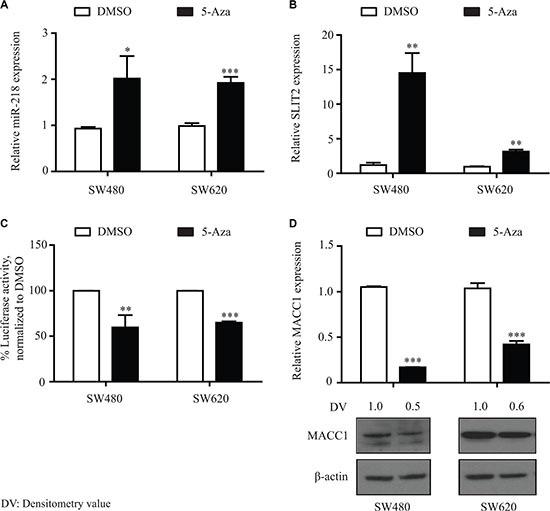
Metastasis is a multistep molecular network process, which is lethal for more than 90% of the cancer patients. Understanding the regulatory functions of metastasis-inducing molecules is in high demand for improved therapeutic cancer approaches. Thus, we studied the post-transcriptional regulation of the crucial carcinogenic and metastasis-mediating molecule metastasis associated in colon cancer 1 (MACC1). In silico analysis revealed MACC1 as a potential target of miR-218, a tumor suppressor miRNA. Expression of these two molecules inversely correlated in colorectal cancer (CRC) cell lines. In a cohort of CRC patient tissues (n = 59), miR-218 is significantly downregulated and MACC1 is upregulated compared with normal mucosa. Luciferase reporter assays with a construct of the MACC1-3'-UTR harboring either the wild type or the mutated miR-218 seed sequence confirmed the specificity of the targeting. miR-218 inhibited significantly MACC1 protein expression, and consistently, MACC1-mediated migration, invasion and colony formation in CRC cells. Anti-miR-218 enhanced the MACC1-mediated migration, invasion and colony formation. Similar findings were observed in the gastric cancer cell line MKN-45. Further, we performed methylation-specific PCR of the SLIT2 and SLIT3 promoter, where miR-218 is encoded in intronic regions. The SLIT2 and SLIT3 promoters are hypermethylated in CRC cell lines. miR-218 and SLIT2 expressions correlated positively. Methyltransferase inhibitor 5-Azacytidine induced miR-218 expression and inhibited the expression of its target MACC1. We also determined that MACC1 has alternative polyadenylation (APA) sites, which results in different lengths of 3'-UTR variants in a CRC cell line. Taken together, miR-218 is post-transcriptionally inhibiting the MACC1 expression and its metastasis-inducing abilities.
转移是一个多步骤的分子网络过程,对超过90%的癌症患者来说是致命的。为了改进癌症治疗方法,对转移诱导分子的调控功能的了解需求迫切。因此,我们研究了结肠癌相关转移因子1(MACC1)这一关键致癌和转移介导分子的转录后调控。计算机分析显示MACC1是肿瘤抑制性微小RNA(miRNA)miR - 218的潜在靶点。在结直肠癌(CRC)细胞系中,这两种分子的表达呈负相关。在一组CRC患者组织(n = 59)中,与正常黏膜相比,miR - 218显著下调,MACC1上调。用含有野生型或突变型miR - 218种子序列的MACC1 - 3'-UTR构建体进行荧光素酶报告基因检测,证实了靶向的特异性。miR - 218显著抑制MACC1蛋白表达,并且一致地,抑制了CRC细胞中MACC1介导的迁移、侵袭和集落形成。抗miR - 218增强了MACC1介导的迁移、侵袭和集落形成。在胃癌细胞系MKN - 45中也观察到了类似的结果。此外,我们对SLIT2和SLIT3启动子进行了甲基化特异性PCR,miR - 218编码在其内含子区域。在CRC细胞系中,SLIT2和SLIT3启动子发生高甲基化。miR - 218与SLIT2表达呈正相关。甲基转移酶抑制剂5 - 氮杂胞苷诱导miR - 218表达并抑制其靶标MACC1的表达。我们还确定MACC1具有可变聚腺苷酸化(APA)位点,这导致CRC细胞系中3'-UTR变体长度不同。综上所述,miR - 218在转录后抑制MACC1表达及其转移诱导能力。



 Zotero 插件