
暴露于四溴双酚A的厌氧污泥微生物群落的表征与适应性
Characterization and Adaptation of Anaerobic Sludge Microbial Communities Exposed to Tetrabromobisphenol A.
作者信息
Lefevre Emilie, Cooper Ellen, Stapleton Heather M, Gunsch Claudia K
机构信息
Department of Civil and Environmental Engineering, Duke University, Durham, NC, United States of America.
Nicholas School of the Environment, Duke University, Durham, NC, United States of America.
出版信息
PLoS One. 2016 Jul 27;11(7):e0157622. doi: 10.1371/journal.pone.0157622. eCollection 2016.
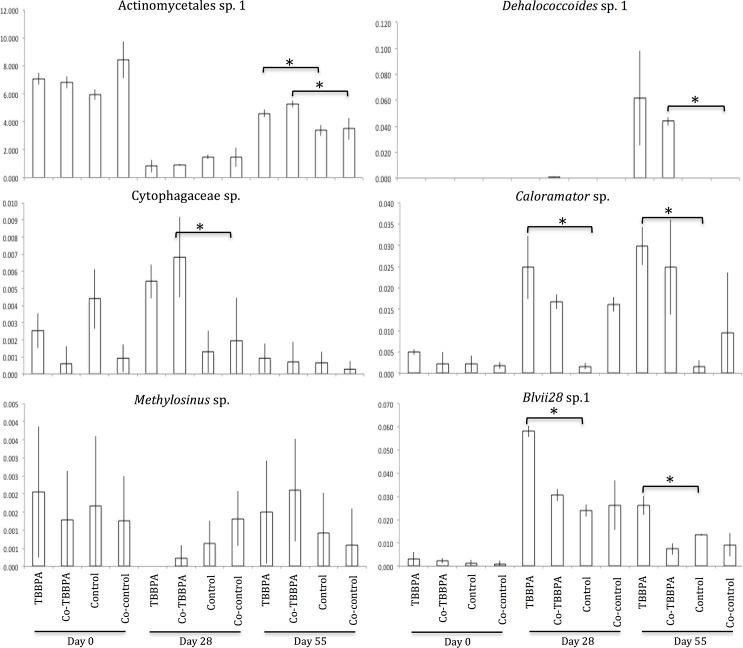
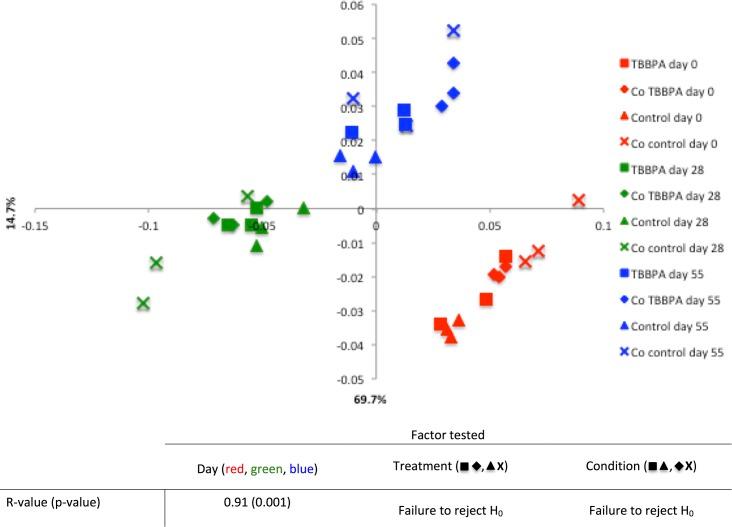
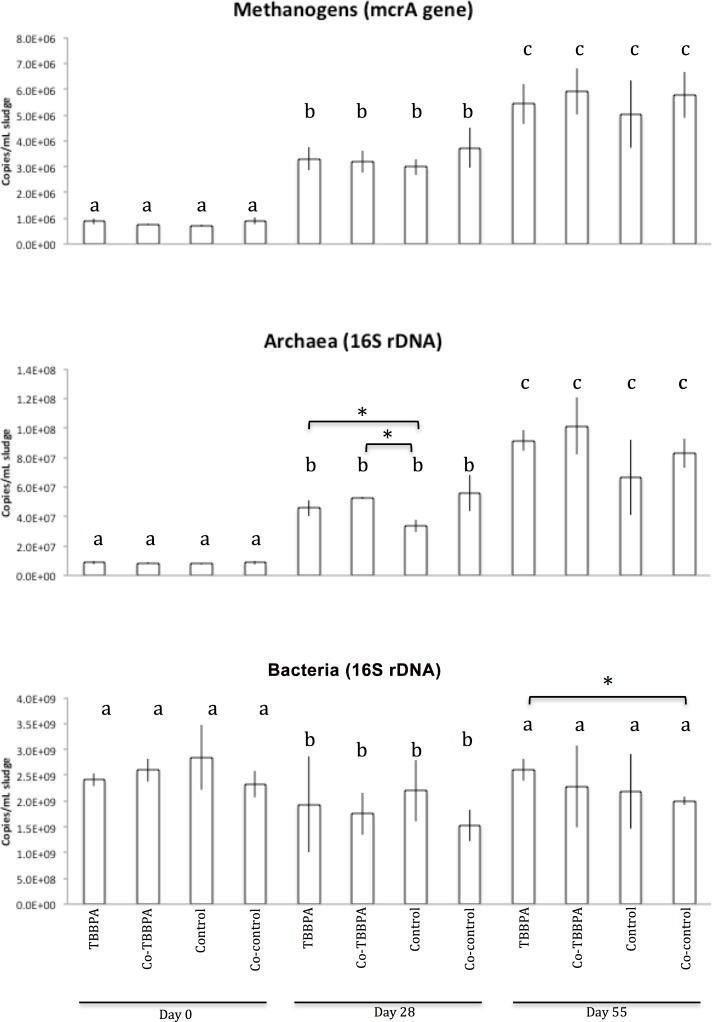
The increasing occurrence of tetrabromobisphenol A (TBBPA) in the environment is raising questions about its potential ecological and human health impacts. TBBPA is microbially transformed under anaerobic conditions to bisphenol A (BPA). However, little is known about which taxa degrade TBBPA and the adaptation of microbial communities exposed to TBBPA. The objectives of this study were to characterize the effect of TBBPA on microbial community structure during the start-up phase of a bench-scale anaerobic sludge reactor, and identify taxa that may be associated with TBBPA degradation. TBBPA degradation was monitored using LC/MS-MS, and the microbial community was characterized using Ion Torrent sequencing and qPCR. TBBPA was nearly completely transformed to BPA via reductive debromination in 55 days. Anaerobic reactor performance was not negatively affected by the presence of TBBPA and the bulk of the microbial community did not experience significant shifts. Several taxa showed a positive response to TBBPA, suggesting they may be associated with TBBPA degradation. Some of these taxa had been previously identified as dehalogenating bacteria including Dehalococcoides, Desulfovibrio, Propionibacterium, and Methylosinus species, but most had not previously been identified as having dehalogenating capacities. This study is the first to provide in-depth information on the microbial dynamics of anaerobic microbial communities exposed to TBBPA.
环境中四溴双酚A(TBBPA)的出现日益增多,这引发了人们对其潜在生态和人类健康影响的质疑。在厌氧条件下,TBBPA会被微生物转化为双酚A(BPA)。然而,对于哪些分类群能够降解TBBPA以及暴露于TBBPA的微生物群落的适应性,我们知之甚少。本研究的目的是在实验室规模的厌氧污泥反应器启动阶段,表征TBBPA对微生物群落结构的影响,并识别可能与TBBPA降解相关的分类群。使用液相色谱-质谱联用仪(LC/MS-MS)监测TBBPA的降解情况,并使用离子激流测序和定量聚合酶链反应(qPCR)对微生物群落进行表征。在55天内,TBBPA通过还原脱溴几乎完全转化为BPA。TBBPA的存在对厌氧反应器性能没有负面影响,并且大部分微生物群落没有发生显著变化。有几个分类群对TBBPA表现出积极反应,表明它们可能与TBBPA降解有关。其中一些分类群此前已被鉴定为脱卤细菌,包括脱卤球菌属、脱硫弧菌属、丙酸杆菌属和甲基弯曲菌属,但大多数此前尚未被鉴定具有脱卤能力。本研究首次提供了关于暴露于TBBPA的厌氧微生物群落微生物动态的深入信息。

 Zotero 插件