
SOX4促进口腔扁平苔藓相关鳞状细胞癌的进展。
SOX4 Promotes Progression in OLP-Associated Squamous Cell Carcinoma.
作者信息
Liu Yi, Cui Li, Huang Junwei, Ji Eoon Hye, Chen Wei, Messadi Diana, Hu Shen
机构信息
1. Department of Oral Medicine, Sichuan Academy of Medical Sciences, Sichuan Provincial People's Hospital, Affiliated Hospital to University of Electronic Science and Technology of China, Chengdu 610072, Sichuan, China.; 2. UCLA School of Dentistry and Jonsson Comprehensive Cancer Center, 10833 Le Conte Ave, Los Angeles, CA 90095, USA.
2. UCLA School of Dentistry and Jonsson Comprehensive Cancer Center, 10833 Le Conte Ave, Los Angeles, CA 90095, USA.
出版信息
J Cancer. 2016 Jul 8;7(11):1534-40. doi: 10.7150/jca.15689. eCollection 2016.
BACKGROUND
The development of oral squamous cell carcinoma (OSCC) is a multistep process that involves in both genetic alterations and epigenetic modifications. Previous studies suggest SOX4 might function as an oncogene or a tumor suppressor in different types of cancers. However, whether SOX4 involves in promoting the progression of oral precancer to cancer is unknown.
METHODS
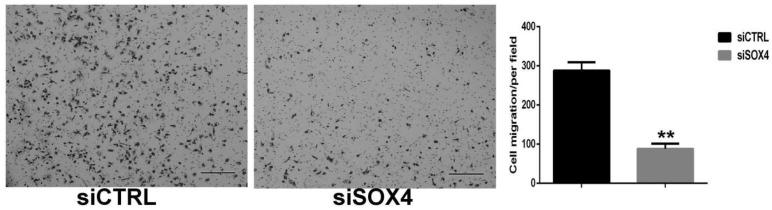
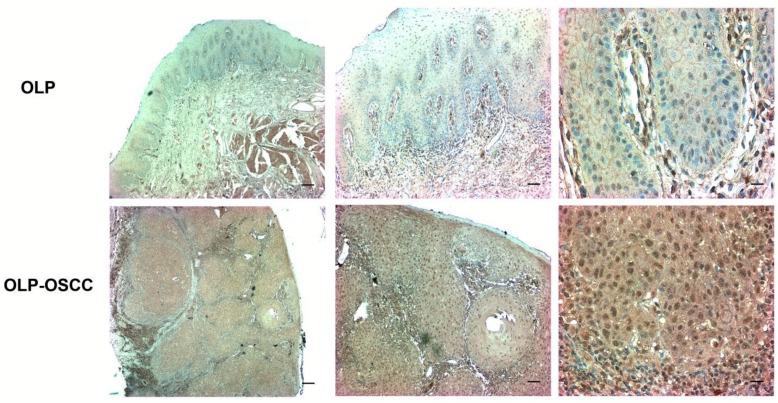
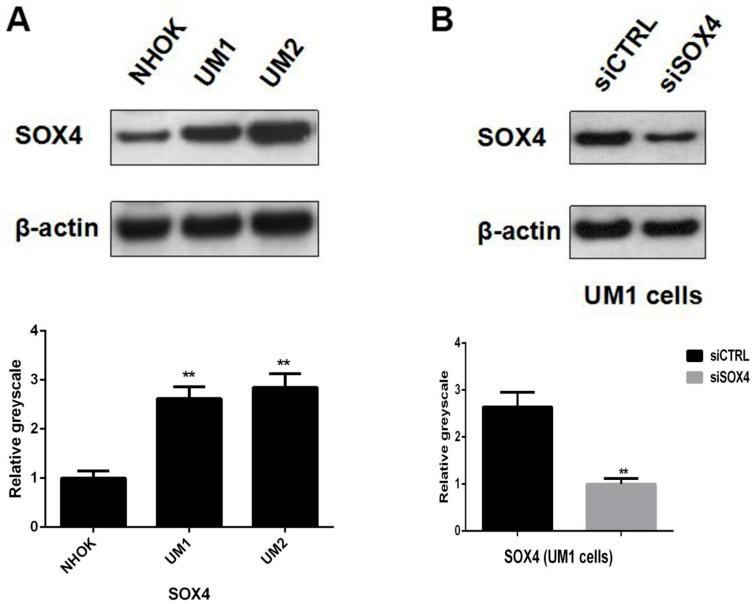
Liquid chromatography with tandem mass spectrometry (LC-MS/MS) was used to identify the proteins that may be differentially expressed between oral lichen planus (OLP) and OLP-associated OSCC (OLP-OSCC) formalin-fixed paraffin-embedded (FFPE) tissues. Immunohistochemistry (IHC) and Western blotting were performed to evaluate SOX4 expression between OLP and OLP-OSCC tissues and among oral cancer cell lines and normal human oral keratinocytes (NHOKs). SOX4 siRNA was used to knock down the expression of SOX4 in UM1 oral cancer cells. MTT, cell counting, migration and Matrigel invasion assays were utilized to examine the effect of SOX4 down-regulation on proliferation, migration and invasion capacity of UM1 cells.
RESULTS
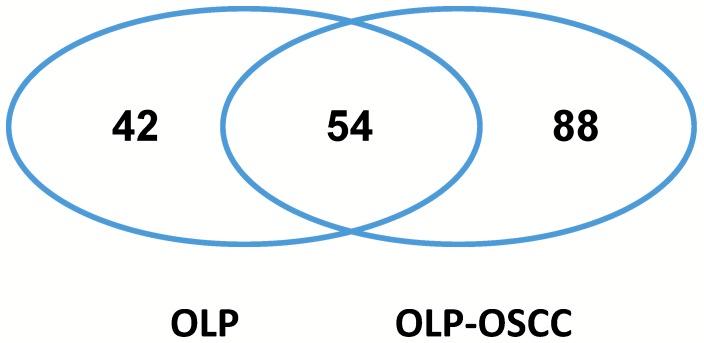
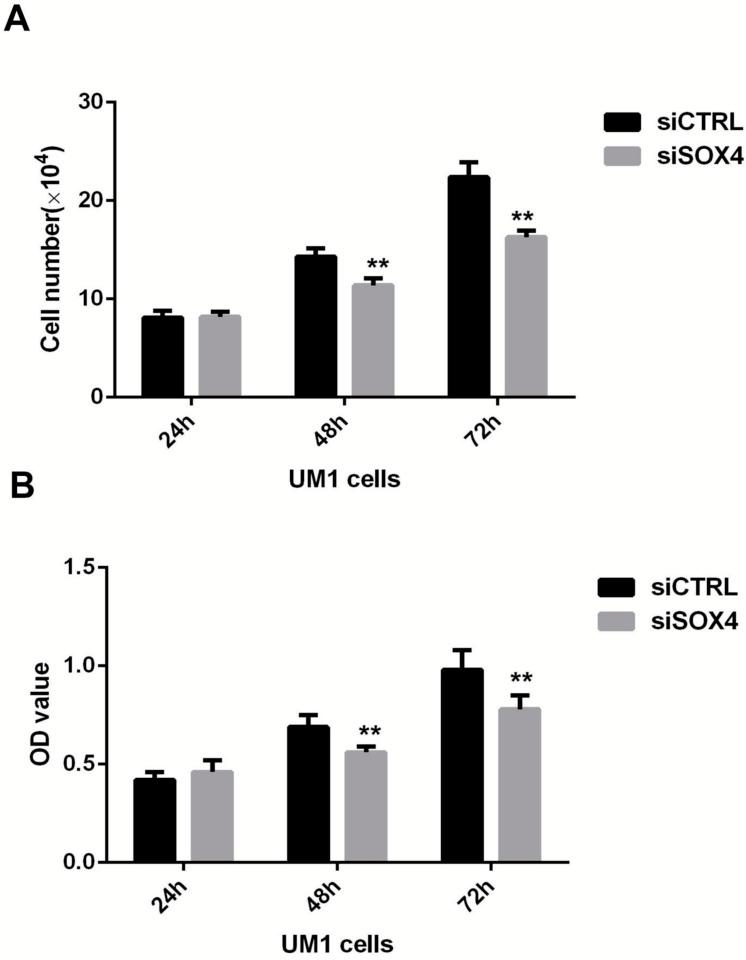
LC-MS/MS analysis showed that 88 proteins including SOX4 were only identified in OLP-OSCC FFPE tissues when compared to OLP FFPE tissues. IHC confirmed that SOX4 expression was significantly higher in OLP-OSCC than OLP and Western blot analysis indicated that SOX4 was over-expressed in UM1/UM2 cells when compared to NHOKs. Knockdown of SOX4 significantly inhibited the proliferation, migration and invasion of UM1 cells (P<0.01).
CONCLUSIONS
Our study indicated that SOX4 is significantly upregulated in OLP-OSCC versus OLP tissues. In addition, down-regulation of SOX4 led to significantly reduced proliferation, migration and invasion capability of oral cancer cells. These findings suggest that SOX4 might be actively involved in the progression of OLP to OSCC.
背景
口腔鳞状细胞癌(OSCC)的发生是一个多步骤过程,涉及基因改变和表观遗传修饰。先前的研究表明,SOX4在不同类型的癌症中可能作为癌基因或肿瘤抑制基因发挥作用。然而,SOX4是否参与促进口腔癌前病变向癌症的进展尚不清楚。
方法
采用液相色谱-串联质谱法(LC-MS/MS)鉴定口腔扁平苔藓(OLP)和OLP相关的OSCC(OLP-OSCC)福尔马林固定石蜡包埋(FFPE)组织之间可能差异表达的蛋白质。进行免疫组织化学(IHC)和蛋白质免疫印迹法以评估OLP和OLP-OSCC组织之间以及口腔癌细胞系与正常人口腔角质形成细胞(NHOKs)之间的SOX4表达。使用SOX4小干扰RNA(siRNA)敲低UM1口腔癌细胞中SOX4的表达。采用MTT法、细胞计数、迁移和基质胶侵袭试验来检测SOX4下调对UM1细胞增殖、迁移和侵袭能力的影响。
结果
LC-MS/MS分析表明,与OLP FFPE组织相比,包括SOX4在内的88种蛋白质仅在OLP-OSCC FFPE组织中被鉴定出来。IHC证实,SOX4在OLP-OSCC中的表达明显高于OLP,蛋白质免疫印迹分析表明,与NHOKs相比,SOX4在UM1/UM2细胞中过表达。敲低SOX4显著抑制了UM1细胞的增殖、迁移和侵袭(P<0.01)。
结论
我们的研究表明,与OLP组织相比,SOX4在OLP-OSCC中显著上调。此外,SOX4的下调导致口腔癌细胞的增殖、迁移和侵袭能力显著降低。这些发现表明SOX4可能积极参与OLP向OSCC的进展。

 Zotero 插件