
从地丁草中分离出的紫堇灵通过调节Nfr2和丝裂原活化蛋白激酶发挥抗炎作用。
Corynoline Isolated from Corydalis bungeana Turcz. Exhibits Anti-Inflammatory Effects via Modulation of Nfr2 and MAPKs.
作者信息
Yang Chunjuan, Zhang Chengyue, Wang Zhibin, Tang Zhenqiu, Kuang Haixue, Kong Ah-Ng Tony
机构信息
Department of Pharmaceutical Analysis and Analytical Chemistry, College of Pharmacy, Harbin Medical University, 157 Baojian Road, Nangang District, Harbin 150081, China.
Center for Phytochemical Epigenome Studies, Department of Pharmaceutics, Ernest Mario School of Pharmacy, Rutgers, The State University of New Jersey, Piscataway, NJ 08854, USA.
出版信息
Molecules. 2016 Jul 27;21(8):975. doi: 10.3390/molecules21080975.
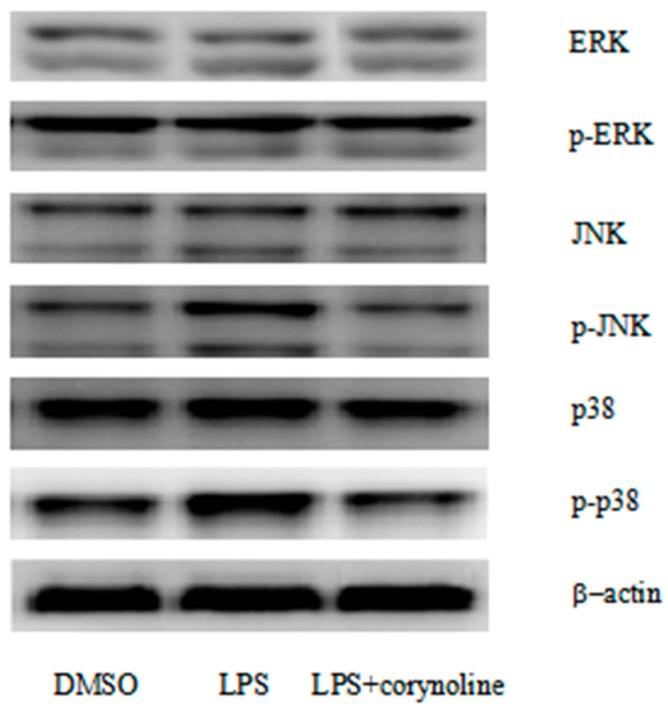
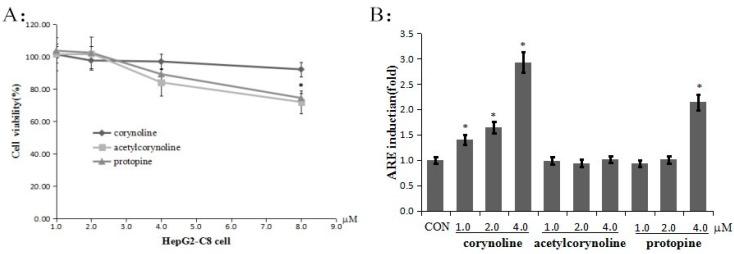
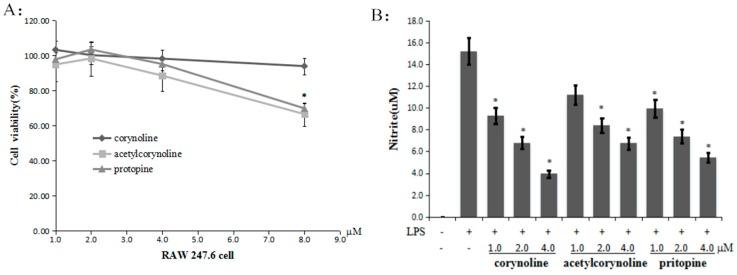
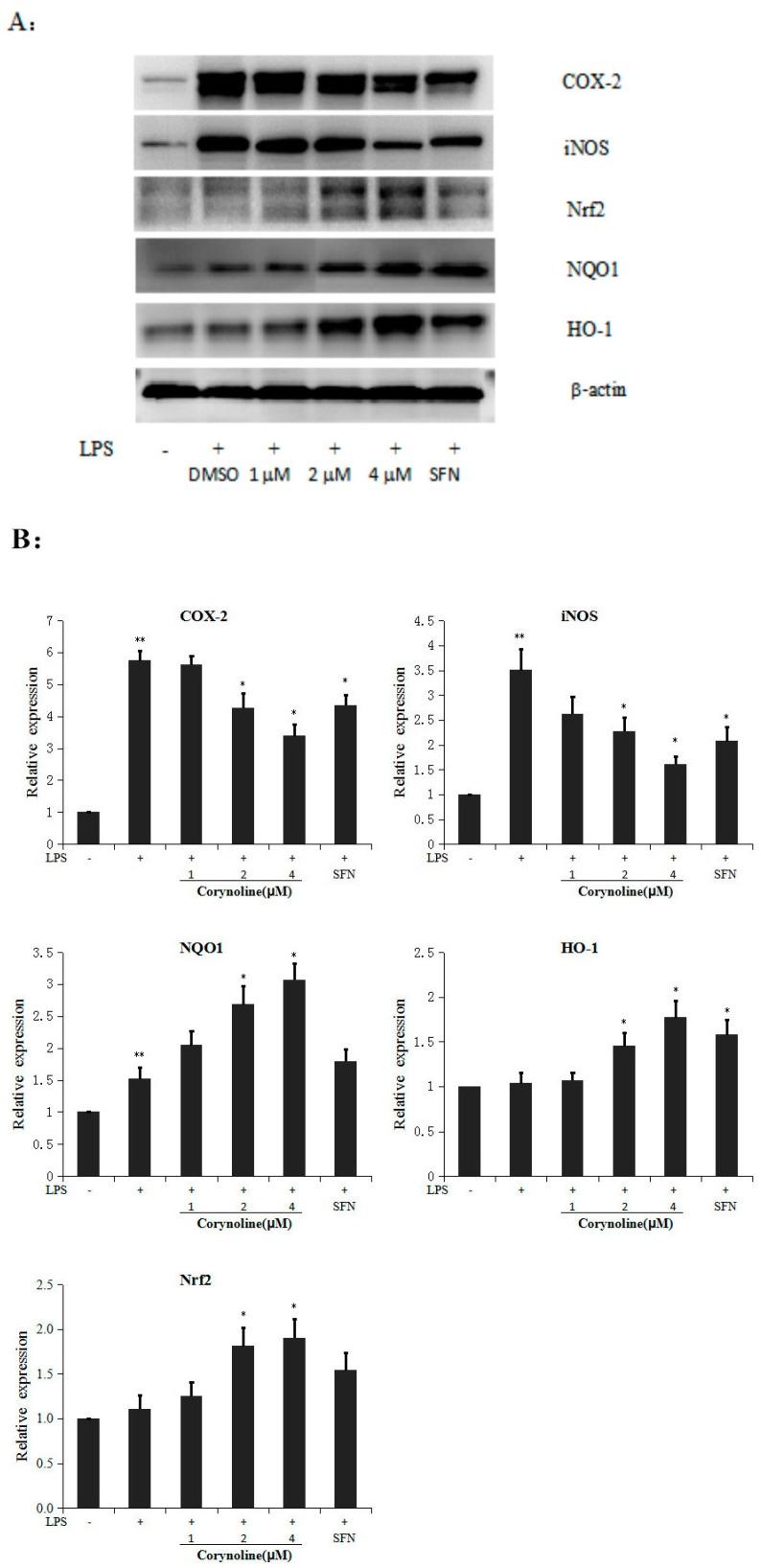
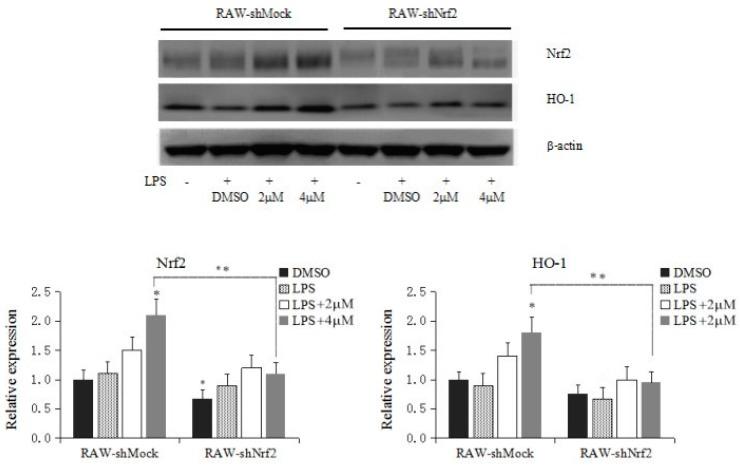
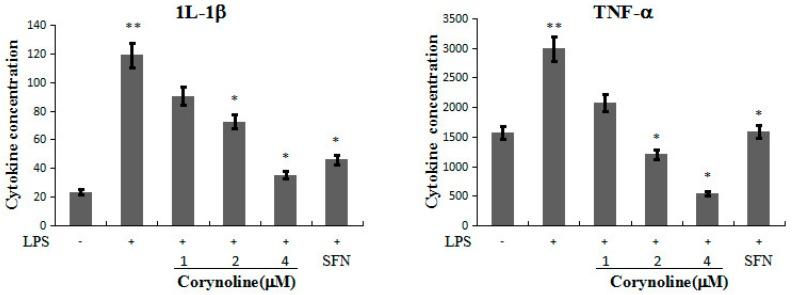
Corydalis bungeana Turcz. is an anti-inflammatory medicinal herb used widely in traditional Chinese medicine for upper respiratory tract infections. It is demonstrated that corynoline is its active anti-inflammatory component. The nuclear factor-erythroid-2-related factor 2 (Nrf2)/antioxidant response element (ARE) pathway and the mitogen-activated protein kinase (MAPK) pathway play important roles in the regulation of inflammation. In this study, we investigated the potential anti-inflammatory mechanism of corynoline through modulation of Nfr2 and MAPKs. Lipopolysaccharide (LPS)-activated RAW264.7 cells were used to explore modulatory role of NO production and the activation of signaling proteins and transcription factors using nitrite assay, Western bloting and qPCR. Treatment with corynoline reduced production of nitric oxide (NO) and the protein and mRNA levels of inducible nitric oxide (iNOS) and cyclooxygenase-2 (COX-2) Treatment also significantly increased the expression of Nrf2, quinone oxidoreductase 1 (NQO1) and hemeoxygenase-1 (HO-1) at the mRNA and protein levels, which demonstrated that corynoline may protect cells from inflammation through the Nrf2/ARE pathway In addition, corynoline suppressed the expression of inflammatory cytokines, such as tumor necrosis factor-α (TNF-α) and interleukin-1β (IL-1β), at the mRNA and protein levels. Furthermore, molecular data revealed that corynoline inhibited lipopolysaccharide-stimulated phosphorylation of c-jun NH2-terminal kinase (JNK) and p38. Taken together, these results suggest that corynoline reduces the levels of pro-inflammatory mediators, such as iNOS, COX-2, TNF-α and IL-1β, by suppressing extracellular signal-regulated kinase 1/2 (ERK) and p38 phosphorylation in RAW264.7 cells, which is regulated by the Nrf2/ARE pathway. These findings reveal part of the molecular basis for the anti-inflammatory properties of corynoline.
地丁草是一种广泛用于治疗上呼吸道感染的抗炎草药。已证明紫堇灵是其活性抗炎成分。核因子红细胞2相关因子2(Nrf2)/抗氧化反应元件(ARE)途径和丝裂原活化蛋白激酶(MAPK)途径在炎症调节中起重要作用。在本研究中,我们通过调节Nfr2和MAPKs来研究紫堇灵潜在的抗炎机制。使用脂多糖(LPS)激活的RAW264.7细胞,通过亚硝酸盐测定、蛋白质免疫印迹和定量聚合酶链反应来探讨紫堇灵对一氧化氮(NO)生成以及信号蛋白和转录因子激活的调节作用。用紫堇灵处理可降低一氧化氮(NO)的生成以及诱导型一氧化氮合酶(iNOS)和环氧化酶-2(COX-2)的蛋白质和mRNA水平。处理还显著增加了Nrf2、醌氧化还原酶1(NQO1)和血红素加氧酶-1(HO-1)在mRNA和蛋白质水平的表达,这表明紫堇灵可能通过Nrf2/ARE途径保护细胞免受炎症侵害。此外,紫堇灵在mRNA和蛋白质水平上抑制了炎性细胞因子如肿瘤坏死因子-α(TNF-α)和白细胞介素-1β(IL-1β)的表达。此外,分子数据显示紫堇灵抑制脂多糖刺激的c-jun氨基末端激酶(JNK)和p38的磷酸化。综上所述,这些结果表明紫堇灵通过抑制RAW264.7细胞中细胞外信号调节激酶1/2(ERK)和p38的磷酸化来降低促炎介质如iNOS、COX-2、TNF-α和IL-1β的水平,这一过程受Nrf2/ARE途径调节。这些发现揭示了紫堇灵抗炎特性的部分分子基础。


 Zotero 插件