
大鼠模型实验性牙齿移动过程中重度和摆动往复力作用下正畸牙根吸收的比较
Comparisons of orthodontic root resorption under heavy and jiggling reciprocating forces during experimental tooth movement in a rat model.
作者信息
Hikida Takuji, Yamaguchi Masaru, Shimizu Mami, Kikuta Jun, Yoshino Tomokazu, Kasai Kazutaka
机构信息
Department of Orthodontics, Nihon University School of Dentistry at Matsudo, Japan.
出版信息
Korean J Orthod. 2016 Jul;46(4):228-41. doi: 10.4041/kjod.2016.46.4.228. Epub 2016 Jul 25.
OBJECTIVE
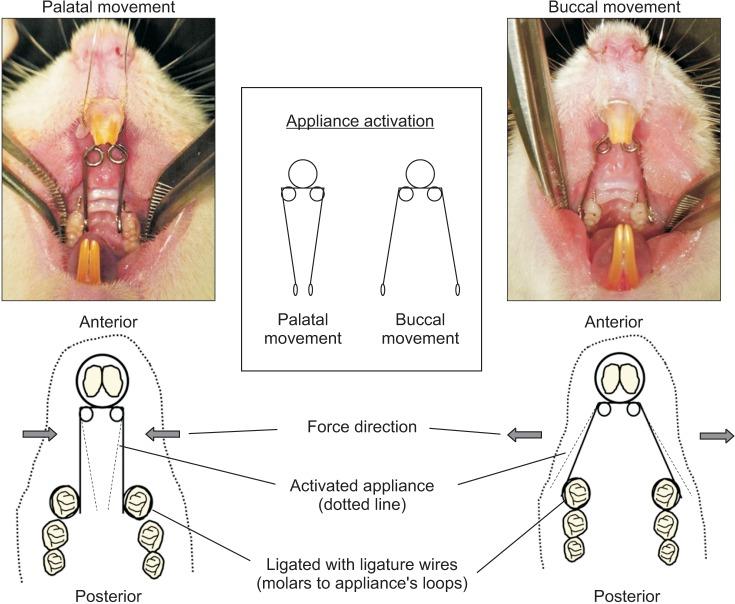
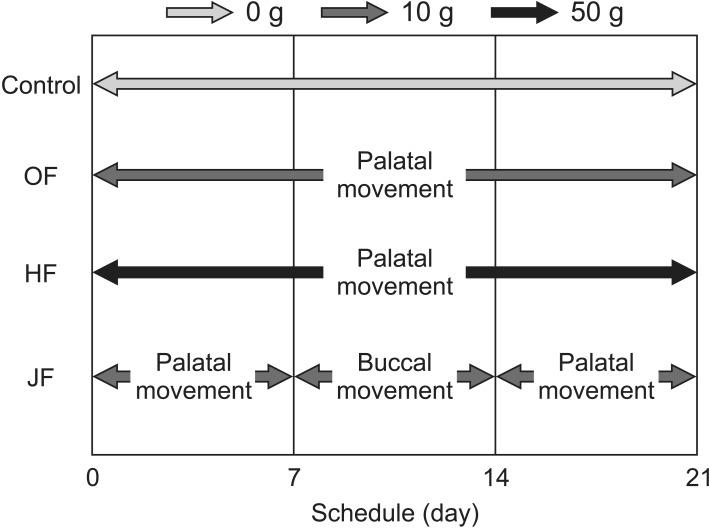
Root mobility due to reciprocating movement of the tooth (jiggling) may exacerbate orthodontic root resorption (ORR). "Jiggling" describes mesiodistal or buccolingual movement of the roots of the teeth during orthodontic treatment. In the present study, buccolingual movement is described as "jiggling." We aimed to investigate the relationship between ORR and jiggling and to test for positive cell expression in odontoclasts in resorbed roots during experimental tooth movement (jiggling) in vivo.
METHODS
Male Wistar rats were divided into control, heavy force (HF), optimal force (OF), and jiggling force (JF) groups. The expression levels of cathepsin K, matrix metalloproteinase (MMP)-9 protein, interleukin (IL)-6, cytokine-induced neutrophil chemoattractant 1 (CINC-1; an IL-8-related protein in rodents), receptor activator of nuclear factor κB ligand (RANKL), and osteoprotegerin protein in the dental root were determined using immunohistochemistry.
RESULTS
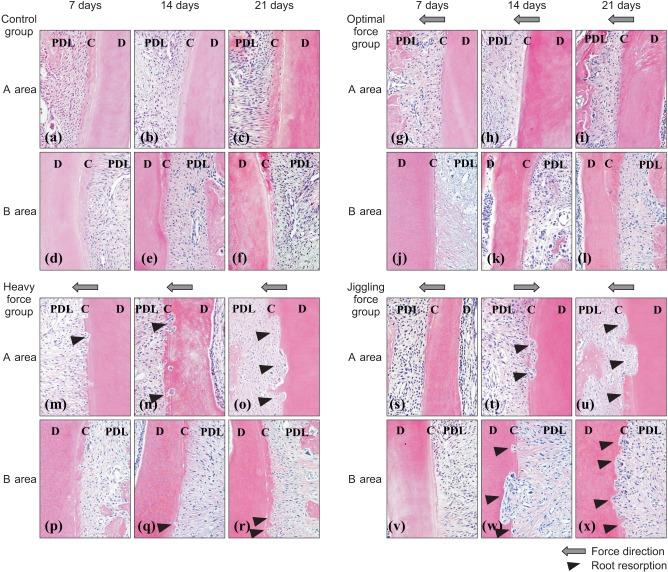
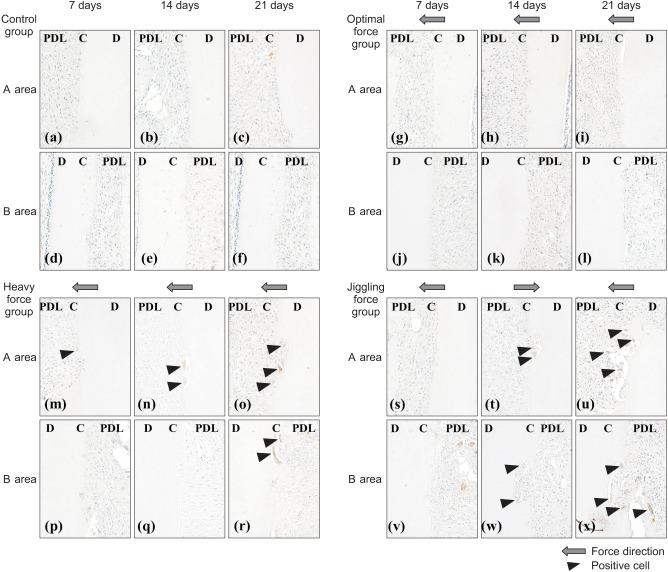
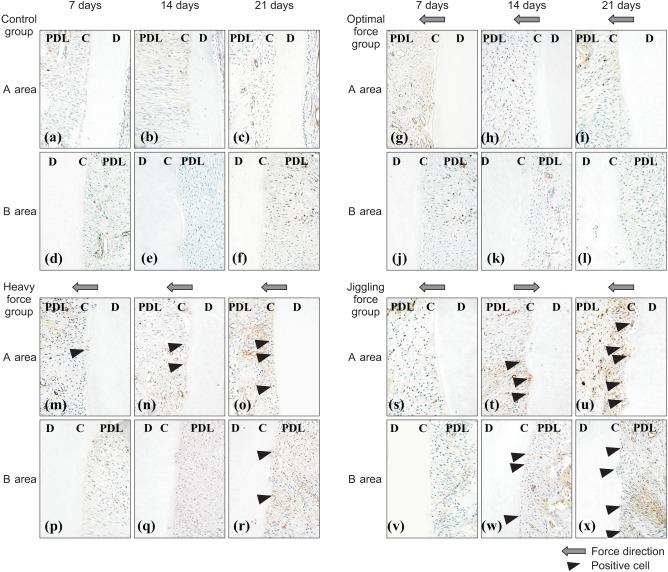
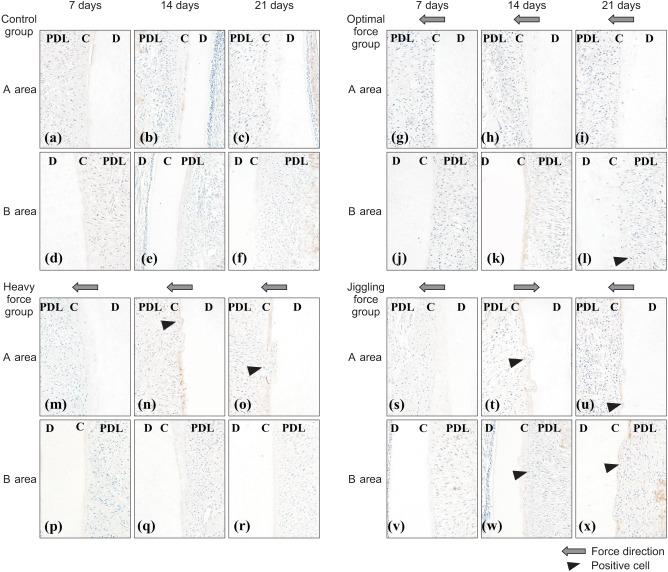
On day 21, a greater number of root resorption lacunae, which contained multinucleated odontoclasts, were observed in the palatal roots of rats in the JF group than in rats from other groups. Furthermore, there was a significant increase in the numbers of cathepsin K-positive and MMP-9-positive odontoclasts in the JF group on day 21. Immunoreactivities for IL-6, CINC-1, and RANKL were stronger in resorbed roots exposed to jiggling than in the other groups on day 21. Negative reactivity was observed in the controls.
CONCLUSIONS
These results suggest that jiggling may induce ORR via inflammatory cytokine production during orthodontic tooth movement, and that jiggling may be a risk factor for ORR.
目的
牙齿的往复运动(颤动)导致的牙根移动可能会加剧正畸牙根吸收(ORR)。“颤动”描述的是正畸治疗期间牙齿牙根的近远中或颊舌向移动。在本研究中,颊舌向移动被描述为“颤动”。我们旨在研究ORR与颤动之间的关系,并在体内实验性牙齿移动(颤动)过程中,检测吸收牙根中破牙细胞的阳性细胞表达。
方法
将雄性Wistar大鼠分为对照组、重力组(HF)、最佳力组(OF)和颤动力组(JF)。使用免疫组织化学法测定牙根中组织蛋白酶K、基质金属蛋白酶(MMP)-9蛋白、白细胞介素(IL)-6、细胞因子诱导的中性粒细胞趋化因子1(CINC-1;啮齿动物中的一种IL-8相关蛋白)、核因子κB受体活化因子配体(RANKL)和骨保护素蛋白的表达水平。
结果
在第21天,JF组大鼠腭根中观察到的牙根吸收陷窝数量更多,其中含有多核破牙细胞,比其他组的大鼠更多。此外,在第21天,JF组中组织蛋白酶K阳性和MMP-9阳性破牙细胞的数量显著增加。在第21天,暴露于颤动的吸收牙根中IL-6、CINC-1和RANKL的免疫反应性比其他组更强。对照组中观察到阴性反应。
结论
这些结果表明,颤动可能在正畸牙齿移动过程中通过炎性细胞因子的产生诱导ORR,并且颤动可能是ORR的一个危险因素。




 Zotero 插件