
通过保留标记的单能上皮祖细胞实现全浆分泌性睑板腺的更新。
Renewal of the Holocrine Meibomian Glands by Label-Retaining, Unipotent Epithelial Progenitors.
作者信息
Parfitt Geraint J, Lewis Phillip N, Young Robert D, Richardson Alex, Lyons J Guy, Di Girolamo Nick, Jester James V
机构信息
The Gavin Herbert Eye Institute, University of California Irvine, 843 Health Sciences Road, Irvine, CA 92697-4390, USA.
The School of Optometry & Vision Sciences, Cardiff University, Maindy Road, Cardiff CF24 4HQ, UK.
出版信息
Stem Cell Reports. 2016 Sep 13;7(3):399-410. doi: 10.1016/j.stemcr.2016.07.010. Epub 2016 Aug 11.
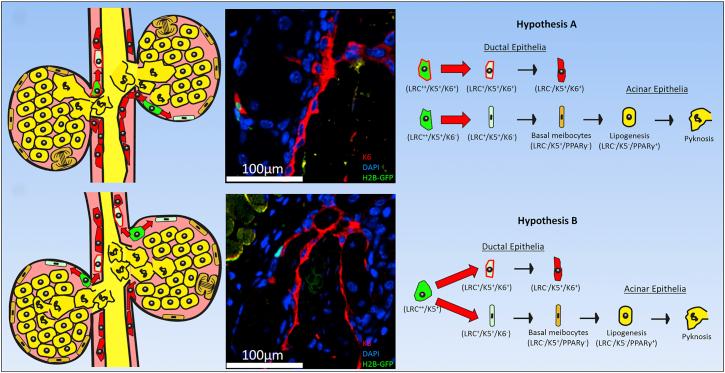
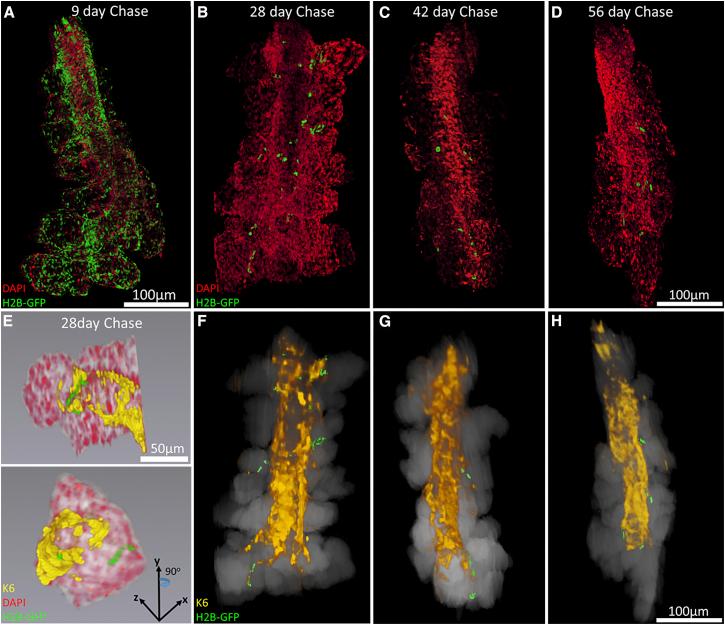
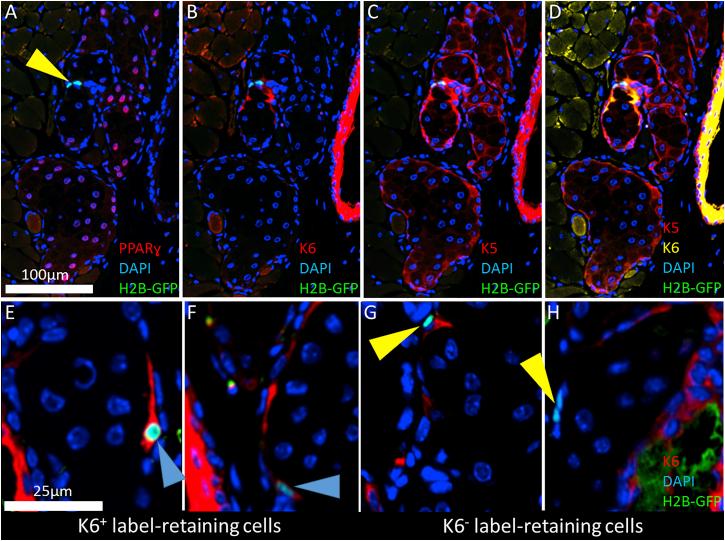
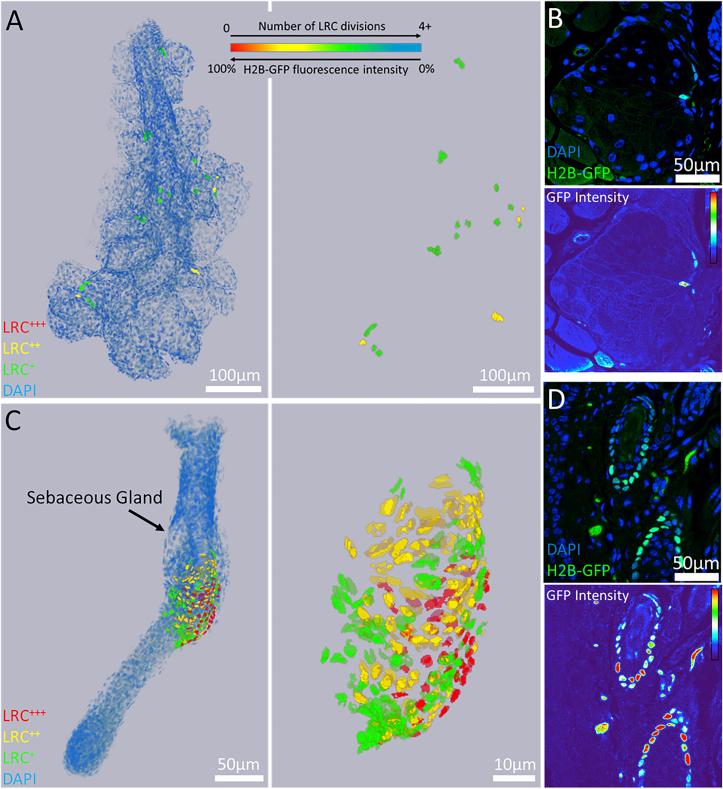
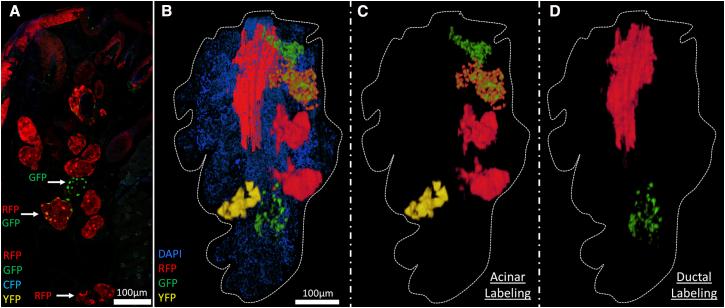
The meibomian and sebaceous glands secrete lipids to prevent desiccation of the ocular surface and skin, respectively. Precisely how these holocrine tissues regenerate is not well understood. To address this, we characterized keratin 5(+) (K5) label-retaining cells (LRCs) and the lineage tracing of keratin 14 (K14) progenitors in mouse meibomian glands. Using the tet-off H2B-GFP/K5tTA mouse, H2B-GFP fluorescence dilutes 2-fold with every division in K5(+) cell nuclei after doxycycline administration. In 3D reconstructions generated over a >28-day doxycycline chase, we observed LRCs at the acinus entrance where K6(+) ductal epithelium terminates. For lineage tracing, K14CreER(T2)-Confetti mice were injected intraperitoneally with tamoxifen and euthanized at 23 and 59 weeks later. Meibomian gland acini in these mice were either monochromatic or dual-colored, whereas the duct exhibited multiple colors. In conclusion, LRCs are likely to direct meibomian gland turnover and may exist as two distinct unipotent progenitors that renew ductal and acinar tissue separately.
睑板腺和皮脂腺分别分泌脂质以防止眼表和皮肤干燥。目前对于这些全分泌腺组织如何再生的了解还不够深入。为了解决这个问题,我们对小鼠睑板腺中的角蛋白5阳性(K5)标记保留细胞(LRC)以及角蛋白14(K14)祖细胞进行了谱系追踪。使用四环素调控的H2B-GFP/K5tTA小鼠,给予强力霉素后,K5阳性细胞核中的H2B-GFP荧光在每次细胞分裂时稀释2倍。在超过28天的强力霉素追踪期内生成的三维重建中,我们在K6阳性导管上皮终止的腺泡入口处观察到了LRC。为了进行谱系追踪,给K14CreER(T2)-Confetti小鼠腹腔注射他莫昔芬,并在23周和59周后实施安乐死。这些小鼠的睑板腺腺泡要么是单色的,要么是双色的,而导管则呈现多种颜色。总之,LRC可能指导睑板腺的更新,并且可能作为两种不同的单能祖细胞分别更新导管和腺泡组织。


 Zotero 插件