
高迁移率族蛋白B1(HMGB1)和凝血酶介导血脑屏障功能障碍,作为神经炎症和阿尔茨海默病向神经退行性变发展的生物标志物。
HMGB1 and thrombin mediate the blood-brain barrier dysfunction acting as biomarkers of neuroinflammation and progression to neurodegeneration in Alzheimer's disease.
作者信息
Festoff Barry W, Sajja Ravi K, van Dreden Patrick, Cucullo Luca
机构信息
pHLOGISTIX LLC, 4220 Shawnee Mission Parkway, Fairway, KS, 66205, USA.
Department of Neurology, University of Kansas Medical Center, 3901 Rainbow Blvd, Kansas City, KS, 66160, USA.
出版信息
J Neuroinflammation. 2016 Aug 24;13(1):194. doi: 10.1186/s12974-016-0670-z.
BACKGROUND
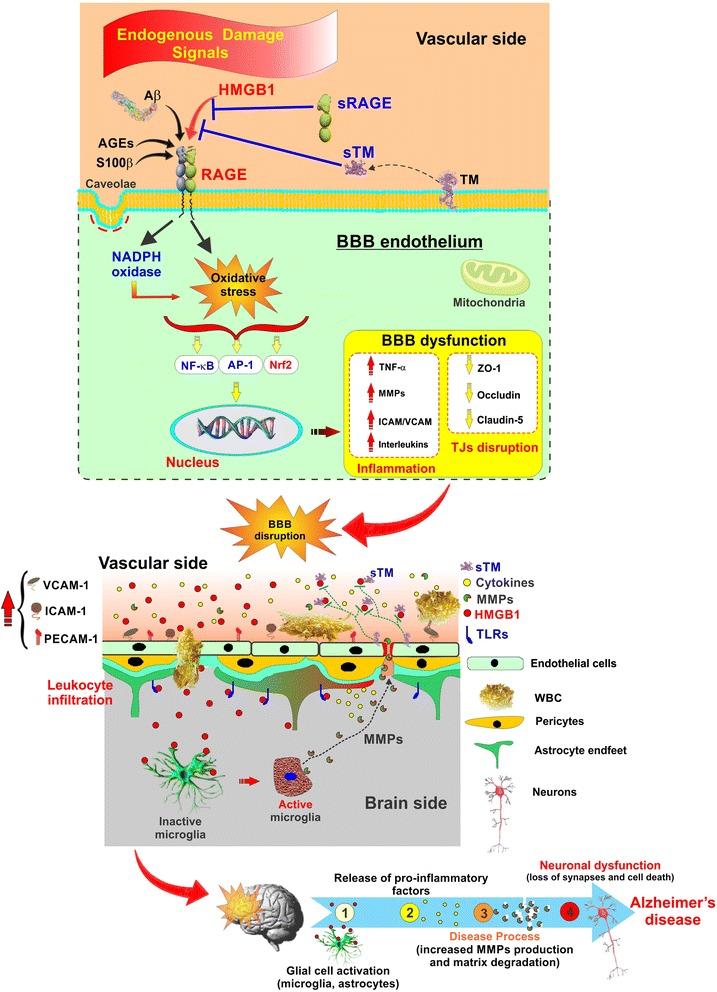
The blood-brain barrier (BBB) dysfunction represents an early feature of Alzheimer's disease (AD) that precedes the hallmarks of amyloid beta (amyloid β) plaque deposition and neuronal neurofibrillary tangle (NFT) formation. A damaged BBB correlates directly with neuroinflammation involving microglial activation and reactive astrogliosis, which is associated with increased expression and/or release of high-mobility group box protein 1 (HMGB1) and thrombin. However, the link between the presence of these molecules, BBB damage, and progression to neurodegeneration in AD is still elusive. Therefore, we aimed to profile and validate non-invasive clinical biomarkers of BBB dysfunction and neuroinflammation to assess the progression to neurodegeneration in mild cognitive impairment (MCI) and AD patients.
METHODS
We determined the serum levels of various proinflammatory damage-associated molecules in aged control subjects and patients with MCI or AD using validated ELISA kits. We then assessed the specific and direct effects of such molecules on BBB integrity in vitro using human primary brain microvascular endothelial cells or a cell line.
RESULTS
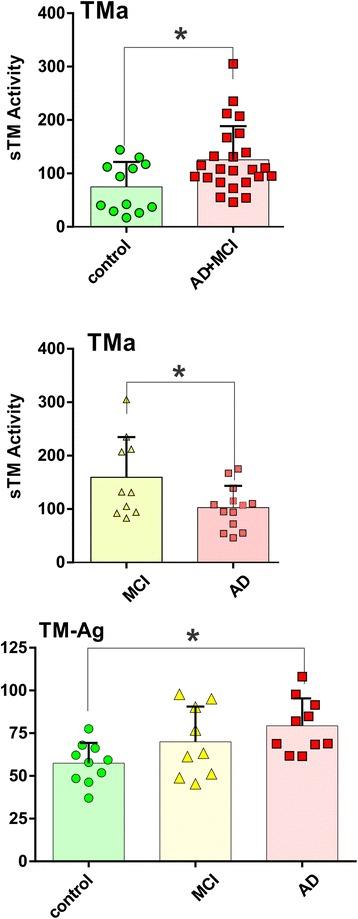
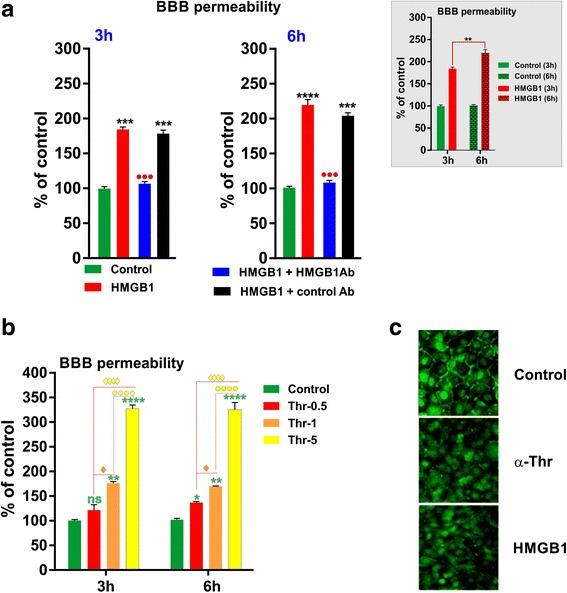
We observed a significant increase in serum HMGB1 and soluble receptor for advanced glycation end products (sRAGE) that correlated well with amyloid beta levels in AD patients (vs. control subjects). Interestingly, serum HMGB1 levels were significantly elevated in MCI patients compared to controls or AD patients. In addition, as a marker of BBB damage, soluble thrombomodulin (sTM) antigen, and activity were significantly (and distinctly) increased in MCI and AD patients. Direct in vitro BBB integrity assessment further revealed a significant and concentration-dependent increase in paracellular permeability to dextrans by HMGB1 or α-thrombin, possibly through disruption of zona occludins-1 bands. Pre-treatment with anti-HMGB1 monoclonal antibody blocked HMGB1 effects and leaving BBB integrity intact.
CONCLUSIONS
Our current studies indicate that thrombin and HMGB1 are causal proximate proinflammatory mediators of BBB dysfunction, while sTM levels may indicate BBB endothelial damage; HMGB1 and sRAGE might serve as clinical biomarkers for progression and/or therapeutic efficacy along the AD spectrum.
背景
血脑屏障(BBB)功能障碍是阿尔茨海默病(AD)的早期特征,早于淀粉样β蛋白(Aβ)斑块沉积和神经元神经原纤维缠结(NFT)形成等标志性病变。受损的血脑屏障与涉及小胶质细胞活化和反应性星形胶质细胞增生的神经炎症直接相关,这与高迁移率族蛋白B1(HMGB1)和凝血酶的表达增加和/或释放有关。然而,这些分子的存在、血脑屏障损伤与AD中神经退行性变进展之间的联系仍不明确。因此,我们旨在分析和验证血脑屏障功能障碍和神经炎症的非侵入性临床生物标志物,以评估轻度认知障碍(MCI)和AD患者神经退行性变的进展情况。
方法
我们使用经过验证的酶联免疫吸附测定(ELISA)试剂盒,测定了老年对照受试者以及MCI或AD患者血清中各种促炎损伤相关分子的水平。然后,我们使用人原代脑微血管内皮细胞或细胞系,在体外评估了这些分子对血脑屏障完整性的特异性和直接影响。
结果
我们观察到AD患者(与对照受试者相比)血清HMGB1和晚期糖基化终产物可溶性受体(sRAGE)显著增加,且与Aβ水平密切相关。有趣的是,与对照组或AD患者相比,MCI患者血清HMGB1水平显著升高。此外,作为血脑屏障损伤的标志物,可溶性血栓调节蛋白(sTM)抗原和活性在MCI和AD患者中显著(且明显)增加。体外血脑屏障完整性的直接评估进一步显示,HMGB1或α-凝血酶可使葡聚糖的细胞旁通透性显著且呈浓度依赖性增加,这可能是通过破坏紧密连接蛋白-1带实现的。用抗HMGB1单克隆抗体预处理可阻断HMGB1的作用并保持血脑屏障完整性。
结论
我们目前的研究表明,凝血酶和HMGB1是血脑屏障功能障碍的直接促炎介质,而sTM水平可能表明血脑屏障内皮损伤;HMGB1和sRAGE可能作为AD谱系中疾病进展和/或治疗效果的临床生物标志物。


 Zotero 插件